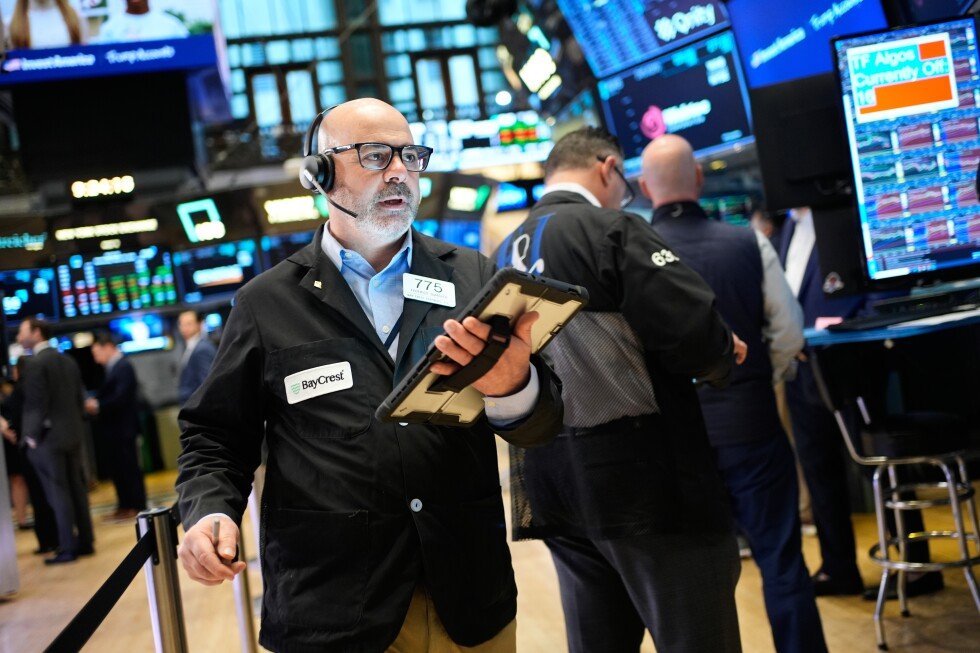
US stock market crash today shook Wall Street as investors reacted instantly to escalating tensions in the Middle East. The Dow Jones Industrial Average fell more than 500 points at its lowest level in early trading. The S&P 500 dropped nearly 1%. The Nasdaq Composite slid over 1% as traders dumped risk assets and rushed toward safe havens.
Rising oil prices triggered the selloff. Brent crude jumped as much as 13% intraday, briefly crossing $82 per barrel before easing below $80. West Texas Intermediate (WTI) crude surged around 8% near $73.
Higher gas prices feed directly into consumer inflation. Higher inflation forces the Federal Reserve to keep interest rates elevated longer. Higher rates crush corporate earnings, squeeze borrowers, and punish stock valuations.
Gold jumped past $5,400 an ounce, extending its historic run as investors piled into the ultimate safe-haven asset. JPMorgan analysts publicly stated they expect gold to gain an additional risk premium of up to 10% as geopolitical and inflation risks build. The US Dollar Index climbed 0.91% to 98.50, adding another layer of pressure on international markets.
Every investor watching markets this week needs to circle Friday on their calendar. The monthly US jobs report drops then, and economists expect payrolls to show just 60,000 new jobs added in February — a steep drop from January’s 130,000 figure that had eased recession fears just weeks ago. A soft jobs number would normally build the case for Federal Reserve rate cuts.
This US stock market crash today is not about weak earnings. It is about geopolitical risk, oil supply fears, and inflation expectations rising again.
Why are Dow, S&P 500 and Nasdaq falling today?
The Dow Jones Industrial Average fell 500+ points intraday, settling near 48,570. That erased billions in market value before lunch. The S&P 500 dropped 45 points to hover around 6,833 — its second consecutive monthly loss after February already closed in the red. The Nasdaq, loaded with high-growth tech stocks that are most sensitive to rising interest rates, slid 139 points to 22,529. These indices don’t crash this hard without a serious catalyst.
Investors reacted sharply to military escalation involving the US, Israel, and Iran. Markets immediately priced in supply disruption risk, especially around the Strait of Hormuz, which handles nearly 20% of global oil shipments.
When oil prices spike, inflation concerns rise. Higher energy costs affect transportation, manufacturing, airlines, and consumer goods. Investors quickly adjust valuations when they expect inflation to remain elevated.
The damage would likely have been worse if energy and defense stocks hadn’t surged to cushion the blow across broader indexes.
Why are oil, gas and gold prices surging?
Crude oil markets moved first. Brent crude futures spiked as traders priced in supply disruption. WTI crude followed. Energy traders reacted to tanker traffic concerns and potential output constraints from Iran, OPEC’s fourth-largest producer.
Natural gas prices also climbed as energy markets adjusted for regional supply risks.
Gold prices surged above $5,400 per ounce. Investors bought bullion as a hedge against geopolitical instability and inflation. At the same time, the US Dollar Index rose nearly 0.9% to 98.50. Cash and gold rallied together as traders sought safety.
Unlike typical crisis days, long-term Treasury yields moved higher instead of lower. Investors demanded higher returns to compensate for inflation risk. The 10-year yield climbed as markets reduced expectations for aggressive rate cuts.
Which defence and energy stocks are gaining big?
Energy stocks rallied strongly. Exxon Mobil shares gained in early trading as higher crude prices boosted profit outlooks.
Defence stocks also attracted strong buying. Lockheed Martin shares moved higher as investors anticipated increased military spending amid rising geopolitical tensions.
Meanwhile, airline stocks fell sharply. Delta Air Lines dropped nearly 6% due to higher jet fuel costs. Travel-linked companies struggled as investors reassessed operating margins.
In the technology sector, Nvidia slipped around 1% despite announcing a $4 billion strategic investment in Coherent and Lumentum to secure advanced optics for next-generation AI data centers. Both Coherent and Lumentum surged over 7-8% on that news, proving that company-specific catalysts can still cut through macro chaos. SoFi Technologies fell 7%. Against the carnage, Netflix bucked every trend and surged 13.7%, reminding investors that earnings strength can still override geopolitical noise for individual names.
This rotation clearly shows how investors shift money during geopolitical shocks. They exit growth and consumer-sensitive sectors. They move into energy, defence, gold, and cash.
How are bond yields and inflation expectations shaping the market?
Investors now focus on inflation risk. When oil prices rise sharply, inflation expectations usually follow. That forces markets to reconsider Federal Reserve policy.
Treasury yields climbed because traders reduced bets on near-term interest rate cuts. Higher yields directly pressure stock valuations, especially in technology and AI-heavy indexes like the Nasdaq.
At the same time, volatility increased. The VIX moved above 20, signaling stronger hedging demand from institutional investors.
Markets now wait for the upcoming US jobs report. Economists expect payroll growth of around 60,000 for February, compared with January’s 130,000 gain. A weaker number could calm yields. A stronger report could intensify inflation fears.
Will this US stock market crash continue?
History suggests that geopolitical-driven market selloffs often fade unless oil prices remain elevated for a prolonged period. Analysts note that sustained Brent crude above $80–$85 per barrel could create deeper inflation pressure.
Morgan Stanley’s top strategist Mike Wilson publicly maintained his bullish outlook on US equities, citing historical data showing geopolitical shocks rarely produce sustained market damage. His one caveat was sharp, sustained oil price gains — exactly what markets are now watching for. Keep your eyes on the CBOE Volatility Index. When VIX holds above 20, institutional investors are actively buying protection. If it pushes toward 25 or 30, forced selling accelerates and the pain spreads. Right now, Monday’s crash looks painful but containable. What Iran does next will decide whether Wall Street stabilizes — or buckles further.
For now, investors are reacting to headlines, oil prices, and bond yields. Corporate earnings remain stable. Economic data has not collapsed. However, if energy disruption continues and inflation expectations rise further, volatility could stay elevated.



![i’m-nervous,-too!-[part-2]](https://10xwealthreport.com/wp-content/uploads/2026/03/177042-im-nervous-too-part-2-1568x784.jpg)