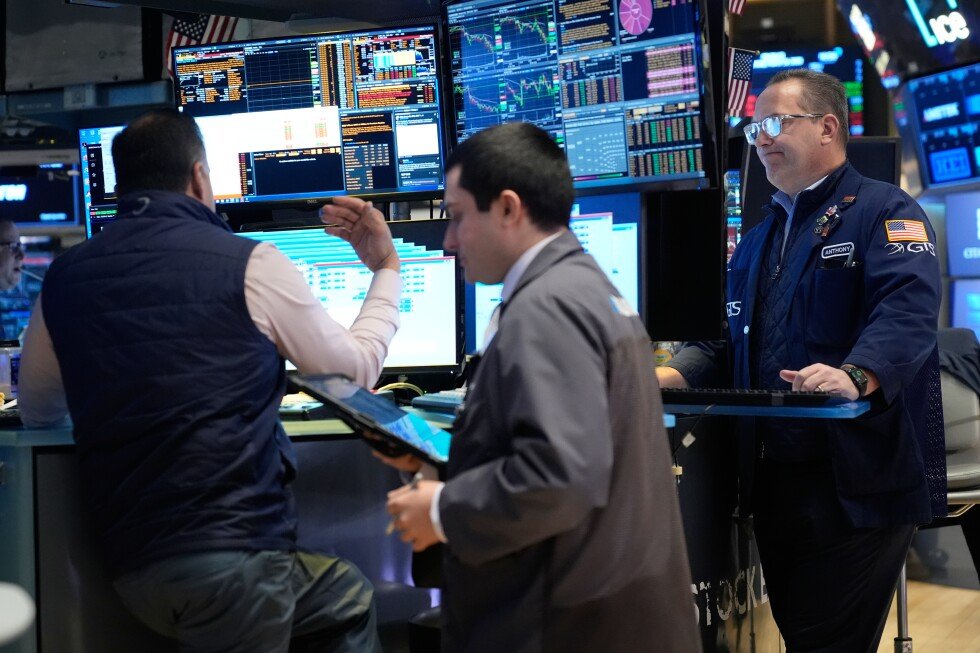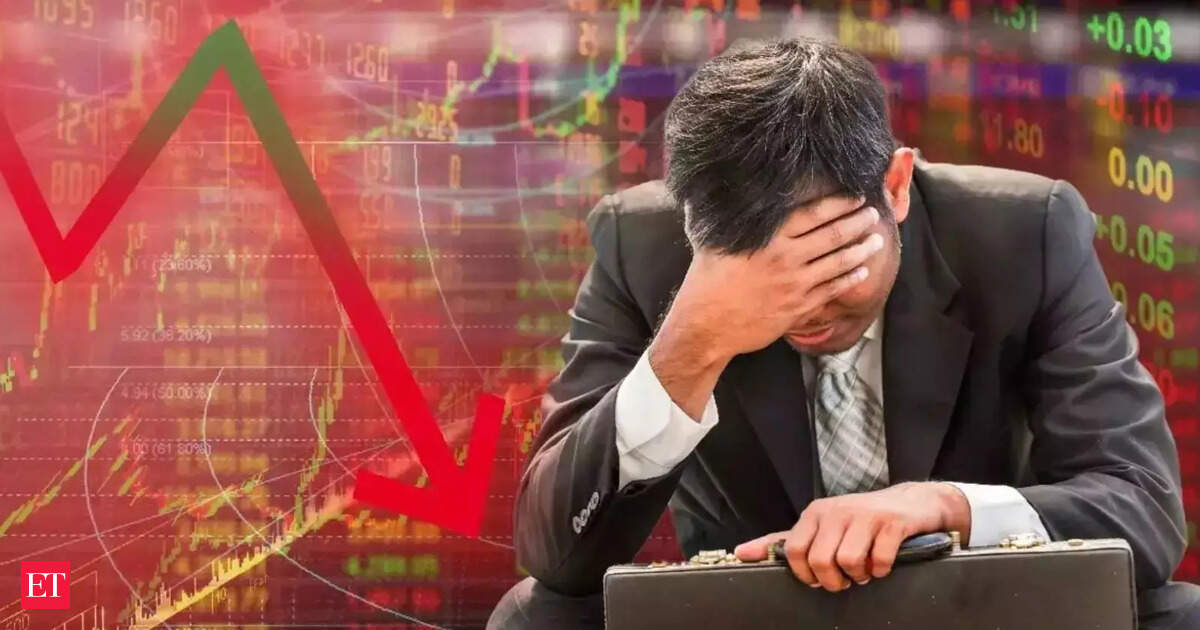
The US stock market crashed today as fresh tariff shockwaves rattled Wall Street. The Dow Jones Industrial Average fell 261.60 points (0.53%) to 49,364.37, the S&P 500 dropped 19.93 points (0.29%) to 6,889.58, and the Nasdaq Composite slid 99.85 points (0.44%) to 22,786.22. Investors reacted sharply after Donald Trump announced he would raise the global tariff rate to 15%, up from 10%, effective immediately.
The move came just days after the U.S. Supreme Court struck down a large part of Trump’s “reciprocal” tariff policy. Instead of easing trade tensions, the new 15% global tariff has injected fresh uncertainty into markets. Gold surged. Bitcoin tumbled. Oil prices rose. European officials warned that transatlantic trade deals could be at risk.
Markets now face a familiar problem: policy unpredictability. Investors had hoped the Supreme Court decision would calm global trade tensions. Instead, the White House escalated tariffs under Section 122 of the Trade Act of 1974, which allows temporary duties for up to 150 days without congressional approval.
Wall Street hates uncertainty. And right now, uncertainty is back in control.
Why is the US stock market down today?
U.S. stocks tumbled Monday after President Trump hiked global tariffs from 10% to 15%, wiping out Friday’s Supreme Court relief rally and sending gold surging past $5,200.
The Dow Jones Industrial Average dropped 261 points (0.53%) to 49,364. The S&P 500 lost 0.29%, settling at 6,889. The Nasdaq slid 0.44% to 22,786. Markets had briefly rallied Friday after the Supreme Court struck down Trump’s broader “reciprocal” tariff framework — but that optimism evaporated within 48 hours.
On Saturday, Trump posted on Truth Social announcing an immediate 15% worldwide tariff, up from the 10% baseline, threatening more levies in the coming months. Gold futures spiked 2.42% to $5,204 per ounce. Silver exploded 6.21%. Bitcoin dropped below $65,000 before recovering slightly — still down 2.65% on the day. Europe responded fast, warning U.S.-EU trade deals are now at risk.
Trump’s tariff hike is the direct cause.
He invoked Section 122 of the Trade Act of 1974. This law lets a president impose tariffs for 150 days without Congress. After that window, lawmakers must approve the duties.
That 150-day clock is now ticking.
Investors fear what comes next. Will tariffs stay at 15%? Will they go higher? Will Congress block them? Nobody knows. That uncertainty is what’s crushing stocks.
The Supreme Court struck down Trump’s broader “reciprocal” tariff structure last week.
Markets jumped. The Dow surged hundreds of points on Friday morning.
Then Trump responded Saturday. He announced the new 15% global rate, effectively replacing the struck-down tariffs with a new legal tool. The rally died.
“The push and pull with tariffs is likely to be a distracting theme for markets for the remainder of the year,” said Michael Landsberg, CIO at Landsberg Bennett Private Wealth Management.
He added: we may be back at the Supreme Court before year-end.
Why did gold prices surge while stocks fell?
When stocks fall and uncertainty rises, money moves.
Gold is the clearest signal. Spot gold crossed $5,204 — a 2.42% single-day gain. Silver jumped over 6%. These are classic inflation-hedge trades. Investors are pricing in the possibility that 15% tariffs on imported goods push consumer prices higher.
Bitcoin told a different story. It fell below $65,000 intraday. Crypto was supposed to be a hedge. Right now it’s trading like a risk asset, not a safe haven. It remains down over 2.6% as of Monday’s close.
Oil held steady. WTI crude edged up 0.77% to $66.99. Brent crude gained 0.71%.
Why is Bitcoin falling today?
Cryptocurrency markets also reacted negatively.
- Bitcoin: $65,771 (−2.65%)
- Ether: $1,901 (−2.59%)
- Nasdaq Crypto Index: −3.38%
Bitcoin briefly fell below $65,000 before stabilizing.
Crypto often behaves like a risk asset during macroeconomic shocks. When uncertainty rises and liquidity tightens, traders reduce exposure to volatile assets.
Unlike gold, Bitcoin did not act as a safe haven today.
What’s happening with oil and commodities?
Energy markets moved in the opposite direction.
- WTI Crude Oil: $66.99 (+0.77%)
- Brent Crude: $71.16 (+0.71%)
- Natural Gas: $3.07 (+0.69%)
Higher tariffs can slow global trade. However, short-term geopolitical and supply expectations often drive oil pricing more than tariff headlines.
Commodities markets are signaling mixed inflation signals — rising gold suggests fear, while rising oil reflects supply-demand dynamics.
How is Europe reacting to Trump’s tariff hike?
European officials expressed concern over the sudden tariff escalation.
The European Commission stated that current conditions are “not conducive” to fair and balanced transatlantic trade. Officials requested full clarity from Washington regarding next steps.
Trade agreements negotiated between the U.S. and Europe may now face renegotiation pressure. That uncertainty adds global macro risk.
Today’s Biggest Stock Movers
Not everything went down.
ACLX (Arcellx) surged 77.77% on strong clinical data. VNDA (Vanda Pharmaceuticals) gained 45.48%. NVDA (Nvidia) rose 1.59% to $192.83 — holding firm despite the broader selloff, a sign that AI-driven demand remains a floor for the stock.
On the losing side, NVO (Novo Nordisk) cratered 14.39% to $40.59. The GLP-1 drugmaker has been under pricing pressure. GOSS (Gossamer Bio) dropped 77.47%.
What Happens Next — 3 Key Things to Watch
1. The 150-day tariff clock. Trump’s Section 122 authority expires after 150 days. That brings us to roughly late July. Congress will then decide whether to extend or kill the tariffs. Expect market volatility to build as that deadline approaches.
2. EU trade negotiations. If Europe and the U.S. reach a deal, stocks could rally hard. If talks break down, expect another wave of selling — especially in multinationals.
3. Inflation data. Tariffs raise import prices. That feeds into CPI. If the next inflation report shows an uptick, the Fed has less room to cut rates. Higher-for-longer rates are bad for equities.



![i’m-nervous,-too!-[part-2]](https://10xwealthreport.com/wp-content/uploads/2026/03/177042-im-nervous-too-part-2-1568x784.jpg)