Wall Street says the S&P 500 will return about 12% in 2026, easily outpacing the 30-year average of 8.1%
About 5,500 companies were listed across U.S. stock exchanges last year, according to the Securities Industry and Financial Markets Association (SIFMA). Many of those companies are included in stock indexes, which measure various aspects of the domestic market.
While hundreds of indexes exist, the S&P 500 (^GSPC +0.81%) is synonymous with the U.S. stock market due to its scope. Here’s how the S&P 500 performed during the last 30 years and what Wall Street expects in the remaining months of 2026.

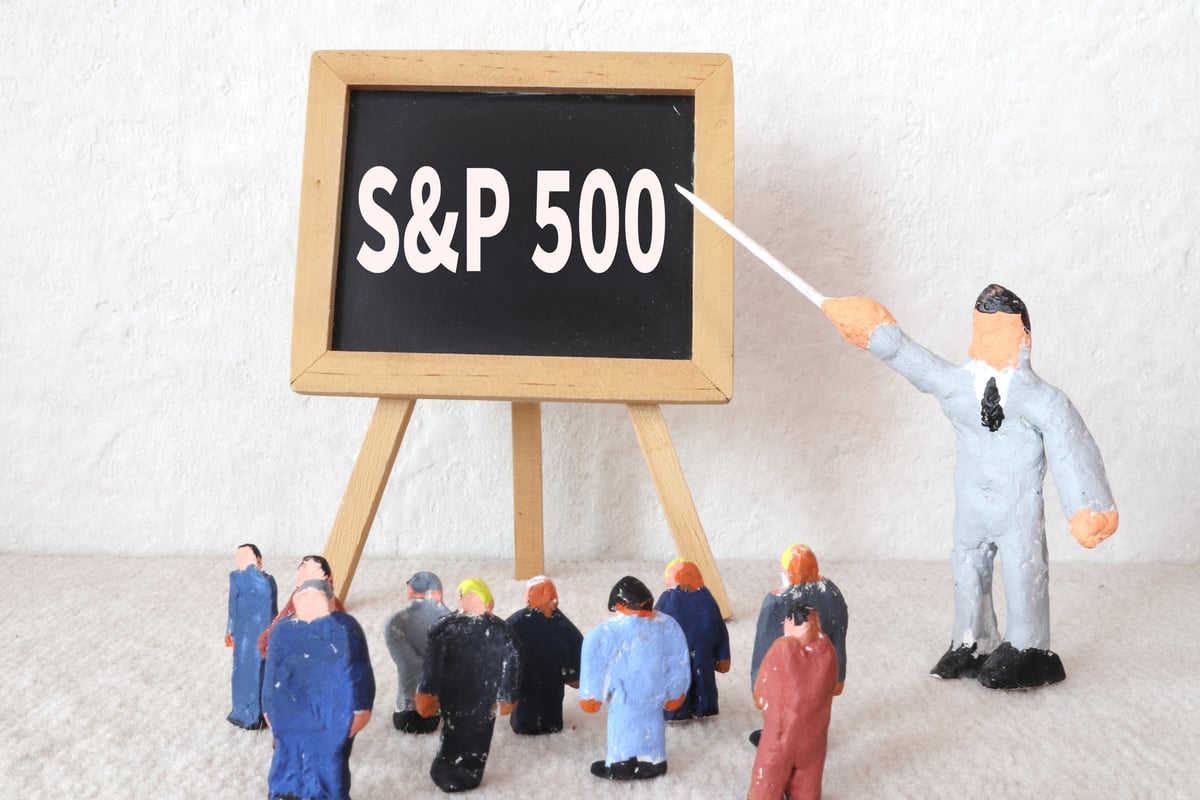
Image source: Getty Images.
The S&P 500 returned 8.1% annually over the last 30 years (excluding dividends)
The S&P 500 was created in March 1957. The index is generally considered the best benchmark for the U.S. stock market because it tracks 500 large companies that account for about 80% of domestic equities by market value.
Inclusion is ultimately at the discretion of a selection committee, but companies cannot be considered unless they meet certain eligibility criteria, such as generally accepted accounting principles (GAAP) profitability, sufficient liquidity, and a minimum market value of $22.7 billion. The top 10 holdings (as of February 2026) are listed by weight:
- Nvidia: 7.9%
- Apple: 6.8%
- Microsoft: 4.9%
- Alphabet: 5.5%
- Amazon: 3.4%
- Broadcom: 2.6%
- Meta Platforms: 2.3%
- Tesla: 1.9%
- Berkshire Hathaway: 1.5%
- Eli Lilly: 1.4%
Excluding dividends, the S&P 500 returned 260% (13.6% annually) over the last decade, 439% (8.8% annually) over the last two decades, and 953% (8.1% annually) over the last three decades.
Wall Street says the S&P 500 will advance 10% in the remaining months of 2026 (bringing the full-year return to nearly 12%)
S&P 500 companies in aggregate reported an acceleration in revenue and earnings growth in 2025. Wall Street anticipates another acceleration in 2026, driven by tax cuts (courtesy of President Trump’s “big, beautiful bill”), artificial intelligence (AI) spending, and interest rate cuts from the Federal Reserve.
In turn, many Wall Street analysts anticipate a strong performance from the S&P 500 in the remaining months of 2026. The table shows where various research organizations and investment banks think the index will finish the year. It also shows the implied upside from the index’s current level of 6,940.
|
Wall Street Firm |
S&P 500 Year-End Target |
Upside |
|---|---|---|
|
Oppenheimer |
8,100 |
17% |
|
Deutsche Bank |
8,000 |
15% |
|
Morgan Stanley |
7,800 |
12% |
|
Seaport Research |
7,800 |
12% |
|
Evercore |
7,750 |
12% |
|
RBC Capital |
7,750 |
12% |
|
Citigroup |
7,700 |
11% |
|
Fundstrat |
7,700 |
11% |
|
UBS |
7,700 |
11% |
|
Yardeni Research |
7,700 |
11% |
|
Goldman Sachs |
7,600 |
10% |
|
Canaccord Genuity |
7,500 |
8% |
|
HSBC |
7,500 |
8% |
|
Jefferies |
7,500 |
8% |
|
JPMorgan Chase |
7,500 |
8% |
|
Wells Fargo |
7,500 |
8% |
|
Barclays |
7,400 |
7% |
|
CFRA Research |
7,400 |
7% |
|
Societe Generale |
7,300 |
5% |
|
Bank of America |
7,100 |
2% |
|
Median |
7,650 |
10% |
Data source: Reuters, Yahoo Finance. The table shows year-end forecasts for the S&P 500 in 2026. Percentages have been rounded to the nearest whole number.
The table suggests the S&P 500 is headed higher in the remaining months of the year. The median forecast says the index will advance about 10% to 7,650 by Dec. 31, 2026.
As a caveat, Wall Street has a mixed track record when setting year-end targets for the S&P 500. The median estimate missed by 5% in 2025 and 25% in 2024. So, investors should never take year-end forecasts too seriously.
Here’s the big picture: If the S&P 500 hits 7,650 by Dec. 31, that implies nearly 12% upside from where the index started the year (6,845). That would crush the 20-year average and 30-year average, though it would fall short of the 10-year average.
Citigroup is an advertising partner of Motley Fool Money. HSBC Holdings is an advertising partner of Motley Fool Money. JPMorgan Chase is an advertising partner of Motley Fool Money. Bank of America is an advertising partner of Motley Fool Money. Wells Fargo is an advertising partner of Motley Fool Money. Trevor Jennewine has positions in Amazon, Nvidia, and Tesla. The Motley Fool has positions in and recommends Alphabet, Amazon, Apple, Berkshire Hathaway, Evercore, Goldman Sachs Group, JPMorgan Chase, Jefferies Financial Group, Meta Platforms, Microsoft, Nvidia, and Tesla. The Motley Fool recommends Barclays Plc, Broadcom, and HSBC Holdings. The Motley Fool has a disclosure policy.
![i’m-nervous,-too!-[part-2]](https://10xwealthreport.com/wp-content/uploads/2026/03/177042-im-nervous-too-part-2-1568x784.jpg)