This is CNBC’s Morning Squawk newsletter. Subscribe here to receive future editions in your inbox.
Happy Tuesday. In a partnership you might not have seen coming, Warren Buffett is teaming up with the NBA’s Stephen Curry to revive his iconic charity lunch.
Stock futures are rising this morning. The S&P 500 ended yesterday’s session within striking distance of correction territory.
Here are five key things investors need to know to start the trading day:
1. In like a lion
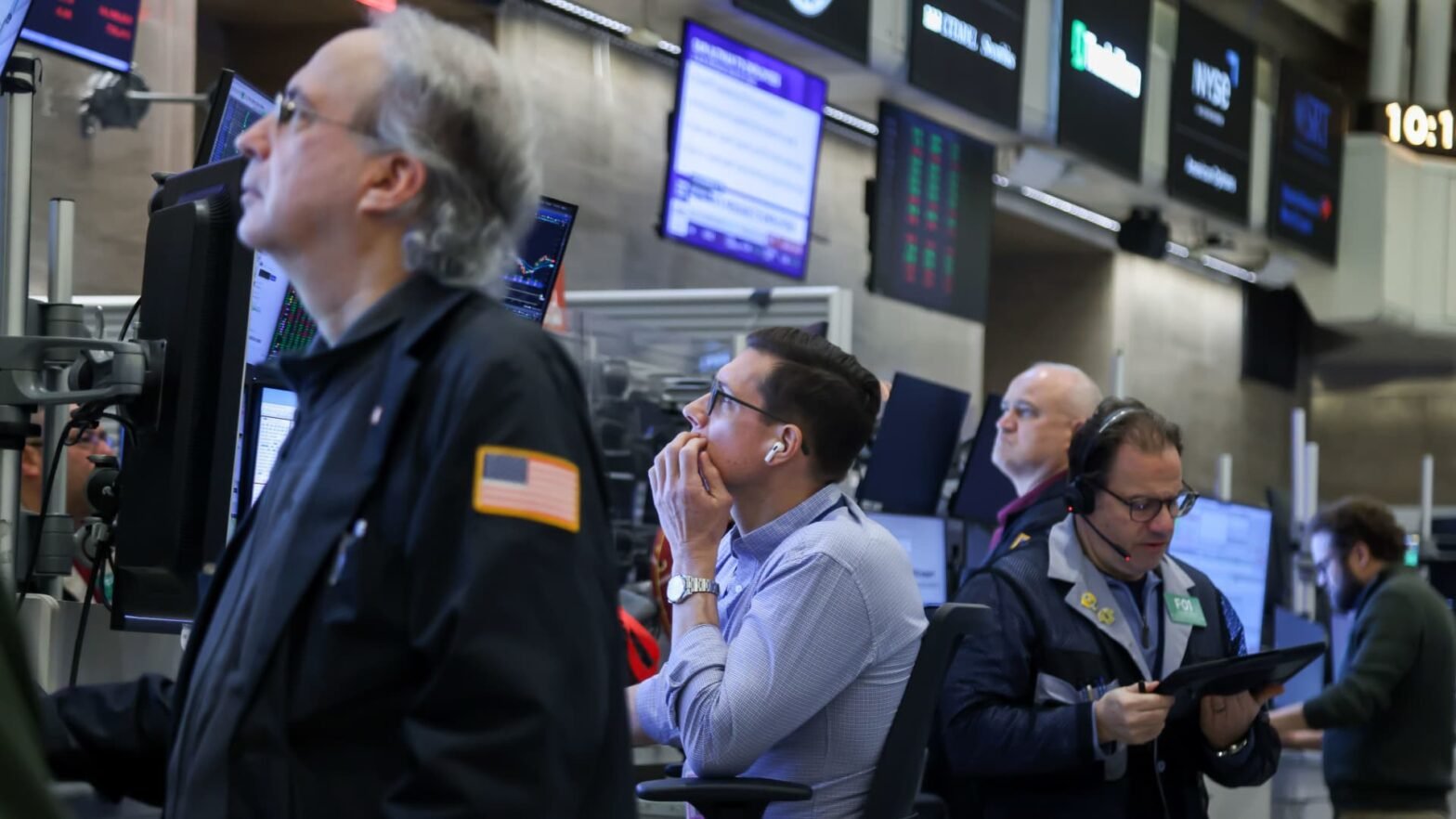
Traders work on the floor of the American Stock Exchange (AMEX) at the New York Stock Exchange (NYSE) in New York, US, on Monday, Feb. 9, 2026.
Michael Nagle | Bloomberg | Getty Images
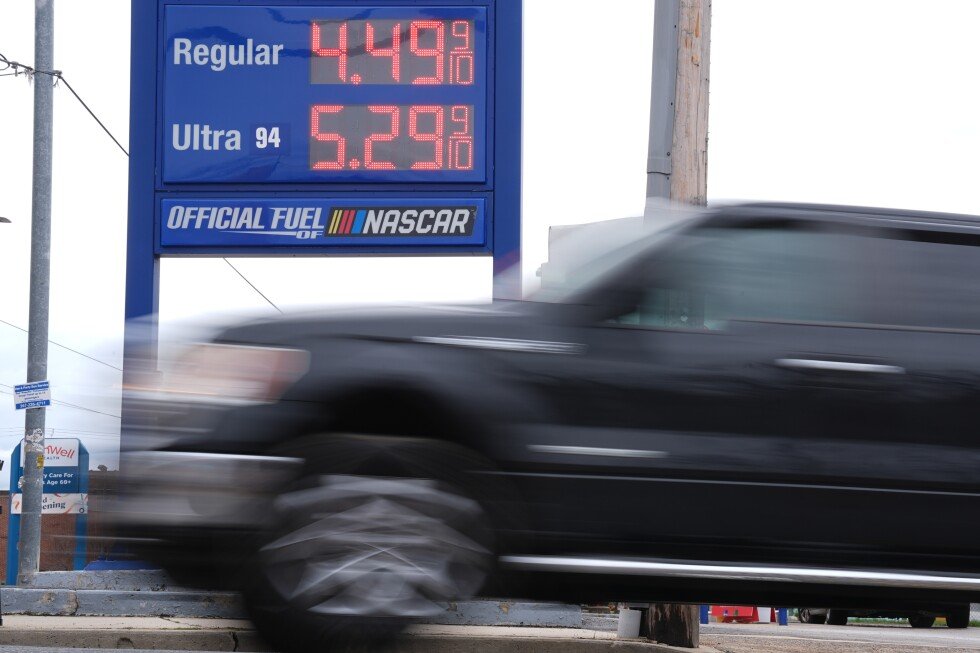
The average price of gas in the U.S. today hit $4 per gallon for the first time since 2022. It’s a not-so-welcome development as Wall Street closes out a rough month that has seen stocks battered by the surge in crude oil prices amid the U.S.-Iran war.
Here’s how stocks and assets have fared in March, with one trading day left in the month:
- All three of the major indexes are on track for their worst monthly and quarterly losses since 2022. The Dow Jones Industrial Average is also on track to end a 10-month winning streak.
- The CBOE Volatility Index, known as Wall Street’s fear gauge, has gained more than 50% in March. It has more than doubled in 2026.
- U.S. West Texas Intermediate‘s May futures are on track for their largest monthly advance in nearly 6 years. WTI yesterday settled above the $100 mark for the first time since 2022.
- May futures for Brent, the international benchmark, have meanwhile soared about 55% this month. If those gains hold today, it would be the benchmark’s biggest monthly gain on record.
- On the other hand, gold and silver have tumbled more than 13% and 24%, respectively, as investors rushed out of the precious metals following their monster rallies.
- Stock futures are higher this morning after a report that President Donald Trump told aides he is willing to end the war even if the Strait of Hormuz remains largely blocked.
- Follow live market updates here.
2. Off the table
Jerome Powell, chairman of the US Federal Reserve, during a moderated conversation at Harvard University in Cambridge, Massachusetts, US, on Monday, March 30, 2026.
Mel Musto | Bloomberg | Getty Images
Federal Reserve Chair Jerome Powell yesterday offered some reassurance to investors worried that oil’s spike could lead to interest rate hikes. Speaking at Harvard University, Powell said he saw the inflation outlook as stable, meaning the central bank would not need to increase borrowing costs due to oil prices.
The Fed chief also said he believes the current rate target is “a good place” for the Fed as it waits to see how the war and tariffs impact prices. Rate hike odds among traders fell sharply after Powell’s appearance.
Meanwhile, Fed Governor Stephen Miran told CNBC yesterday that monetary policymakers can ignore the energy price increase and bring rates down. Miran said he has not seen signs of a wage-price spiral or rising inflation expectations that would lead him to worry about crude costs.
3. Open-door policy
Opendoor is acquiring parts of Doma, a property technology company that uses artificial intelligence to make real estate closing more affordable. As CNBC’s Diana Olick reports, Opendoor will be taking over Doma’s closing and escrow businesses.
The deal — an effort to lower mortgage refinance costs — comes as the real estate industry sees a drop in home loan refinancing applications. The Iran war has caused a sharp increase in mortgage rates.
Get Morning Squawk directly in your inbox
4. Like and subscribe
People walk past a sign for Novo Nordisk’s annual general meeting at the entrance to the venue in Copenhagen, Denmark, March 26, 2026.
Tom Little | Reuters
Novo Nordisk is launching multi-month Wegovy subscriptions as it hopes to catch up with Eli Lilly in the race to win GLP-1 users.
The drugmaker said this morning that eligible patients can select three, six or 12-month subscriptions for the injection or for doses of the new Wegovy pill. As CNBC’s Annika Kim Constantino reports, the longer-term packages have lower monthly price tags, which could lead to hundreds of dollars in savings for users.
The offering’s launch comes as Novo readies for a new oral GLP-1 from its rival Eli Lilly, expected later this year. Eli Lilly currently leads the branded GLP-1 market in the U.S. with an estimated 60% share.
5. Pocketbook blues
JebBlue employees help to check passengers in at Ronald Reagan Washington National Airport on Nov. 11, 2025 in Arlington, Virginia.
Alex Wong | Getty Images
JetBlue is hiking checked bag fees by at least $4 as it contends with higher fuel costs. The New York-based carrier said price increases were “never ideal” and it only makes such changes “when necessary.”
It’s not the only example of businesses passing down costs to consumers. In China, manufacturers of everything from pickleball paddles to scarves told CNBC’s Eunice Yoon that Americans should prepare to pay more. Some suppliers are warning that the U.S. could also start seeing product shortages if the Strait of Hormuz remains closed for a prolonged period.
The Daily Dividend
CNBC’s Matt Peterson recently spoke to Tyler Goodspeed, who led the White House Council of Economic Advisers in Trump’s first administration. Read the full Q&A here.
We have been getting better at absorbing the kinds of shocks that historically would have generated recession.
Tyler Goodspeed
former acting chair of the White House Council of Economic Advisers
— CNBC’s Sean Conlon, Spencer Kimball, Lisa Han, Jeff Cox, Diana Olick, Annika Kim Constantino, Leslie Josephs, Eunice Yoon and Matt Peterson contributed to this report. Josephine Rozzelle edited this edition.


![i’m-nervous,-too!-[part-2]](https://10xwealthreport.com/wp-content/uploads/2026/03/177042-im-nervous-too-part-2-1568x784.jpg)