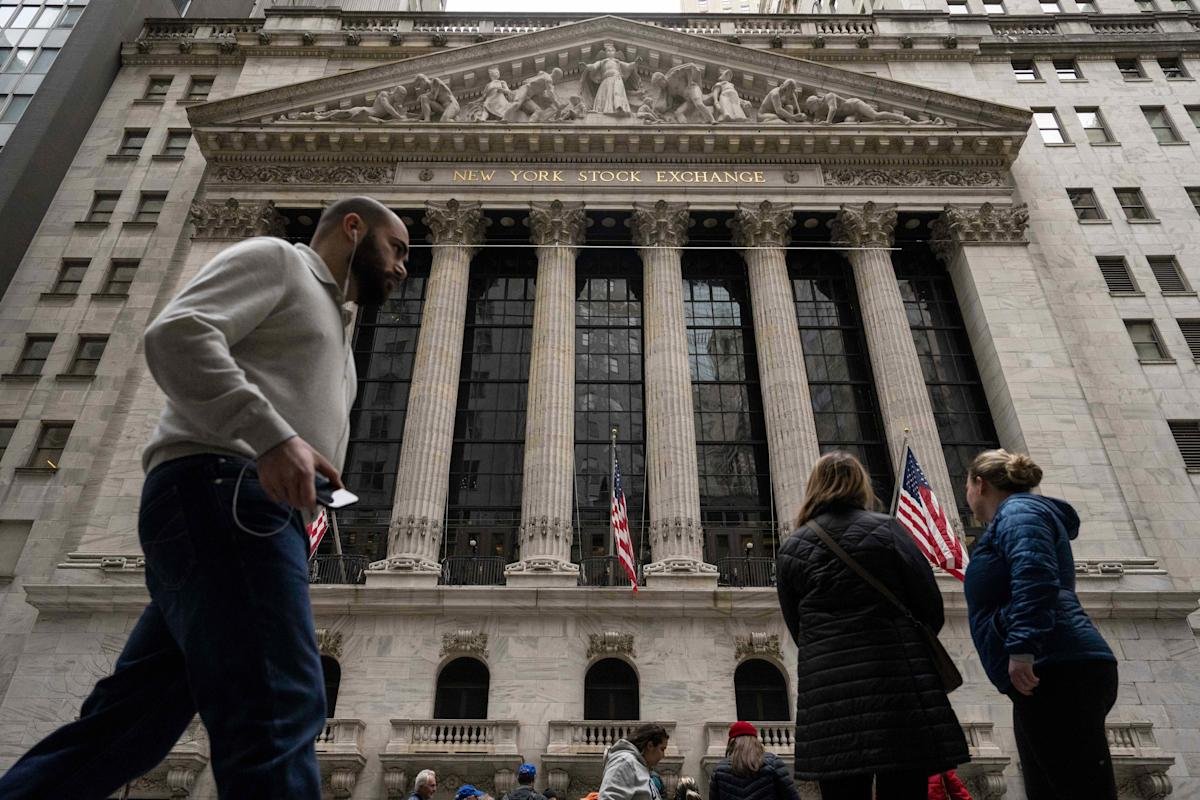
NEW YORK (AP) — When stock markets are as manic as they’ve been recently, it’s natural to want to do something to protect your retirement savings. Historically, though, staying calm has usually been best.
The U.S. stock market has a track record of recovering from every steep drop it’s taken. Whether it’s a global financial crisis, a trade war or a military war, the S&P 500 has so far always recouped its losses to push toward more records. Of course, that can take years, but anyone who moved their 401(k) investments out of stocks risked missing out on the recovery and further gains.
Will that happen again? No one can say for sure, and some things are different this time around. But many professional investors and strategists are sticking with the advice they usually give: As long as it’s money you don’t need soon, which should never be in stocks in the first place, try to be patient and ride out the stock market’s swings, tough as it is.
They gave the same counsel after President Donald Trump unveiled his global tariffs on “Liberation Day” last year, after inflation skyrocketed in 2021 and after COVID crashed the global economy in 2020. Stomaching these kinds of shocks is the price of admission to get the bigger returns that stocks can offer over the long term.
The war in Iran is slowing the global flow of oil and causing extreme swings in markets.
The fighting has halted most of the traffic in the Strait of Hormuz, a narrow waterway off Iran’s coast where a fifth of the world’s oil sails on a typical day. That has sent oil prices as high as $119 per barrel occasionally, up from roughly $70 before the fighting started.
If the war continues until the end of June, strategists at Macquarie say the price of oil could reach $200 per barrel. The record is just above $147, set during the summer of 2008.
If oil prices stay high a long time, the effect would carry far beyond gasoline pumps. It could also push businesses that use any trucks, ships or planes to move their products to raise their own prices. It would also make electricity from gas-fired power plants more expensive.
The S&P 500 just fell to a fifth straight losing week, its longest such streak in nearly four years. It’s roughly back to where it was in August, and it’s 8.7% below its record set early this year.
The Dow Jones Industrial Average and the Nasdaq composite, meanwhile, have both already dropped more than 10% from their own records. That’s a steep-enough fall that professional investors have a name for it: a “correction.”

![i’m-nervous,-too!-[part-2]](https://10xwealthreport.com/wp-content/uploads/2026/03/177042-im-nervous-too-part-2-1568x784.jpg)