Nvidia, the world’s most valuable company and the bellwether of the ongoing artificial intelligence boom, reported earnings that once again beat expectations.

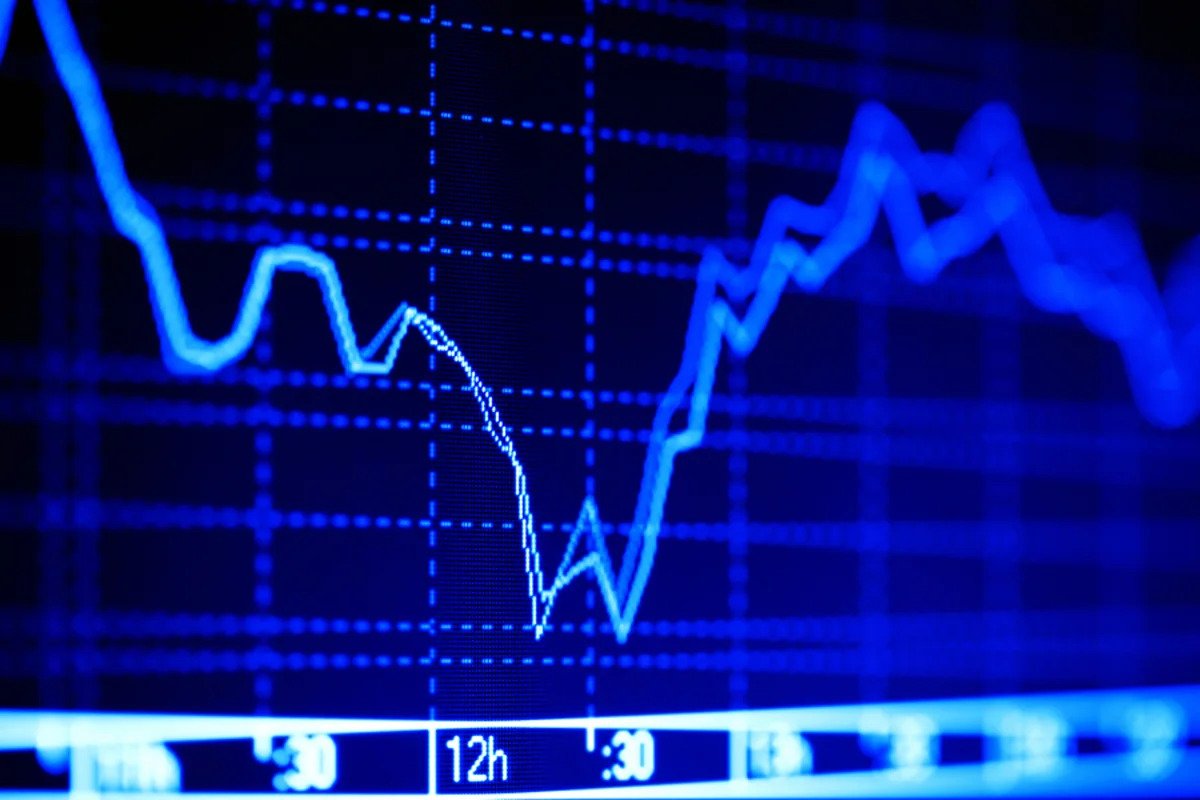
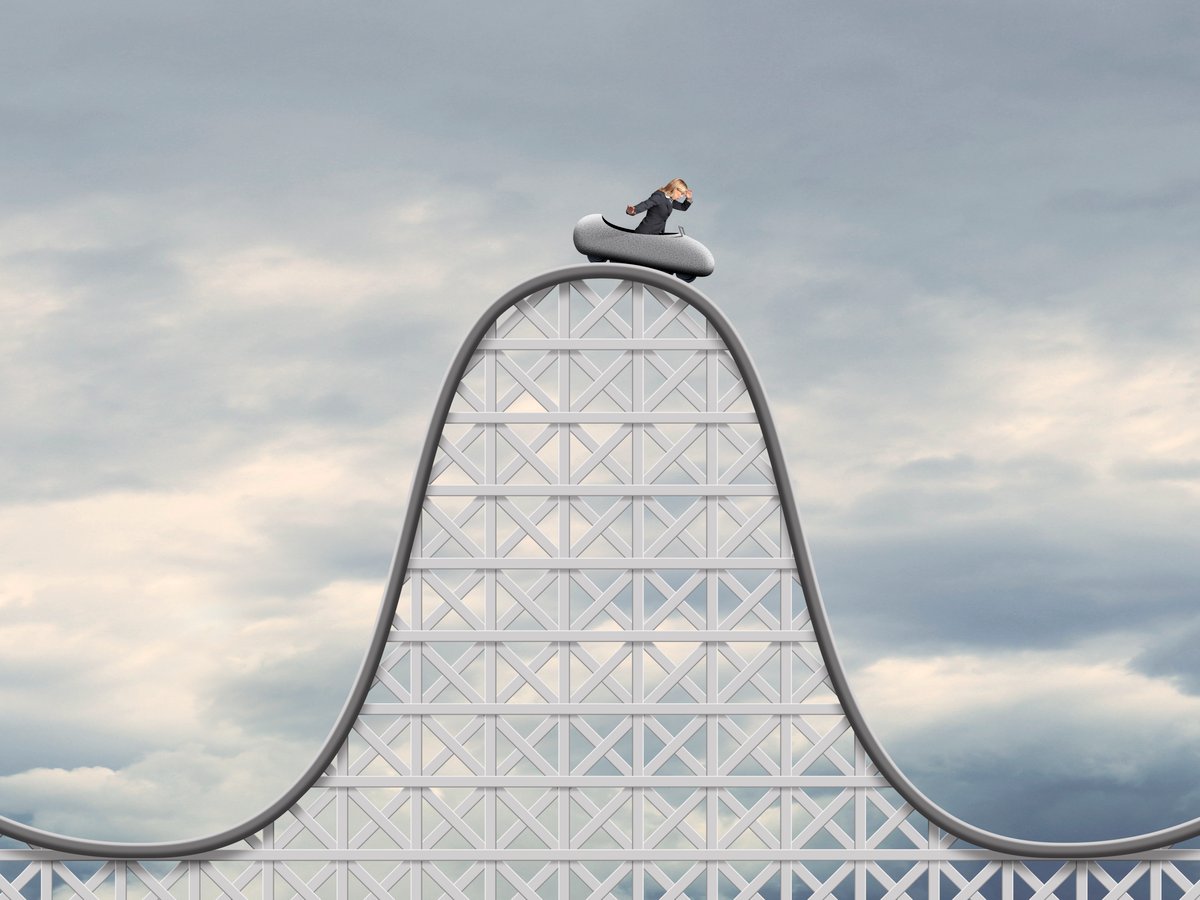
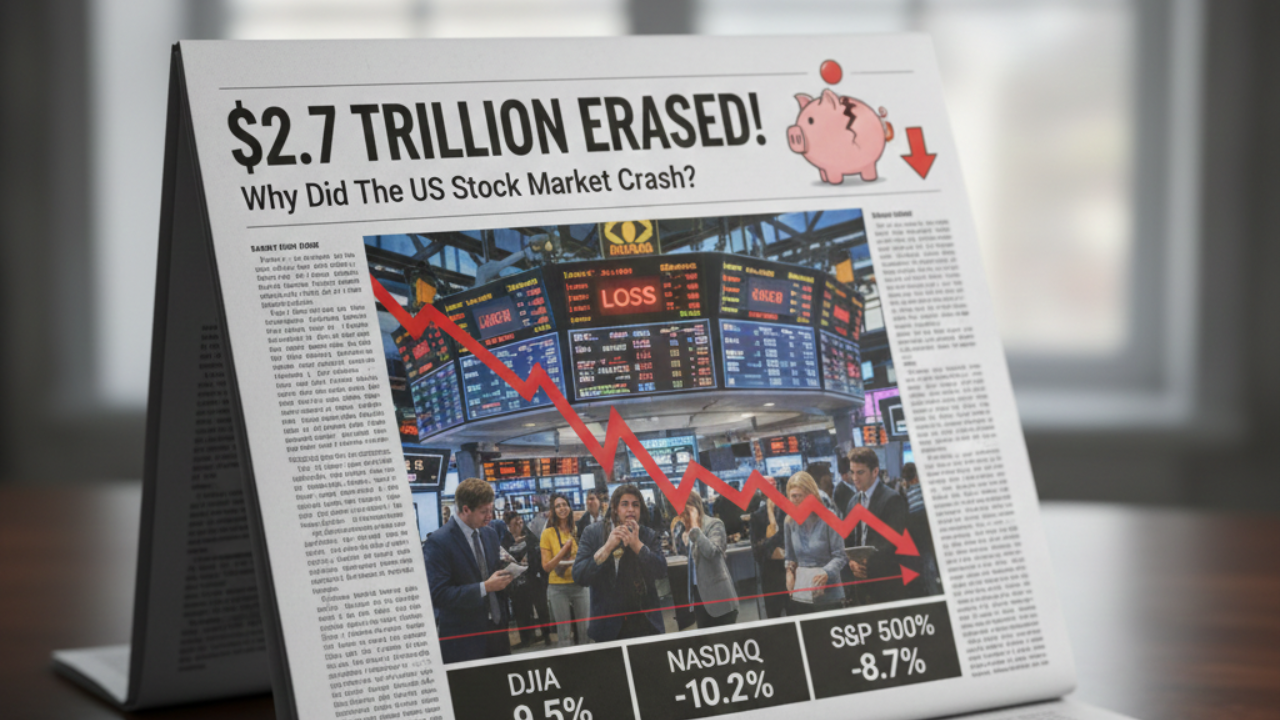
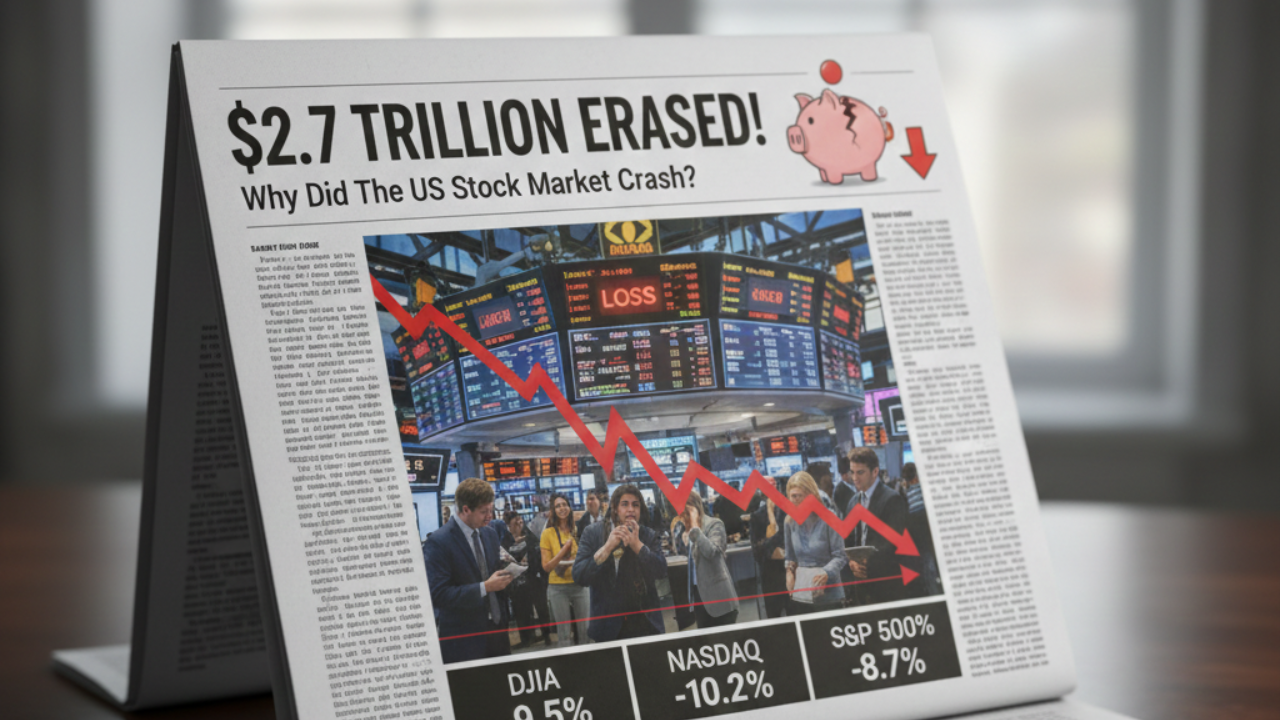
Wall Street witnessed one of its most dramatic sessions of the year as US stocks collapsed on Thursday in a violent swing that erased nearly $2.7 trillion in value within hours. What began as a strong rally—fuelled by optimism around Nvidia’s blockbuster earnings, quickly transformed into a deep market rout, leaving investors stunned and triggering the highest reading in Wall Street’s fear gauge since April, said a report by the Financial Express.
The day began on an upbeat note. Nvidia, the world’s most valuable company and the bellwether of the ongoing artificial intelligence boom, reported earnings that once again beat expectations. Its shares jumped as much as 5% in early trade, lifting the broader technology sector and nudging the Nasdaq higher. But the optimism was short-lived. By mid-session, Nvidia’s surge faded sharply, and the stock not only gave up its gains but closed 3.2% lower, dragging semiconductor shares into a steep decline. An index tracking chipmakers plunged 4.8%, signalling an abrupt reversal of sentiment in one of the market’s most influential sectors.
The volatility was intense. Both the Nasdaq and the Dow saw intraday swings of more than 1,000 points. The Nasdaq’s 4.9-percentage-point gap between its high and low was its most extreme movement since April 9, during the period of tariff-related market chaos earlier this year. The index ultimately closed at its lowest level since September 11, while the S&P 500 ended at its weakest since September 10.
Beneath the market gyrations lay a growing unease about the state of the US labor market. Fresh economic data painted a confusing picture: unemployment rose in September even as employers added more jobs than economists had forecast. This contradictory signal intensified uncertainty over the Federal Reserve’s next steps. Investors have been watching closely for signs of whether the Fed will cut interest rates in December, but the new data—arriving just weeks after the US government reopened from a record 43-day shutdown—complicated the outlook. With the shutdown delaying major economic reports, the market is now bracing for a flood of backlogged data that could reshape expectations dramatically.
As volatility intensified, the Cboe Volatility Index (VIX) surged to its highest level since April 24, signalling a sharp rise in fear among institutional investors. Large funds accelerated defensive positioning, dumping high-valuation technology stocks that had already been under scrutiny due to concerns about runaway AI-related spending and stretched market valuations. Nvidia’s reversal amplified those doubts, unleashing a chain reaction that hit everything from cloud computing to semiconductor manufacturers.
The Federal Reserve added to the nervousness. Fed Governor Lisa Cook warned that valuations across multiple markets—including equities, corporate bonds, housing, and leveraged loans—were historically elevated and could be vulnerable to a significant pullback. Her comments reinforced the belief that the market may have run too far, too fast, especially in sectors tied to artificial intelligence and high-growth technology.
By the end of the day, nearly every major sector was deep in the red, with technology stocks leading the slide. The only area of strength was consumer staples, which rose 1.1% as investors sought safety in defensive, non-cyclical companies. Walmart was one of the rare bright spots, jumping 6.5% after the retailer raised its full-year forecast for the second time and announced plans to shift its stock listing from the NYSE to the Nasdaq in December.
The broader market breadth was overwhelmingly negative. On the NYSE, declining stocks outnumbered advancing ones by more than three to one. On the Nasdaq, over 3,500 stocks fell compared to 1,168 that rose. Trading volumes surged to nearly 21.5 billion shares, well above the recent 20-day average, underscoring the intensity of the selloff.
Thursday’s chaotic session reflected a perfect storm of factors: fading confidence in megacap technology stocks, murky labor data clouding the Fed’s path forward, warnings from policymakers about inflated asset prices, and the re-emergence of delayed economic indicators following the prolonged government shutdown. Together, they transformed what seemed like a bullish morning into one of the steepest market reversals of the year, wiping out trillions in value and pushing Wall Street deeper into uncertainty as the year approaches its close.
Get Latest News live on Times Now along with Breaking News and Top Headlines from Business, Companies and around the world.