If you have $1,000 that you can put into an investment account, you have plenty of options — index funds, thematic exchange-traded funds, or single stocks can be solid choices. But as artificial intelligence (AI) and the companies capitalizing on the technology have been one of the biggest generators of wealth in the market, I’m willing to keep my money in growth stocks playing an outsize role in the AI space.
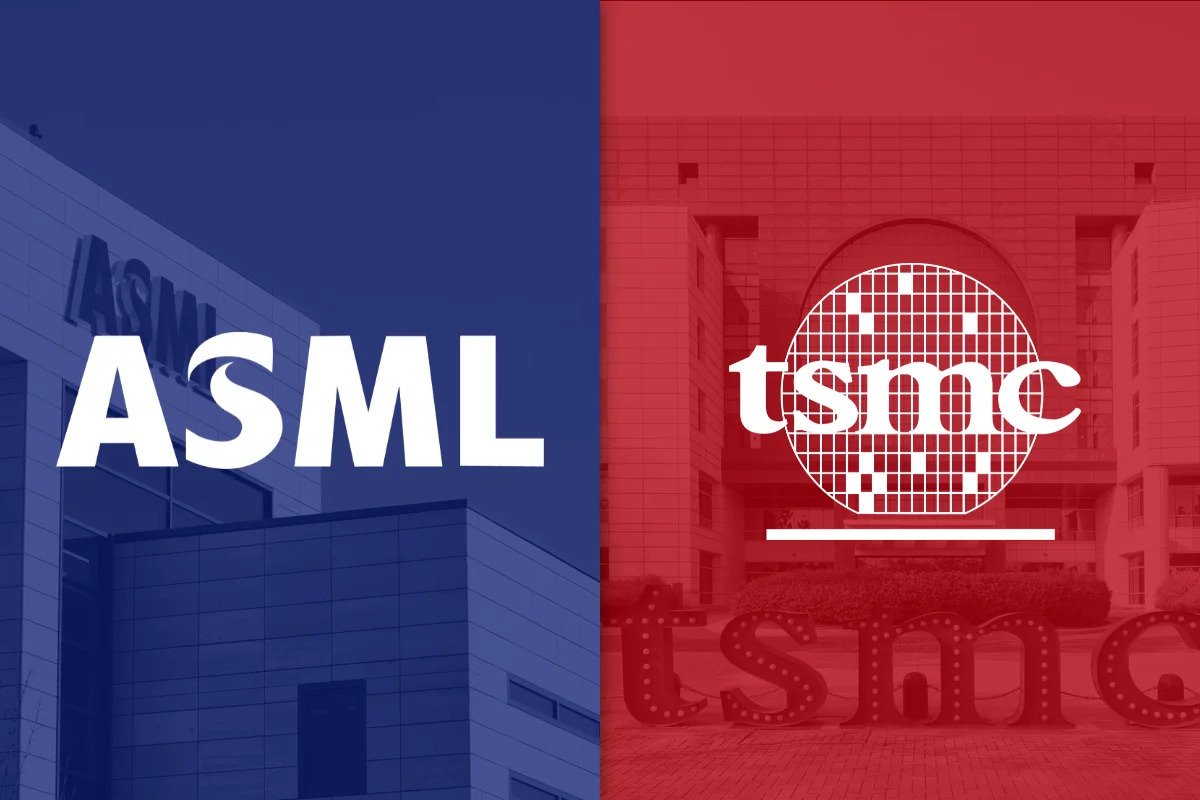
Specifically, I’m turning to two companies that sit at the top of the food chain: ASML (NASDAQ: ASML) and Taiwan Semiconductor Manufacturing (NYSE: TSM).
Missed AI’s “Act 1”? Act 2 Could Be 14x Bigger. Most investors think they missed the AI boat because they didn’t buy Nvidia in 2005. But according to our analysts, we’re only at the end of “Act 1″—the R&D phase. “Act 2” is the global rollout. Continue »
Neither of these companies designs advanced AI processors that are critical to training and running AI programs. And neither of them is building data centers to provide gigawatts of computing power for AI.
But they’re important in their own ways — and they have incredible advantages that make them indispensable for the growth and operation of AI.
1. ASML
ASML doesn’t design AI processors or manufacture semiconductors. Instead, the Dutch company builds the incredibly sophisticated machines that semiconductor manufacturers need to produce their most advanced chips.
Its biggest competitive advantage is extreme ultraviolet (EUV) lithography technology, which uses light to print microscopic circuit patterns onto silicon wafers.
And here’s the important part: ASML is the world’s only commercial supplier of EUV lithography systems.
That gives the company an extraordinary position in the semiconductor supply chain. Whether Nvidia, AMD, or another chip designer wins market share, manufacturers still need ASML’s equipment to produce cutting-edge processors.
The company’s latest financial results demonstrate how valuable that position has become. ASML reported record third-quarter revenue of 11.7 billion euros ($13.07 billion), with net income reaching 5 billion euros ($5.58 billion). Its gross margin climbed to 57.5%, up from 54% in the previous quarter.
But I found management’s comments about future demand even more interesting. CEO Christophe Fouquet said customers are already expressing interest in ordering equipment for 2029 and 2030. In fact, ASML now expects its planned production capacity for 2027 and 2028 to fall short of customer demand.
That’s remarkable visibility for a business that manufactures extremely expensive industrial equipment.