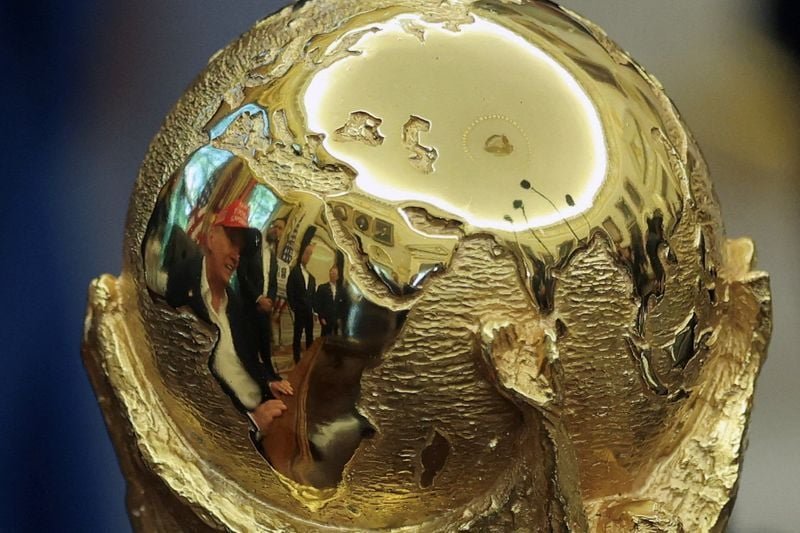
The 2026 World Cup is almost on us, and it is set to reach a new scale. While perhaps not yet the greatest, it is already the largest in terms of format. The tournament will bring together 48 teams instead of 32, featuring 104 matches instead of 64, held across three countries: the United States, Mexico and Canada.
The economic stakes will be significant. The World Economic Forum estimates that the event could generate over $40bn for global GDP. For financial markets, the World Cup is therefore more than just a month of football. It is becoming a gigantic commercial arena, where several sectors hope to capture a share of global attention.
Sportswear Giants on the Front Line
Major sporting equipment manufacturers will be the most exposed. Nike, Adidas, and Puma will kit out 37 of the 48 national teams, including most of the squads capable of a good run in the competition.
For Nike, RBC estimates that the 2026 World Cup could generate up to $1.3bn in additional revenue, on an annual turnover of nearly $50bn. The group has already said that volume orders for “Nike Football” products were nearly 40% higher than those observed before the 2022 World Cup.
For Adidas, the impact could be more visible in proportion to revenue. Reuters reports that the group secured approximately €250m in World Cup-related orders in Q1, with a similar amount expected in Q2. Puma, meanwhile, sees this as welcome support after a difficult start to the year and declining sales. The brand is sponsoring 11 national teams, the most in 20 years, with strong exposure to African teams and Portugal as its flagship.
Beyond immediate sales, the goal is to further convert the North American market to football. For Nike, which outfits the US team, the challenge is as much cultural as it is commercial.
Sports Betting Faces a Full-Scale Test
The World Cup is also expected to be a key moment for sports betting. Barron”s estimates that the competition could generate approximately $50bn in wagers. Logically, this money does not translate directly into revenue.
To provide a sense of scale, the 2022 World Cup generated €597m in bets in France, resulting in €70m in gross gaming revenue, or 11.7% of wagers.
For FDJ United, this will be the first major test since the integration of Kindred, the parent company of Unibet. The group will be able to measure the strength of its European ambitions during a major global event, following a sluggish start to the year and falling sales.
However, the big winners are expected to be American. The tournament will largely take place in the United States, a market where sports betting is now deeply established. Match schedules will also be much more favorable for North American bettors than they were in previous editions.
Exposed stocks include Flutter, DraftKings, Entain, Penn Entertainment and FDJ United. But this World Cup could also mark a new stage in the war between traditional players and prediction platforms like Polymarket or Kalshi. This competition arrives at a delicate time, amid slowing growth, increased tax pressure, and the battle for user retention.
Beverages, Snacks and Major Brand Moments
The World Cup will also be a massive event for discretionary consumption. Ab InBev, Heineken, Coca-Cola, PepsiCo and Lay”s are among the sponsors of this edition. In other words, a good share of what is found on a family table on a match night.
For major brewers, Jefferies estimates a possible effect of 0.5% on annual volumes for Ab Inbev and 0.27% for Heineken in 2026. This is a non-negligible contribution for a product in structural decline in Western countries.
That said, the financial impact of these five weeks of competition is not the most important factor for these brands. The marketing challenge is primarily to associate their brand with key, shared and emotionally charged moments to build consumer loyalty.
A World Cup can support a category, cause local volume spikes, and strengthen consumer loyalty. But it is not enough on its own to change the valuation of a global giant.
Hospitality as Direct Exposure
The most direct stockmarket exposure to the tournament may lie with TKO Group, via its premium hospitality subsidiary On Location. The company is the official hospitality provider for the 2026 World Cup. It sells VIP packages, suites, and premium experiences around the matches.
According to TKO Group, over 500,000 packages have already been allocated. The program has already generated more hospitality revenue than any previous global event. As of March 31, 2026, revenues had more than doubled those of any previous World Cup hospitality program.
Airbnb will also be one of the direct beneficiaries. The group estimates that over 380,000 travelers will use its platform during the World Cup, with an estimated economic impact of $3.6bn in host cities. According to Airbnb, the 2026 World Cup is expected to be the largest hosting event in its history. Approximately one in six guests is expected to be a new user of the platform.
The 2026 World Cup will therefore fill stadiums, hotels, bars, booking platforms and betting apps. It will also fill the coffers of several companies exposed to the event. However, it will not automatically drive up stock prices. For most of the groups involved, the World Cup will remain, above all, a formidable open-air marketing campaign.