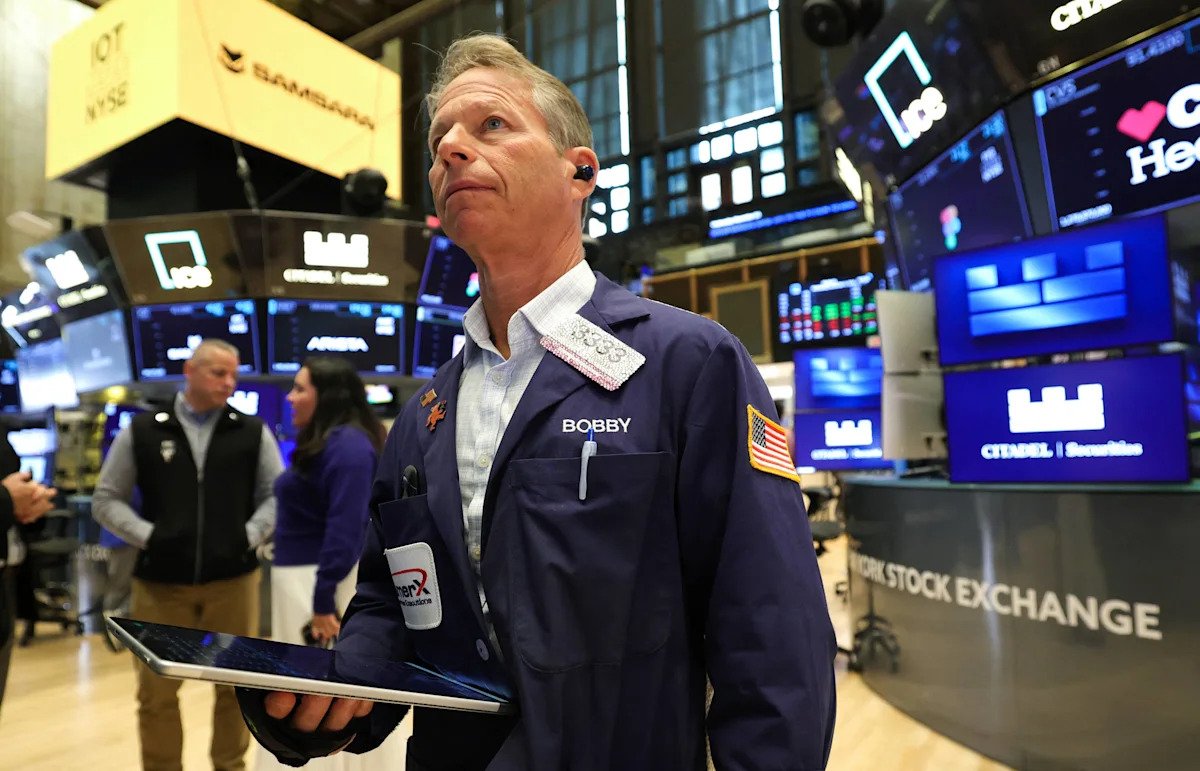
You’re watching the numbers on your computer screen, and you realize the Nasdaq Composite Index has just fallen 1,420 points, and the Dow Jones Industrial Average has given up more than 1,800 points.
The Nasdaq closed at 24,315 on Nov. 5 and is now down 12.3% from its 52-week high of 27,723. That means one thing: a market correction.
-
Read more: Stocks tumble on post-election reset
And now you’re thinking, “Now what do I do?”
First, take a deep breath. Markets go up and down, often violently.
Remember April 2025 when President Donald Trump imposed huge tariffs on everything from copper to French wine to Canadian lumber and auto parts?
The Standard & Poor’s 500 Index fell more than 10% in two days, leaving it down nearly 14% on the year.
But the index rebounded, ending 2025 up 17.3% for the year.
In other words, time often heals. That was the advice my mother received in 1987 when the stock market crashed and left her with potentially a big loss in IBM. She called her broker, who told her not to sell. The market would ultimately recover.
When I called her a few days later, she asked what I thought. “Your broker is a wise man,” I said.
IBM went on. It left its dividend alone. Within a year, mom had made back all of her losses and a few years later made a tidy profit when she finally sold.
Which brings us to:
Lesson one in an ugly selloff: Don’t panic
Market selloffs happen. All the time. A 10% correction (from a recent high) occurs about once every 1.2 to 1.5 years, according to Charles Schwab. A bear market is a 20% selloff. The last one came in 2020 during the COVID-19 pandemic. The ugliest in my lifetime was the 2007-2009 financial crisis.
We are in the midst of what may be a correction for many stocks of companies involved in artificial intelligence in the aftermath of the Midterm elections.
The concern of many on Wall Street is that the Democrats’ big victory on Nov. 3, which gave them majorities in the U.S. House and Senate, will slow the rapid development of huge data centers scattered across the country.
The data-center expansion was already under pressure because of the huge amounts of debt financing required to get them built.
In addition, a Bloomberg report suggested Microsoft was scrutinizing new data center projects more closely. And incoming Texas governor Gina Hinojosa has pledged to impose a moratorium on new data centers in the state. Some 27 centers are awaiting approval.
Lesson 2: Be prepared to be tough on yourself
Take a hard look at your investments and ask whether there is really a compelling reason to unload a bad position.