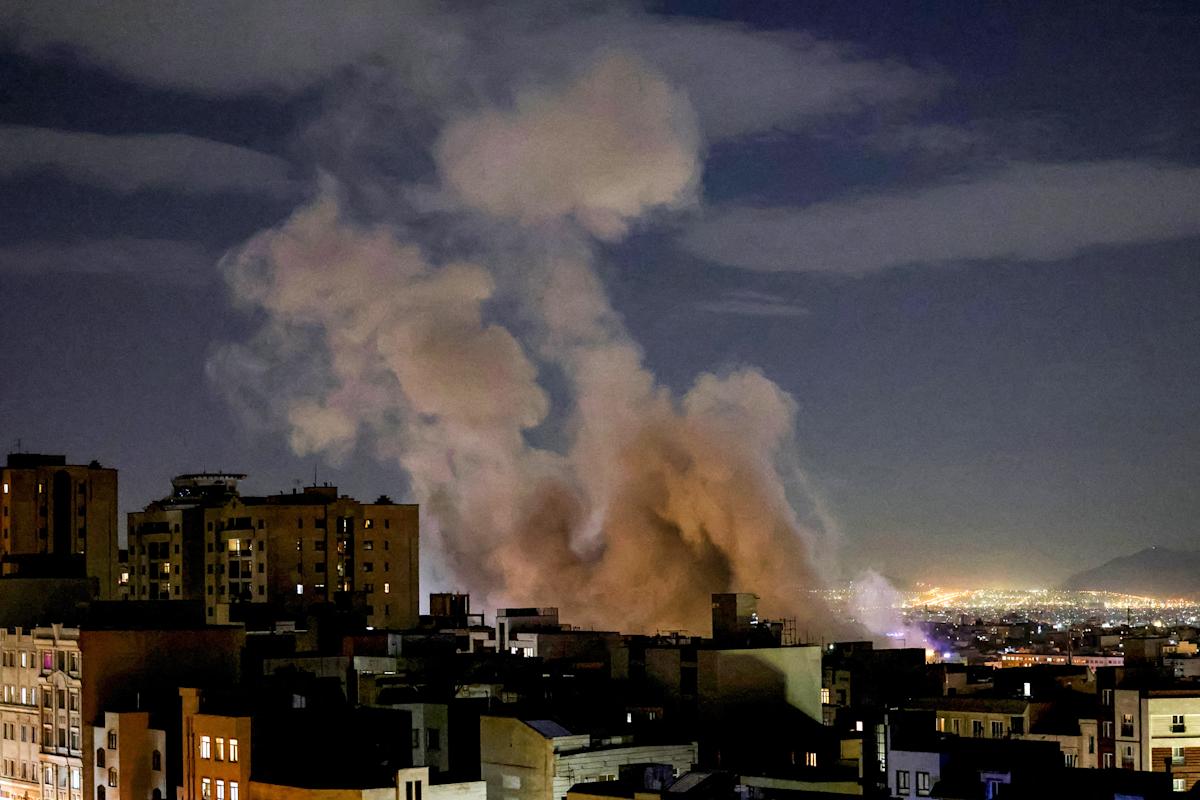
(Bloomberg) — The escalating Mideast war is testing global market resiliency anew as investors brace for the open of stock, bond and energy markets Sunday evening in New York.
Early signs point to a shift away from risk. The US dollar surged and the Swiss franc edged higher against major peers in early trading, while the Australian dollar and South African rand led risk-sensitive currencies lower.
Most Read from Bloomberg
-
New Tax Proposal Takes Aim at Thailand’s Salty Food Obsession
-
Alberta’s Deficit To More Than Double, Hit by Oil Price Drop
-
Oslo Rebuilds Its Government Quarter with a New Focus: Openness
Benchmark equity indexes in Saudi Arabia and Egypt each slid more than 2% in Sunday trading, while Bitcoin, which trades around the clock, was down about 2% as of 4 p.m. in New York. Futures on US stocks, Treasuries, oil and gold are set to begin trading at 6 p.m. New York time, offering the first broad gauge of investor sentiment.
Shaken by fresh anxieties over artificial intelligence and potential cracks in credit, all while trading at historically high valuations, markets now must contend with a spiraling military action in Iran and the broader region that threatens to destabilize global shipping and stanch travel. The impact on oil and inflation is a paramount concern in markets that last month saw US stocks post their worst drop in 10 months.

“This is all coming at a fragile time as investors are becoming more cautious,” said Dec Mullarkey, managing director at SLC Management. “US equity markets are already very sensitive to threats of technology disruption and emerging credit stress, so the prospects of higher commodity prices could force a selloff as investors rein in risk.”
Bloomberg Economics said a prolonged Middle East conflict raises the likelihood of crude reaching $80 a barrel and estimated that if the Strait of Hormuz is closed, then it could trigger a spike as high as $108. About one-fifth of global oil flows pass through the waterway, making it a critical energy choke point.
Brent crude prices closed at $72.48 a barrel on Friday.
Digital signals indicate that oil-tanker traffic through Hormuz has nearly halted, and three ships were attacked near the mouth of the Persian Gulf, heightening fears that supplies could tighten. Iran has said it doesn’t intend to shut the passage.
“Even without a formal closure of the Strait of Hormuz, the reality is that vessels rerouting and sharply higher insurance premiums effectively tighten supply conditions,” said Dilin Wu, a strategist at Pepperstone. “That alone embeds a fresh inflationary impulse into the global economy.”