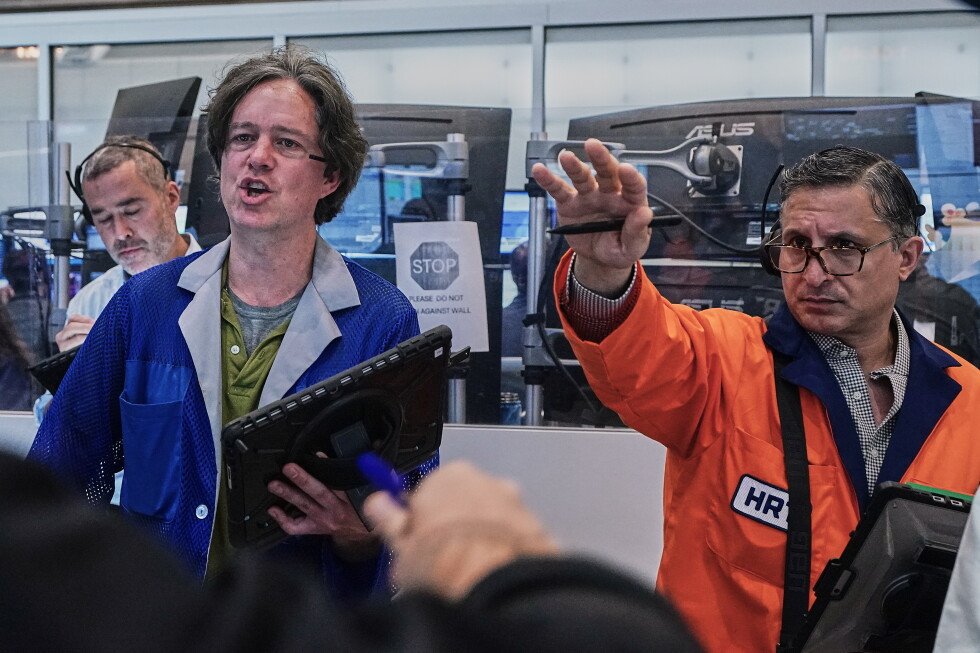
In the days since the outset of the U.S.-Iran war, stock markets have followed a familiar historical pattern: an initial selloff on the news, followed by some volatility and a slight recovery.
“The U.S. equity selloff seems to have reversed in short order, which makes sense,” Scott Helfstein, head of investment strategy at investing firm Global X, wrote in a note earlier this week. “Geopolitical events generally lead to brief periods of heightened volatility, but markets are usually quick to recover losses and tend to move higher in the subsequent weeks.”
Indeed, since 1979, the S&P 500 has risen by 2.2%, on average, in the month following wars, geopolitical events and energy crises, according to data from Stock Trader’s Almanac.
During periods of market volatility and geopolitical uncertainty, it can be tempting to pull your money out of the market. After all, even if the market tends to bounce back over the long run, scary headlines can drive stock prices down in a hurry. Investors don’t have to think back too far to remember when a slate of new U.S. tariffs caused a 19% decline in the stock market in 2025.
But financial pros generally advise against making any big changes to your long-term plans based on what’s happening now.
“Staying invested across geopolitical, economic and market disruptions is really important,” Helfstein tells CNBC Make It. “The biggest mistake an investor can make is moving out of the market, which increases the risk of missing a bounce or new highs.”
Why experts say you’d be wise to stay invested
OK, you may be thinking, but what if I get a bad feeling about the market and manage to sell before stock prices plummet?
The answer is, you’d potentially shield your portfolio from major losses, but that’s only half the battle. Because then you have to figure out when to get back in. And because the stock market has historically trended upward, you’re putting yourself in mathematical peril the longer you keep your money sitting on the sidelines, experts say.
Consider research from mutual fund firm Hartford Funds, which found that a theoretical investor in the S&P 500 would have ended up with about $224,000 had they invested $10,000 in 1995 and held through 2024. If, over the same holding period, the same investor missed the 10 days with the highest returns, the total drops 54% to about $103,000. Missing the best 30 days leaves the investor with $38,000.
Lest you think that the key is merely to avoid investing when stocks are falling, 50% of the market’s best days over the sample occurred during bear markets (periods of decline of 20% or more), Hartford Funds found, and 28% occurred during the first two months of a bull — before many investors know than an uptick will take permanent hold.
How to avoid overreacting to news
Now, will a real investor ever sell all of their stocks for one day before buying back in the next? Probably not. But the data illustrates a simpler point: To take advantage of a market that tends to trend upward, an investor can’t win by keeping their money out of stocks.
So what’s to be done when things look bleak? Ideally, you add to your long-term, diversified portfolio when prices decline, says Ryan Detrick, chief market strategist with the Carson Group.
“The stock market is the only place where things go on sale, and people run out of the store screaming,” he says. For those who plan to hold for long periods, continuing to invest when prices are declining means you’re effectively buying stocks at a discount, he adds.
“If you have that plan ahead of time, you probably will realize these are solid companies that I can get on the cheaper right now,” he says.
That’s easier said than done when you’re seeing big red numbers in your portfolio page and scary headlines on your screen — which is why some pros recommend doing your best to invest with blinders on.
“Put yourself in a position to be paying as little attention as possible on an ongoing basis,” says Christine Benz, director of personal finance and retirement planning at Morningstar. “Put all those contributions on autopilot.”
Once you have an appropriate asset mix set up — this will vary depending on your investment objectives and the timing of your goal — you can safely let money flow into your accounts without worrying about how the next geopolitical or economic event will affect your portfolio, she says.
“Yes, down markets are a great environment to put additional funds to work if you’re in a position to do so,” Benz says. “But I think you can really set yourself up for success by setting a decent target savings rate, getting into some sort of sane asset allocation … and then just tuning it out.”
Want to improve your communication, confidence and success at work? Take CNBC’s new online course, Master Your Body Language To Boost Your Influence.
Take control of your money with CNBC Select