As widely expected, the Federal Open Market Committee held the Fed funds rate steady in Jerome Powell’s final meeting as Chair.
The decision and the press conference, which often swing markets, barely registered with investors today as the outcome was expected and already priced in.
|
Will AI create the world’s first trillionaire? Our team just released a report on a little-known company, called an “Indispensable Monopoly,” providing the critical technology Nvidia and Intel both need. |
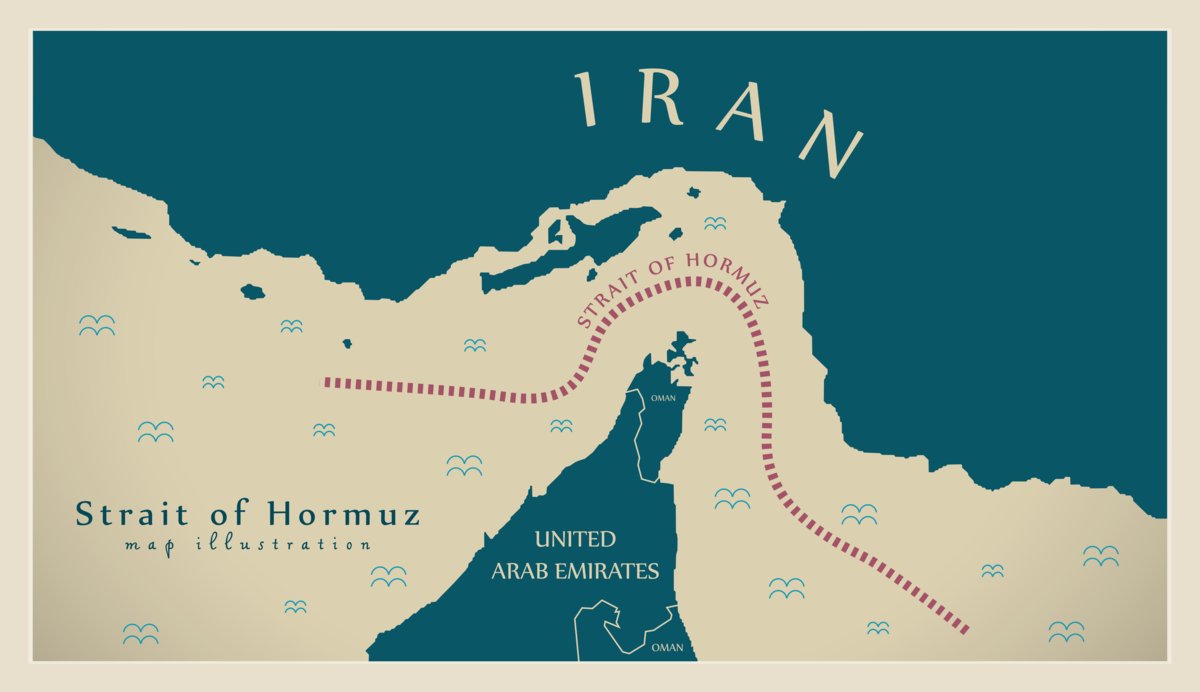
However, in his swansong as Chair, Powell did share some commentary on the situation in the Middle East that is worth heeding for investors wondering how to respond to the situation in Iran.

What the Fed thinks about Iran
Powell has been measured in his commentary about current events, whether they be tariffs, inflation, or the war in Iran, and while he acknowledged the war’s impact on inflation, he also seemed to emphasize the uncertainty around the war.
Powell said, “Developments in the Middle East are contributing to a high level of uncertainty about the economic outlook,” adding that the central bank would watch its impact on both employment and prices, the two sides of its dual mandate.
Throughout the conference, the overwhelming sentiment behind Powell’s comments on the war was that the central bank is best off waiting to make a move due to the high level of uncertainty around the war. He also acknowledged that no one knows the outcome of the war, implying that it would be presumptuous to make a policy decision based on an assumption about its future.
Patience is key
The stock market reacts to news every day, and that includes movements in response to developments with the war in Iran. Stocks plunged through March, but then bounced back in April in response to cooling tensions in the region and the ceasefire.
However, while the stock market moves every day, investors would be mindful to borrow from Powell’s approach. While it’s important to monitor events coming out of the region, it’s not necessarily a reason to change your investing strategy. As Powell alluded, it’s important to acknowledge the uncertainty inherent in the war, and making predictions about when and how it ends, its impact on prices, or its impact on the energy market could easily backfire.
Regarding making any moves in your portfolio, adopting a wait-and-see approach is the best move.
Long-term investing for the win
Stocks have recovered from the Iran war sell-off, though the situation remains fluid and oil prices are elevated, meaning there’s still risk of the war roiling markets.