Updated 2 min read
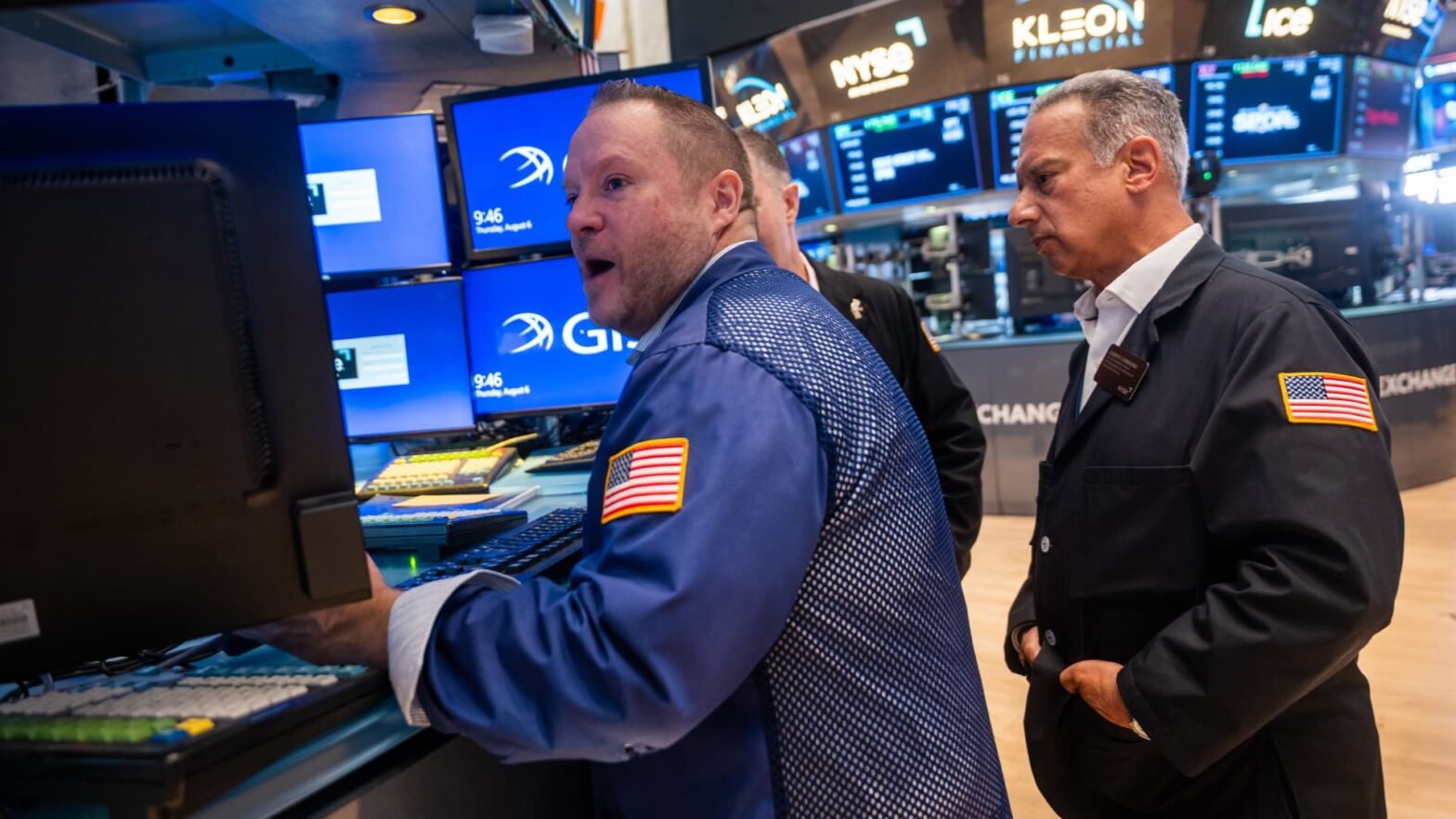
US stocks climbed on Monday as Wall Street weighed the likely impact of surging oil prices on the Federal Reserve’s interest rate path and looked for signs of easing in the Strait of Hormuz supply disruption.
The Dow Jones Industrial Average (^DJI) put on roughly 0.9% on the heels of another shaky week for equities. Meanwhile, the S&P 500 (^GSPC) and the tech-heavy Nasdaq Composite (^IXIC) moved up about 1.1% and 1.3%, respectively.
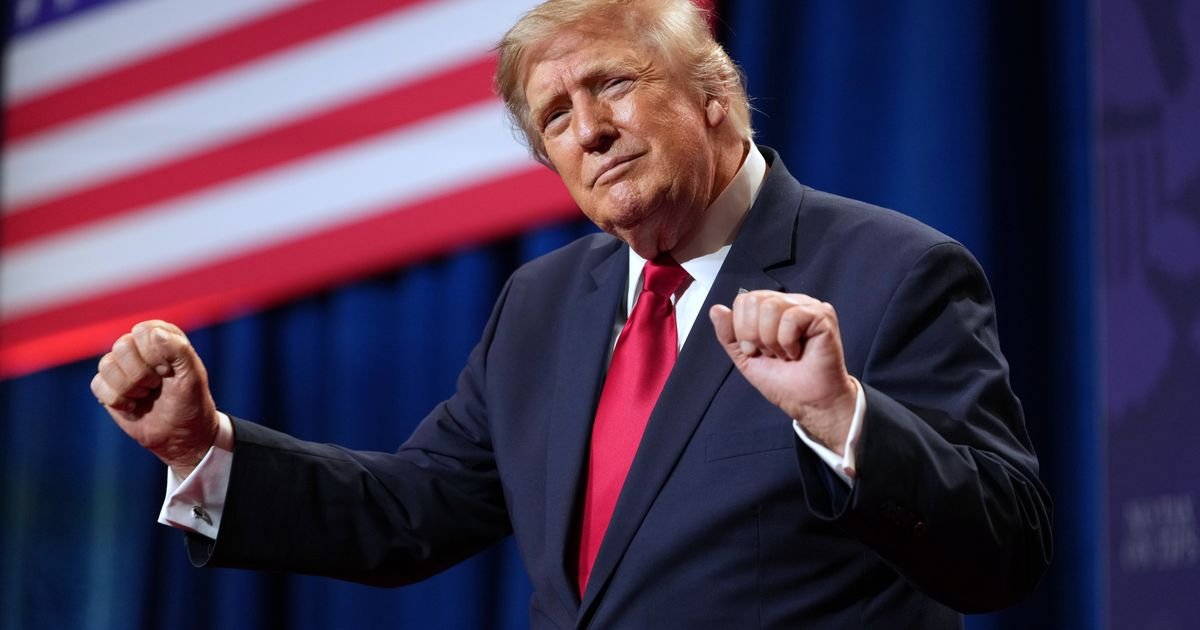
Wall Street is keeping a close watch on developments in the Strait of Hormuz as the Middle East conflict enters its third week. Several tankers successfully transited the waterway over the weekend, injecting some hope into markets that the key conduit for crude supply might reopen. At the same time, President Trump put pressure on allies to join the US in breaking Iran’s blockade of Hormuz, warning NATO faces a “very bad future” if they don’t help.
Futures for West Texas Intermediate (CL=F) and Brent (BZ=F) both topped $100 a barrel for the first time since 2022 in early trading on Monday. US benchmark WTI (CL=F) pulled back to trade at around $95 at last check, down over 3%, while Brent (BZ=F) held above $102, according to Bloomberg data.
The impact of surging oil prices on inflation is in focus as Federal Reserve officials gather for their two-day policy meeting this week. Uncertainty around the fallout from the Iran war is seen as potentially deepening divisions with the central bank over the path forward on interest rates, though officials are expected to leave rates unchanged on Wednesday.
On the corporate front, Nvidia’s (NVDA) annual GTC event kicks off Monday with a keynote speech from the AI chipmaker’s CEO, Jensen Huang.
LIVE 14 updates
-

Small caps sprinted out of the gate — megacaps are catching up
The early pop has been losing steam since the first hour of trading wrapped at about 10:30 a.m., and the leadership setup is worth watching closely.
Micro-caps (IWC) and the Russell 2000 (^RUT, IWM) led for most of the morning, but that edge is narrowing as megacaps trade steadier. The Roundhill Magnificent Seven ETF (MAGS) is holding up a bit better now, with large-cap tech (XLK) out front.
Inside tech, chips (SOXX) are doing more of the heavy lifting than software (IGV), though software remains modestly positive.
That rotation matters. If small-caps give way to large-caps from here, and software slips into the red, it would point to a narrower, more defensive tone beneath the surface — and raise the odds of another disappointing close.
-
Oil price spike likely to keep rates on hold but deepen divisions among Fed officials this week
Wall Street is assessing the inflationary impact from surging oil prices and what that would mean for the Federal Reserve’s view of the future path for interest rates at its meeting this week.
Yahoo Finance’s Jennifer Schonberger reports:
-
US stock market opens in the green on Monday, oil prices hold high
The US stock market opened higher on Monday as Wall Street looked ahead to the Federal Reserve meeting on Wednesday and watched the continued conflict in the Middle East.
The tech-heavy Nasdaq Composite (^IXIC) led the way up with a gain of 1.1% to start Monday’s session, while the Dow Jones Industrial Average (^DJI) and S&P 500 (^GSPC) picked up 0.8% and 0.9%, respectively.
Oil prices have continued to hold strong with no clear end in sight for the war in the Middle East. Futures for both international benchmark Brent (BZ=F) and US benchmark West Texas Intermediate (CL=F) topped $100 a barrel for the second time since the war began in early trading on Monday before pulling back. West Texas Intermediate traded around $95, while Brent traded at $102, according to Bloomberg data.
In focus for investors this week will be the Federal Reserve, where the FOMC is expected to hold rates steady. That said, the market will look for any and all commentary on the war’s impact on inflation from Chair Jerome Powell.
In equities, Nvidia’s (NVDA) annual GTC event begins Monday with a keynote speech from CEO Jensen Huang.
-
Stocks set for biggest opening pop since Feb. 6
Stock index ETFs (DJI, QQQ, SPY, IWM) are indicated to open with their biggest gap higher since Feb. 6 as several macro pressures ease at once.
Long-term Treasury yields (^TNX, ^TYX) are backing off recent highs, and the dollar index (DXY) is pulling back after briefly pushing above 100 late Friday for the first time since November. Finally, WTI crude oil (CL=F) — which traded above $100 Sunday evening — has slipped back into the mid-$90s.
Five weeks ago, a similar relief rally held through the day (Friday) and extended into the following Wednesday before sellers reemerged on Thursday.
Today I’ll be watching whether those same pressure points return. If the dollar index pushes back toward 100 or crude reclaims $100, the macro squeeze could quickly reappear. And with late-day reversals showing up more frequently in recent weeks, the final hour will be the final verdict on the day’s tape.
-
Oil prices hold over $100 as weekend salvos in Iran war threaten key infrastructure
Oil prices held above $100 per barrel through Monday morning as key attacks from both sides of the Iran war targeted key infrastructure and showed no signs of an off-ramp for what has become the largest energy crisis since at least the 1970s.
ICE futures on Brent crude (BZ=F), the international pricing benchmark, held above $102 per barrel, while those on the US benchmark West Texas Intermediate (CL=F) traded above $95 after cracking the key $100 mark late Sunday night.
Over the weekend, key actions from both sides of the war pointed toward further escalation.
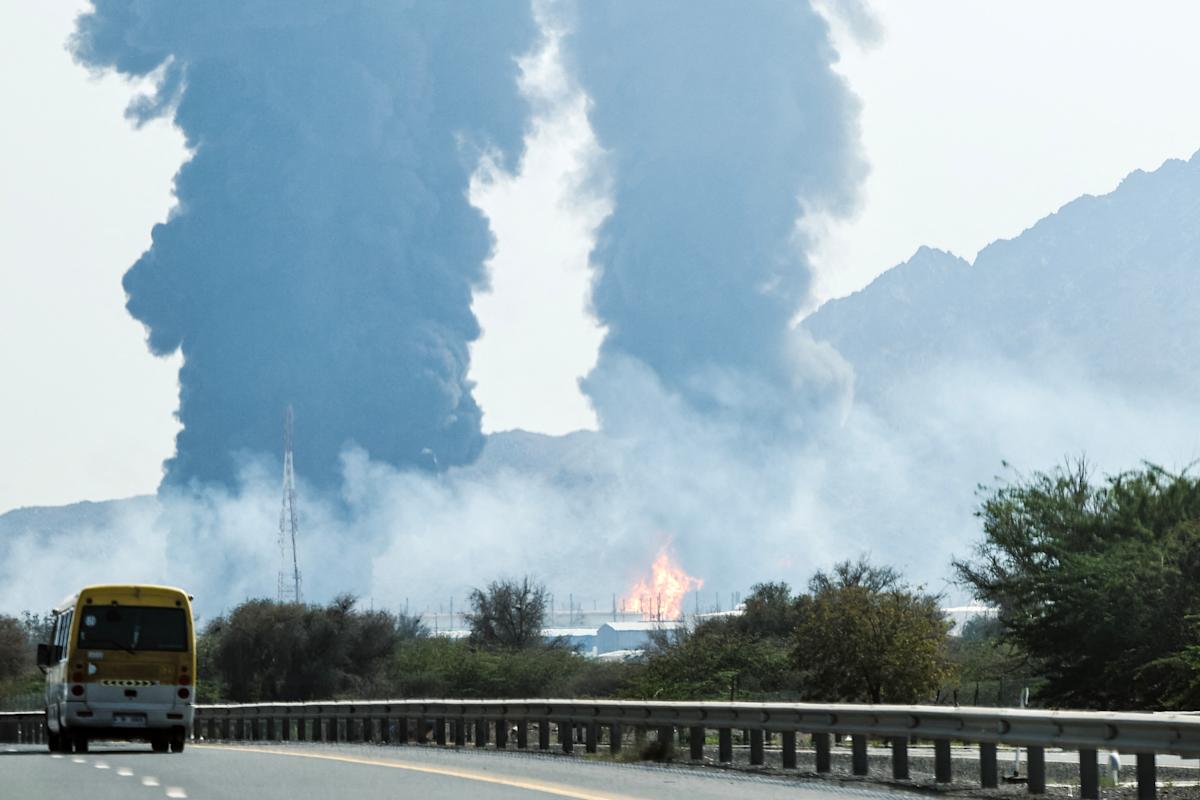
Late Friday night, the US struck a litany of military assets on Kharg Island, the Iranian regime’s primary oil export terminal, with threats to strike oil infrastructure on the island if the conflict continues. At the same time, drone strikes from Iran on Saturday and Monday have halted oil loadings at the key port of Fujairah in the United Arab Emirates as the conflict continues to threaten the wider Gulf region.
The Strait of Hormuz, the world’s most important shipping lane for oil, remains essentially closed to all but a handful of Indian liquefied petroleum gas tankers that made the crossing over the weekend. President Trump called on other world leaders to step up efforts to reopen the Strait of Hormuz, but those international partners deferred on taking concrete actions.
This week, global central bank meetings will take place, where leaders will have to grapple with whether the war in Iran remains transitory or risks becoming a drawn-out crisis.
“The result is a high stakes stalemate that markets are struggling to price,” Capital analyst Daniela Hathorn wrote in a client note Monday morning. “Energy flows remain significantly constrained, and as long as that persists, the risk of a prolonged global energy shock remains elevated.”
-
BofA: Markets may be underpricing potential Iran-driven growth shocks
Investors may be underpricing the risk of potential growth slowdowns triggered by the economic fallout of the Iran war, Bank of America global economist Antonio Gabriel wrote in a client note Monday morning.
Even as inflation concerns have risen alongside energy prices, which are likely to feed into headline inflation in the coming months, the US dollar has rallied, and US equities are less than 5% off their highs — bets that could be threatened by a drawn-out conflict.
“While a quick resolution to the conflict is certainly [possible], we view the conflict extending into 2Q as an equally likely outcome, and a more protracted war cannot be ruled out,” Gabriel wrote.
“Markets seem to be pricing a largely transitory shock … In our view, the more disruptive scenarios for global growth are underpriced,” he wrote.
-
What to expect from Nvidia’s biggest event of the year
Nvidia’s (NVDA) CEO Jensen Huang will take the stage at the SAP Center in San Jose, Calif., at 2 p.m. ET, kicking off the AI leader’s annual developer conference.
Our tech editor Daniel Howley previews what to expect from Huang’s keynote and the highly anticipated event:
Read the full GTC preview and follow along for live updates from the event.
-
Nebius signs AI deal with Meta
Nebius (NBIS) stock soared 14% after the AI cloud company announced it struck a new long-term AI infrastructure supply agreement with Meta (META).
Nebius will provide Meta with $12 billion worth of neocloud capacity as part of its deployment of Nvidia’s Vera Rubin platform, starting in 2027. Meta has also committed to purchasing additional compute capacity up to a total of $15 billion over a five-year period.
Last week, Nvidia disclosed a $2 billion investment in Nebius to deploy more than 5 gigawatts of data center capacity by the end of 2030.
Meta stock rose 2.6% on the Nebius news, as well as rumors that it’s planning sweeping layoffs that could affect up to 20% of the company as it looks to offset high artificial intelligence costs. The date and extent of the layoffs have yet to be finalized, according to Reuters, but it could mark Meta’s largest restructuring since late 2022 and early 2023.
-
A critical Fed meeting, $100 oil, and Micron earnings: What to watch this week
Yahoo Finance’s Jake Conley takes a look at the pivotal events for markets this week:
-
Software stocks teased a comeback — but investors still want proof
Software is breaking investors’ hearts — again.
Just one week after staging its sharpest rebound in nearly a year, the group has faded again, writes Yahoo Finance’s Jared Blikre:
-
The biggest new question the Street is chatting about
I think it’s silly that we have started to see a lot of chatter about potential interest rate hikes from the Federal Reserve this year.
I get it: Oil prices are up 42% since Operation Epic Fury began, and that may feed into inflation. But to think the Fed will hike rates because of this seems rather far-fetched.
Nonetheless, my day started with seeing the below headline from a JPMorgan report.
-
Useful charts with Iran war still in focus
A few helpful charts from RBC Capital Markets on the market’s performance during periods of war.
-
Goldman’s market warning
Some good points from Goldman Sachs this morning on the markets. I think this amounts to a mild call of a near-term correction:
-
Gold continues to hover around $5,000 as oil surges
Bloomberg reports: