Have you ever wondered what analysts mean when they say a stock, or the broader market, is overvalued or undervalued?
Broadly speaking, stock researchers will analyze metrics such as price-to-sales (P/S) or price-to-earnings (P/E) and benchmark these ratios against historical levels and industry peers to help gauge a company’s valuation profile. While useful, these metrics can fall short, as they only account for one year’s worth of data.
Will AI create the world’s first trillionaire? Our team just released a report on the one little-known company, called an “Indispensable Monopoly” providing the critical technology Nvidia and Intel both need. Continue »
An often overlooked valuation tool that could prove more useful is the cyclically adjusted price-to-earnings (CAPE) ratio. The CAPE ratio provides a more thorough look at market valuations, as it accounts for a decade’s worth of inflation-adjusted earnings. This approach helps smooth out one-time anomalies and economic cycles.
Let’s take a look at the S&P 500’s current CAPE ratio and compare it to prior periods. From there, smart investors should be able to develop a solid game plan for navigating ongoing volatility in 2026.

As noted, the CAPE ratio differs from more standard metrics such as the P/E multiple because it is not distorted by one-time events. The CAPE offers a normalized view of long-term value by smoothing out short-term fluctuations.

Currently, the CAPE ratio stands at 39 — more than double its long-term average and inching closer to its all-time high. The only other times in history when the CAPE ratio was near its current level were in the late 1920s and in 2000.
In both periods, the stock market ultimately plummeted — crashing during the Great Depression and during the dot-com bubble burst. This is important to note because it could signal that the CAPE ratio is a good barometer of stock market crashes.
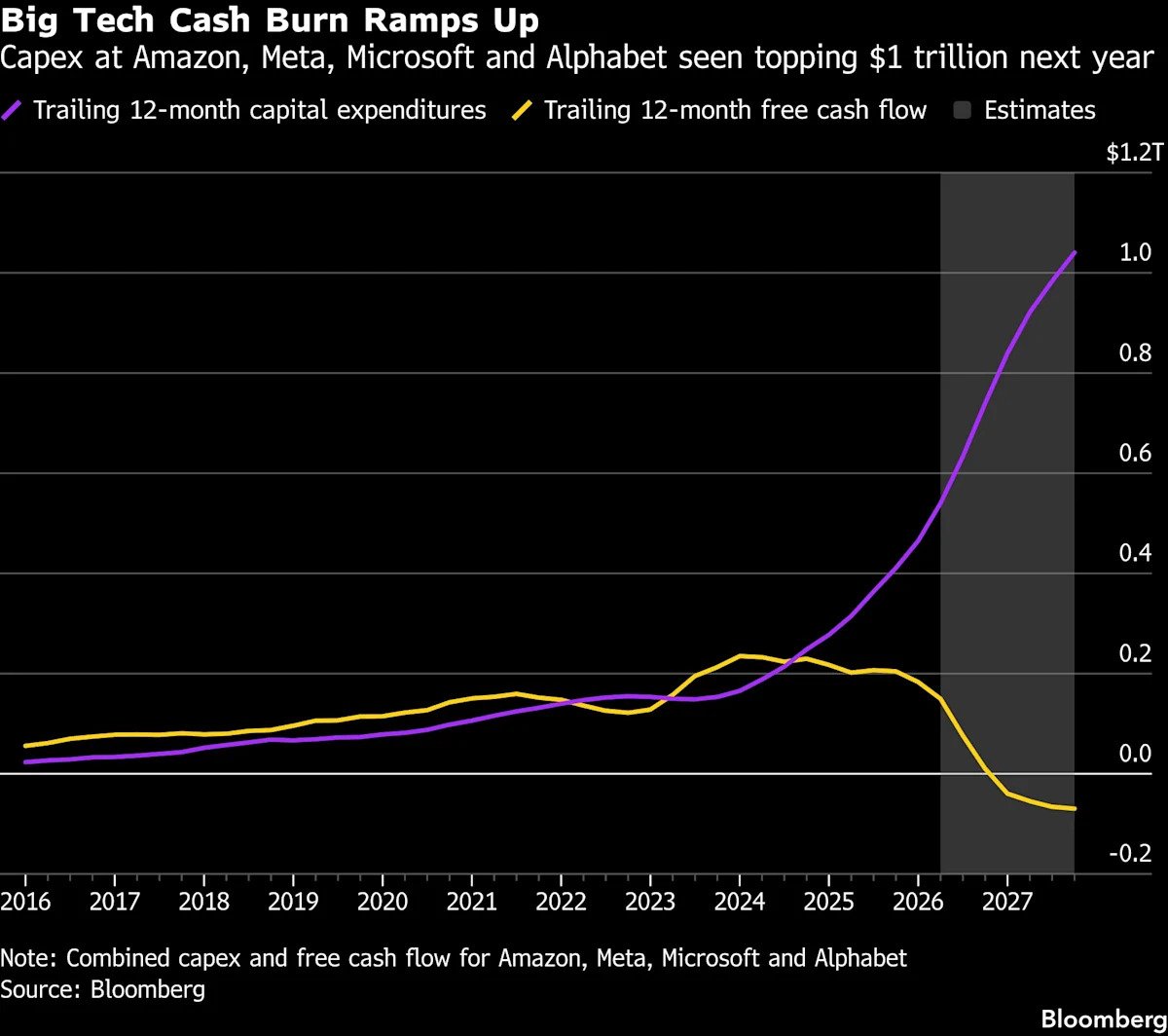
Right now, the stock market remains elevated relative to historical levels, driven by tailwinds from demand for artificial intelligence (AI). Hyperscalers such as Microsoft, Amazon, Alphabet, and Meta Platforms are spending hundreds of billions of dollars procuring chips from Nvidia, Broadcom, and Advanced Micro Devices for their next-generation data centers.
This investment in AI infrastructure is fueling valuations higher. Hence, the CAPE ratio is climbing higher, supported by the notion of higher earnings. However, based on these trends, it’s clear that once the CAPE oscillates above 25 to 30, the stock market tends to enter a correction.