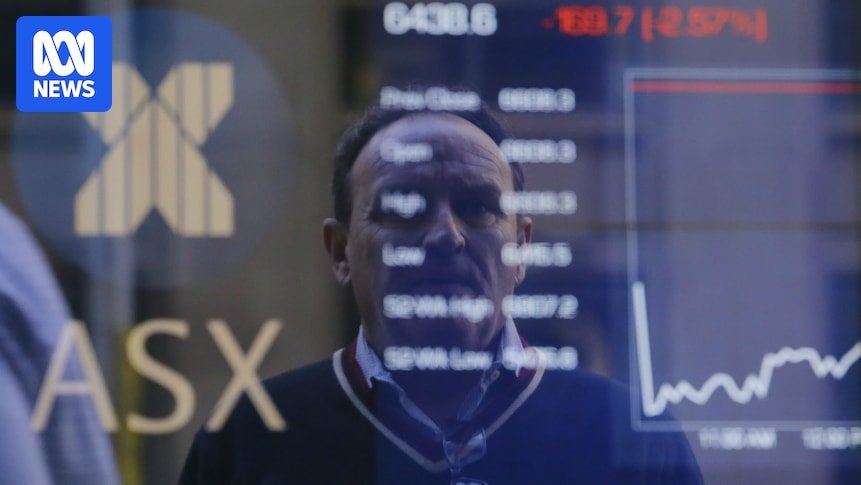
Nothing, it seems, can dent the almost inexplicable optimism coursing through financial markets.
Where once, years ago, stock markets would shudder, tumble and spend the best part of a decade recovering from a recession or some other economic calamity, recovery time is now measured in mere months and sometimes weeks, if they bother to react at all.
Just step back a little and look at recent events.
We have heard dire predictions of a global recession from the International Monetary Fund, the Reserve Bank deputy openly expressing fears of a “nightmare scenario”, and the global energy body warning of the worst crisis in history.
While markets initially tumbled as the Middle East erupted into a conflagration with the Strait of Hormuz blocked for the first time in history, concerns since have been brushed aside.
Hundreds of vessels waited on either side of the Strait of Hormuz on April 13. (Supplied: Marine Traffic)
On Wednesday night, Wall Street staged the final act in its incredible recovery.
It headed back into La La Land, into record territory, erasing weeks of worry about the disintegration of western unity and the prospect of an energy crisis that would make the 1970s look tame.
That it was led by the Nasdaq, the technology-heavy stock index, was one of the most puzzling aspects of it all.
Loading…
For even before Iran choked off the modern world’s industrial oxygen, investor fear around the great artificial intelligence boom was running amok. Tech stocks took a hammering long before Tehran came under fire.
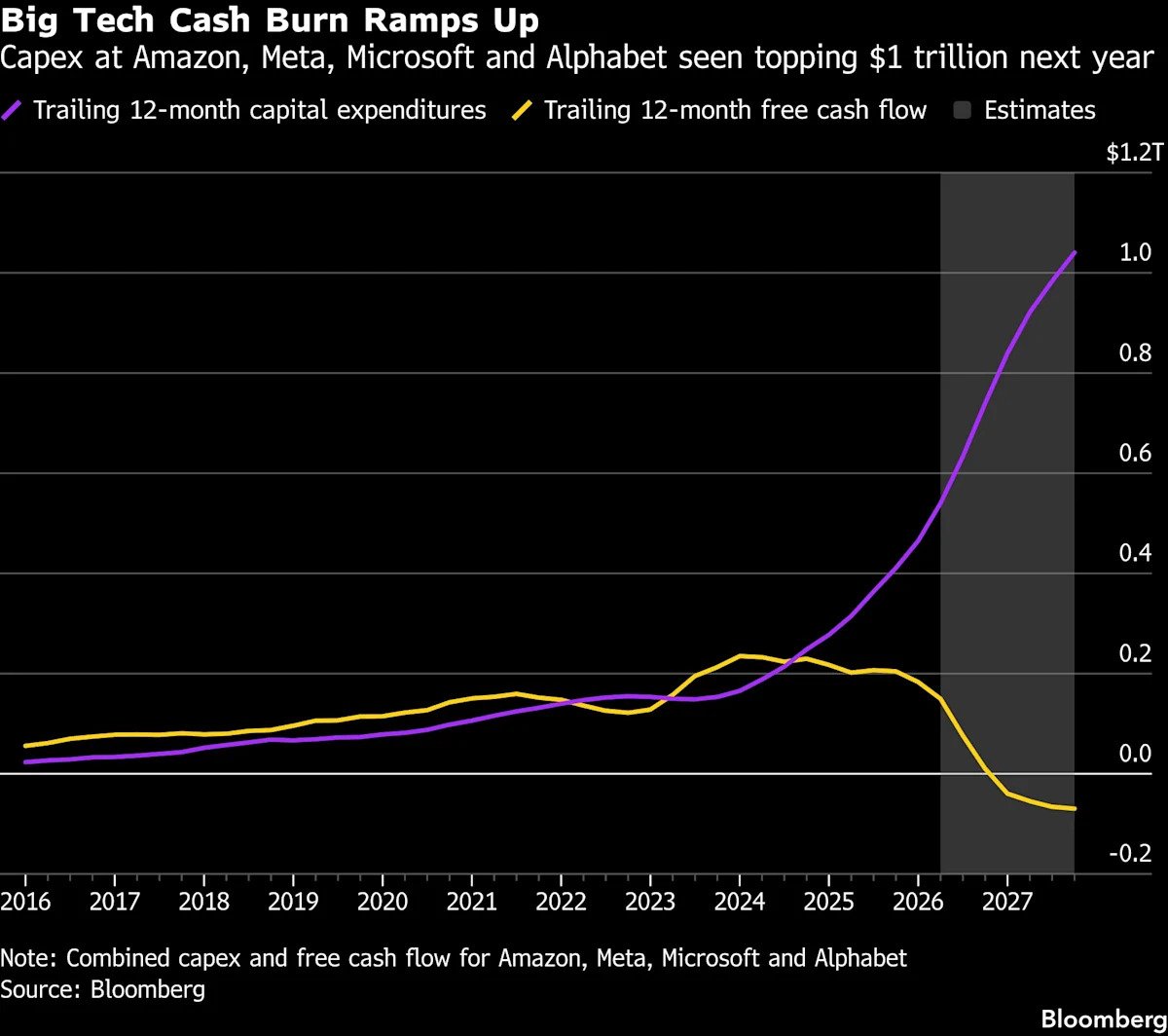
There were legitimate concerns about the eye-watering valuations of the technology giants, that it’s all just a bubble waiting to pop.
And then the wall of worry about the countless hundreds of billions of dollars thrown at AI. Would it ever pay off?
Suddenly, it seems, there is absolutely nothing to be concerned about at all.
As Rabobank global strategist Michael Every wryly put it: “At this point, it isn’t a random walk but a determined march: markets have decided the Iran war and the Hormuz blockades are over, and everything is going to be better than normal imminently.”
Confidence in crisis
Out on the streets, there’s a palpable sense of fear.
Panic buying of fuel, concerns about higher interest rates, and the prospect of job losses are rapidly eroding confidence among households and businesses. There is even a shortage of jerry cans.
The past few days have seen survey results that stunned economists both here and offshore.
Consumer sentiment versus business confidence over the past two decades. (Supplied: Morgan Stanley, NAB, WBC-Melbourne Institute)
Australian consumers and business owners are fearing the future. Confidence levels for both groups have plunged at some of the fastest rates on record.
They are now plumbing the dire levels of the global financial crisis and are outdone only by the pandemic.
Motorists have been fearing fuel shortages. (Reuters: Hollie Adams)
And with good reason.
Qantas this week announced cuts to some of its most marginal regional services and forecast an $800 million blowout in its fuel bill, while Westpac announced it would sock away extra reserves to cover an expected rise in late repayments.
The fuel emergency has led to a similar crisis in confidence at the Reserve Bank.
Deputy governor Andrew Hauser, addressing an audience in New York this week, was uncharacteristically blunt about the dilemma the war had created for the central bank and the stark choices it would need to make.
Andrew Hauser says the central bank is in a difficult position. (AAP: Lukas Coch)
The energy crisis undoubtedly would force inflation higher but also result in weaker growth, a rare combination known as stagflation.
Should the RBA focus on stifling inflation? Or should it try to protect the economy from the ravages of recession?
“It is a central banker’s nightmare,”
he said.
His comments were reinforced by dire warnings from the International Monetary Fund, which predicted that, on a best-case scenario, the Iran war and the fuel blockades would lead to a sharp slowdown in global growth.
Worst case?
“This would mean a close call for a global recession [with a growth rate below 2 per cent], which has happened only four times since 1980, with the latest two occasions corresponding to the global financial crisis and the COVID-19 pandemic,” it said.
And yet, the Australian Securities Exchange is within striking distance of new records.
Even the prospect of another interest rate hike within weeks has only mildly dented the buying spree we have witnessed in the past fortnight, that largely has recovered all the losses incurred in the early stages of the war.
Wall Street v Main Street
The disconnect is even more pronounced on Wall Street, a trend that first became evident after the pandemic.
After years of rigid correlation, stock prices appear to have completely unshackled themselves from consumer sentiment, as this graph below shows.
Wall Street is surging while US consumer sentiment drops. (Supplied: The Kobeissi Letter)
US consumer sentiment has fallen below the COVID-19 nadir as measured by the University of Michigan, just as Wall Street has surged back into record territory.
Why the sudden disengagement from the real world?
Loading…
One school of thought is that so much cash has been pumped into the global economy since the start of the pandemic that it simply needs to find a home somewhere, and that usually is in stock markets.
America, which continues to rack up huge deficits, has three times the amount of cash washing through the system than before the global financial crisis, and 50 per cent more than just before the pandemic, as the graph below shows.
Billions of dollars are washing through the system in the US. (Supplied: US Federal Reserve of St Louis)
It partly explains the dramatic recoveries we have witnessed in the past six years, regardless of real-world conditions.
Global stocks took years to recover from the 1987 crash, the 2000 tech wreck, and even the 2008 financial crisis.
But within a month of the pandemic shutting down the global economy and sending markets crashing, a recovery was underway. There was no vaccine, lockdowns were in full force, trade had halted and there was no end in sight.
It was the same story last year, after US President Donald Trump announced his Liberation Day tariffs. Stocks tanked globally but then staged a dramatic recovery within weeks.
And now this.
Signs of a bubble?
Despite months of fear and concern about the sustainability of the tech rally, fuelled by a race for AI dominance that not everyone can win, technology stocks once again are driving Wall Street.
Is it a bubble?
The Nasdaq has led the stock market surge. (Reuters: Shannon Stapleton)
During the tech boom of the late 90s, desperate companies needing a leg up would simply add dotcom to their name, regardless of what they produced, to get a quick sugar hit to their share price.
It worked a treat until everything unravelled.
Loading
And right on cue this week, an American company called Allbirds, a fluffy shoe manufacturer that was going broke, announced it was transforming into an AI infrastructure company.
The share price surged 800 per cent.
Pepperstone’s senior research strategist Michael Brown, in a note to clients, questioned his own judgement on Wall Street’s frothy valuations after the Allbirds incident.
“It was only yesterday morning in a discussion with our head of trading that I was saying how one of the reasons why AI doesn’t ‘feel’ like a bubble is because we haven’t seen the mania that we tend to see accompany such events,” he said.
“I guess that’s a call I might now have to look at again. Either that, or the ‘market gods’ were listening to my conversation and I’m acting as some sort of jinx!”