A big date many investors have likely circled is May 15, which is when current Fed Chair Jerome Powell’s term is set to end. While Kevin Warsh will take over and there appears to be little doubt about that, the bigger question is what will happen with interest rates, which may have a significant impact on the S&P 500 (^GSPC +0.79%).
Powell has been reluctant to cut rates this year amid economic uncertainty and inflation still not being all that low. The expectation is that under Warsh, there may be multiple cuts, given that President Trump has nominated him and has pushed for lower rates, often criticizing Powell for being slow to act. Warsh, however, recently said he hasn’t promised to cut rates immediately.
That’s why the bigger date for the stock market will be June 17 — which is when the next Fed meeting and announcement on interest rates is expected to take place.

Image source: Getty Images.
Why the next Fed meeting will be crucial for the markets
Even if Warsh smoothly transitions into the Fed chair position later this month, the bigger question remains about what his approach will truly be. He was nominated by Trump as someone who’s expected to be more willing to cut rates, but at the same time, he believes in the importance of the Fed’s independence, and claims he hasn’t promised Trump that he would cut rates.
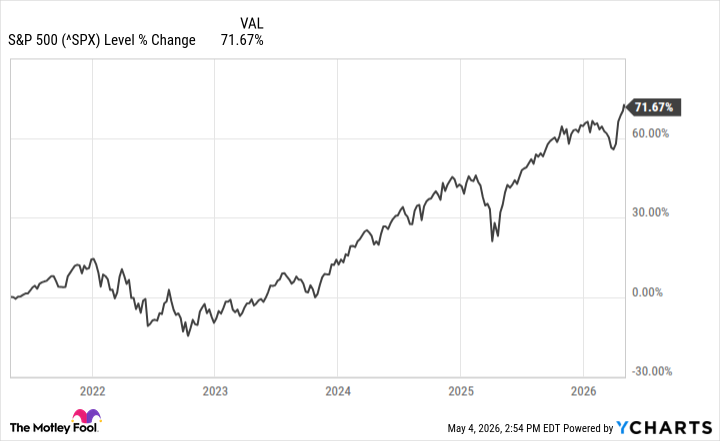
There’s a fair bit of uncertainty around what Warsh will do once he’s in charge of the Fed, thus the importance of the next rate decision in June. At that stage, the market will get a clearer picture of what his views are on the current economic climate and his appetite for rate cuts. While the stock market generally responds favorably to rate cuts, as they lower borrowing costs for companies, if investors lose confidence in the Fed’s independence, that could result in a sharp pullback in the S&P 500.
What Warsh does or doesn’t do shouldn’t affect your long-term strategy
If you’re a long-term investor, what happens with interest rates is inevitably a short-term issue to consider; it’s not something that makes a good stock suddenly a bad investment. It’s why billionaire investor Warren Buffett doesn’t worry about all that short-term noise, because when you’re holding on for the long haul, those things won’t end up mattering.
Even if the S&P 500 jumps or crashes on the news, your investing strategy doesn’t need to change. But if, however, the market does go into a panic, then the good news is that it could create some attractive buying opportunities in the process.