Adam Spatacco, The Motley Fool
3 min read
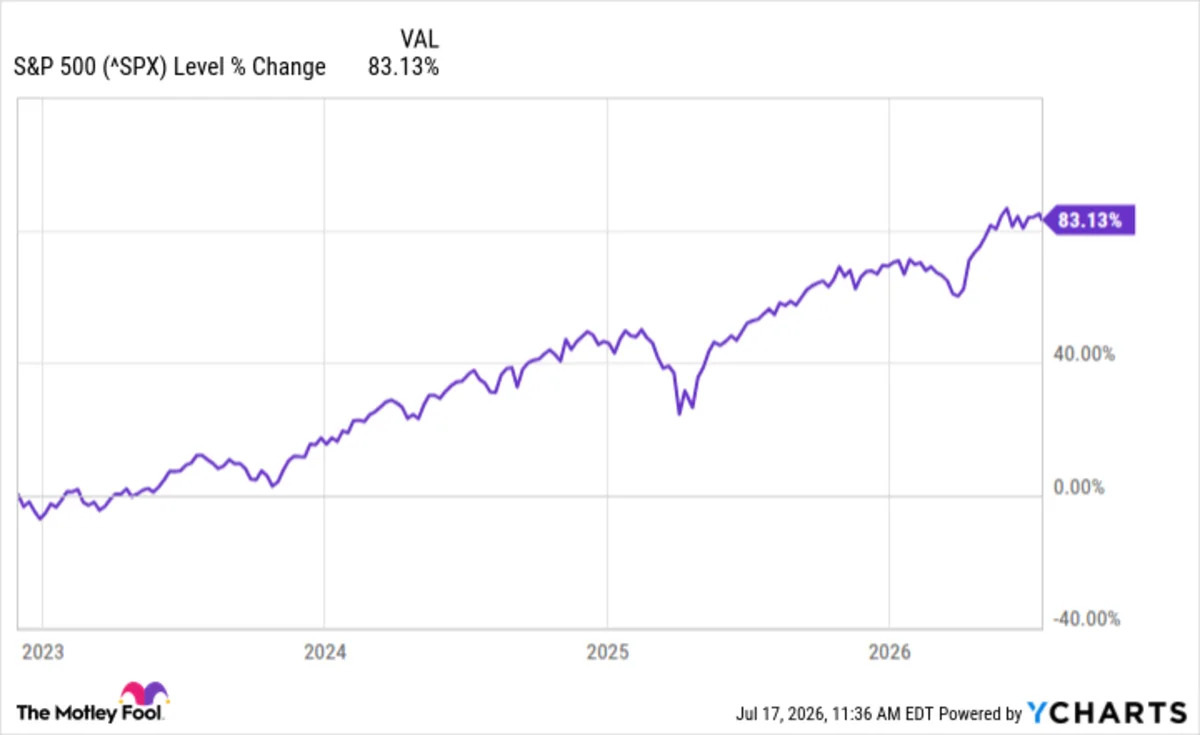
The stock market has long been one of the most reliable paths to create wealth. Since the artificial intelligence (AI) revolution ignited in late November 2022, the S&P 500 (SNPINDEX: ^GSPC) has gained a cumulative 83%, propelled by innovation and expanding corporate profits in technology and related sectors.

Missed Nvidia in 2009? This Rare Signal Is Flashing Again. In 2009, a “Double Down” signal flashed for a little-known chipmaker called Nvidia. For the first time in years, that same “Total Conviction” signal is flashing for a company 1/100th the size of Nvidia. Continue »
These advances reinforce the appeal of stocks for long-term investors who simply stay the course. At the same time, the market’s elevated valuation and heavy concentration in a handful of dominant names have sparked growing speculation that a meaningful correction — or even a bear market — could lie ahead.
Understanding how the stock market moves
Stocks do not travel in a straight line upward or downward. Instead, they move through cycles of expansion and contraction that reflect the macroeconomic environment and shifts in investor psychology.
Declining stock prices often coincide with recessions, when the economy begins to show weakness with declining growth rates. Selling pressure can also emerge independently of economic downturns. When corporate profits fall short of optimistic forecasts that are already priced into stocks, investors may decide to lock in gains. This profit-taking can quickly snowball into broader selling.
Understanding these ebbs and flows as ordinary features of the stock market — rather than anomalies — allows investors to digest downturns with greater composure instead of panic.
What lessons can be learned from prior downturns?
Since 2000, the S&P 500 has recorded four distinct bear markets:
-
Dot-com bust: 49% decline
-
2008 financial crisis: 57% decline
-
COVID-19 crash: 34% decline
-
2022 bear market: 25% decline
In the chart below, I’ve annotated recessions in the gray-shaded columns. History shows that the market ultimately recovered from each of these episodes and moved on to notch new all-time highs. Even earlier this year, the S&P 500 pulled back 7% as investors took profits after years of strong AI-driven gains, combined with questions about whether earnings growth would continue at the previously assumed pace we’ve witnessed over the last few years.
As always, the market absorbed the selling pressure, eventually stabilized, and resumed its upward trajectory.
How can investors respond to uncertainty?