Market snapshot
- ASX 200: 0.2% to 8,995 points
- Australian dollar: -0.1% at 71.64 US cents
- Wall Street: Dow Jones (+0.6%), S&P 500 (+0.5%), Nasdaq Composite (+0.2%)
- Europe: FTSE (-0.3%), DAX (-0.5%), Stoxx 600 (-0.2%)
- Spot gold: 0.4% to $US4,406/ounce
- Oil (Brent crude): FLAT at $US95.63/barrel
- Iron ore: -1.6% to $US97.80/tonne
- Bitcoin: FLAT at $US77,312
Prices current at around 12:00pm AEST
Industrials supporting broader share market
Fair dinkum. ASX see-sawing? Really? We are talking about +/- 5 points compared to 9000 points. Let’s call that steady and/or flat. So much drama! What will be left to describe the crash when it inevitably comes?
– Josh
Hi Josh,
The local bourse is producing modest gains as we approach the final hour or two of trade.
The S&P/ASX 200 has gained 40.60 points or 0.45% to 9,019 after setting a new 20-day low.
Thanks for coming along for the rise as always.
DT
‘That Don’t Repress Me Much’: Rabobank
If you can get past Rabobank’s title, here’s some of the agribank’s commentary on oil, EVs and interest rates.
Oil supplies
New data released by the Energy Information Administration yesterday showed commercial crude inventories fell by 4.5m barrels last week while the Strategic Petroleum Reserve saw a draw of just over 3m barrels.
The EIA reports that US refineries are working at 98% capacity.
This is likely because the supply of products have been severely constrained by shipping interruptions in the Strait of Hormuz and Ukrainian attacks on Russian refining infrastructure.
These converging factors have seen refining margins blow out to multi-decade highs.
Nevertheless, capacity remains insufficient to meet requirements, causing gasoline inventories to fall by 1.2m barrels and prices to remain above $4/gallon throughout the course of August.
Distillate inventories posted a small build, but diesel prices are at their highest levels since April.
Electric Vehicles
Scott Bessent, meanwhile, recently remarked that a Chinese BYD is “the best $70,000 car that $35,000 can buy”. No wonder the European auto sector is worried.
Borrowing costs
Financial repression has gathered more interest in recent times. The FT recently published a piece saying “the risk of a new age of financial repression is rising” while the Times yesterday claimed that the “world economy phase a new phase of rising repression”.
If we define financial repression as government dragooning the private sector into helping hold borrowing costs low we could easily argue that it has been ongoing in the developed world for some time.
Best and worst ASX performers
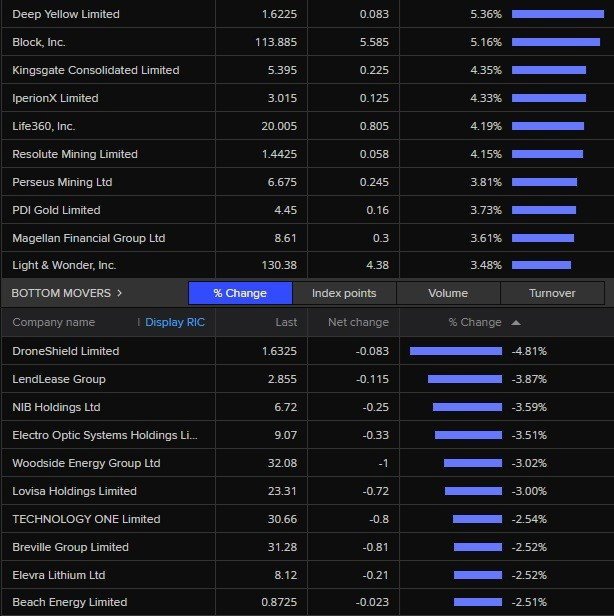
Deep Yellow and Drone Shield are among the best and worst performers in the ASX 200 index today.
ABC understands Bathla will live another day, situation remains dire
The ABC has confirmed with two sources with direct knowledge of the negotiations that some funding has been secured to meet some of Bathla’s payroll obligations today.
In parallel, negotiations are continuing between the administrator and lenders over short-term funding.
Bathla’s future remains a day-to-day proposition.
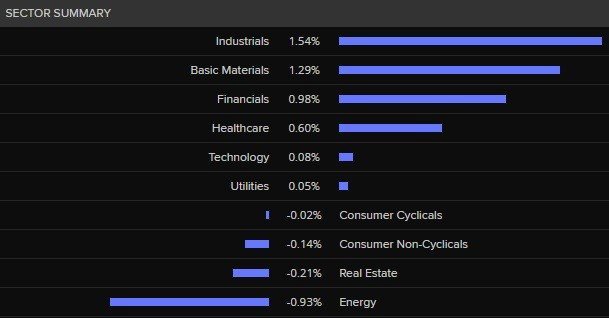
ASX 200 pushes back above 9,000
The Australian share market is gaining today, pushing higher with the help of Industrial stocks.
“Industrials” are stocks that manufacture capital goods, provide commercial and professional services, or operate transportation and infrastructure networks.
Corporate Travel facing ‘existential threat’
Shares in travel services company Corporate Travel Management (CTM) have plunged 81%.
The company sells itself as an “award winning provider of innovative and cost-effective travel management solutions”.
It ceased trading on the Australian Securities Exchange (ASX) in September last year because it did not lodge its preliminary final report for the year ended June 30, 2025.
It filed audited reports on Wednesday morning and was relisted (reinstatement to quotation) later in the day.
The market today has given a savage assessment of its earnings forecast.
“An 80%+ fall in Corporate Travel’s stock price is indicative of the existential threat the company faces,” MooMoo’s Michael McCarthy said.
“Even if CTM can negotiate its way out of the overpayment crisis, the question remains — is there a real business here?”
The business is in hot water after pocketing tens of millions of dollars in margins on air tickets and rebates from suppliers.
Corporate Travel is now refunding the amounts to customers because contracts obliged the company to hand on some of this money to clients.
For other customers, the problem is that contracts did not spell out what to do with the margins and so the cash is being handed back.
The method of overcharging was revealed in an announcement from Brisbane-based Corporate Travel to the share market and brings the total of remediation to almost $246 million.
Farm sector holding up despite rising costs: Westpac
Westpac has provided some commentary on the outlook for Australia’s farm sector.
Below is an excerpt from the bank’s Quarterly Agriculture Report September 2026:
The farm sector has held up better than expected given the rise in diesel, fertiliser and freight costs following the Middle East conflict.
We have revised up our outlook and now expect farm GVA to grow 0.9% in 2026, from the 0.8% contraction forecast previously.
The upgrade reflects stronger crop production than anticipated alongside more resilient livestock production.
Growth is expected to slow from the exceptional pace experienced in 2025 and remain more subdued further out, as activity normalises and production returns closer to long-run levels.
‘Going for gold’: J.P.Morgan on Australian trade
The Bureau of Statistics has published its International Trade in Goods report for July.
- The seasonally adjusted balance on goods decreased $418m in July
- Goods credits (exports) decreased $1,576m (3.3%) driven by non-monetary gold and coal, coke and briquettes
- Goods debits (imports) decreased $1,157m (2.5%) driven by fuel and lubricants and non-monetary gold
Here’s a follow-up note from investment bank J.P.Morgan:
Australia’s monthly trade surplus for July landed at $A1.9 billion, a modest decline following upward revisions to the prior print ($A2.3 billion).
Exports value slipped 3.3%m/m, though the weakness was entirely concentrated in non-monetary gold, which sank 26%m/m following an unusually large increase the month prior.
The remainder of the export basket performed as expected, with rural goods bouncing (6%m/m) and non-rural holding steady.
Non-monetary gold was also influential on the import side, declining 31%m/m and dragging aggregate nominal imports 2.5%m/m lower.
Capital goods demand remained strong (7%m/m), led by data centre-related imports (captured in the broader capital goods – ADP equipment sub group), which jumped 50%m/m.
Fuel declined 12%m/m, which we think is more related to global energy prices rather than volumes, while the recent rally in WTI/Brent crude prices suggests import values will recover from August.
While early in the quarter, today’s print is consistent with our view that the quarterly trade surplus will rebound in 3Q given unexpectedly soft export growth around the middle of the year.
Alongside our forecast for relatively stable income flows, this outcome leaves the current account on track to post a modest improvement in 2H26.
No quick fix for Australia’s housing markets
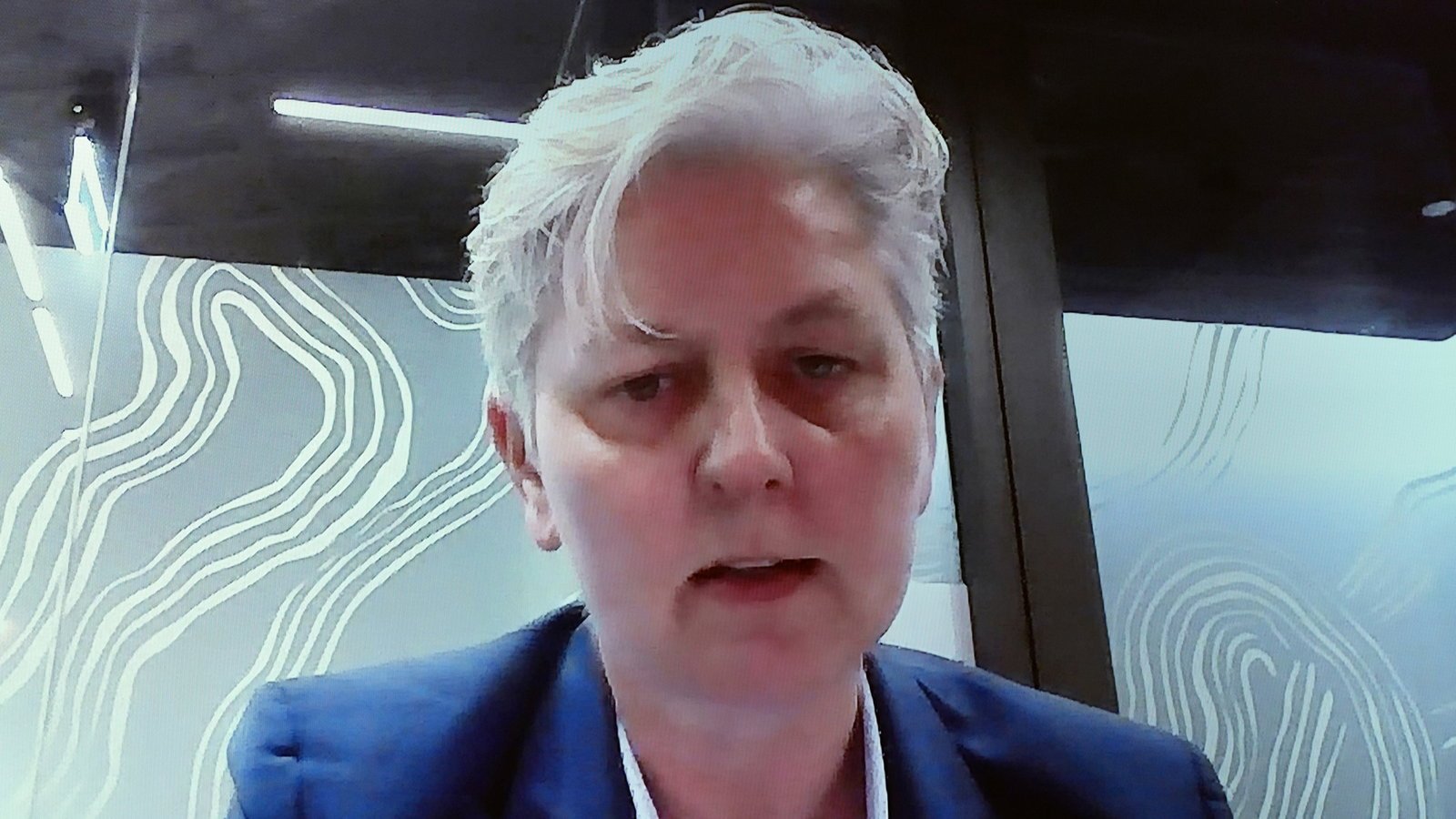
Sally Auld, chief economist of NAB, has also appeared at the Senate Committee on Intergenerational Housing Inequity today.
In her opening statement Dr Auld said the current property price declines in Australia, even though they’re forecast to be quite large, still won’t be enough to improve housing affordability for millions of Australians.
She says the problems that have accumulated in Australia’s housing system will take “a generation” to solve.
She said we had to figure out how to improve the country’s ability to supply homes at a material rate.
Liberal senator Andrew Bragg asks Dr Auld about the mismatch between housing approvals and housing completions.
That led into a discussion about how lots of housing projects are approved but never go ahead, or are delayed by years, because they don’t stack up economically.
Dr Auld said that’s a genuine issue in Australia and she listed a number of issues that were contributing to the overall problem: problems with planning approvals, problems with the provision of essential infrastructure to complement new housing projects, a shortage of skilled labour, and a large fall in productivity in the construction industry in recent decades.
She said none of these issues would be solved overnight.
Non-profit retailers worried about competing against $2 billion thrift store
A new Savers store opened in Geelong at the end of August, drawing people from across the region to attend the opening.
They were on the hunt for second-hand discounted clothes, and the company’s 19th store in Australia was to provide just that.
But what is not commonly known is that Savers Australia is the subsidiary of a much larger US company, worth $2.2 billion, which has shares that trade on the New York Stock Exchange and is majority-owned by American private equity firm Ares Management.
Business reporter Emilia Terzon provides the details:
Moving on multiple fronts at the same time
With technology moving quickly, Xero CEO Sukhinder Singh Cassidy talks about managing her “bets” as a portfolio.
It’s instructive about how companies are managing risk, particularly the risk of being left behind.
“Our AI strategy has very core bets,” she says.
“It’s probably illustrative. We’ve got very core AI [capabilities] in bookkeeping. We also announced a Claude connector. Last week we announced a bet on Casper, a kind of intern in digital form.
“I don’t think having a portfolio of bets is a lack of focus.”
Xero CEO said the company ‘had everything I was looking for’
Sukhinder Singh Cassidy is the CEO of Xero, she’s spent half her career building her own companies and the other half with big companies Amazon and Google.
She left Amazon when it had about 1,000 staff and was at Google starting up its maps product. She “loves to build”.
Xero’s stock price has halved in the past year.
“I don’t watch it daily, one would drive oneself crazy if you watched it daily,” she says.
She referenced the SaaSpocalypse.
The SaaSpocalypse is a loss of confidence in software-as-a-service businesses like Xero that investors think might be smashed by AI.
Unsurprisingly she says “people can talk about our share price all they want” but the company will keep focusing on what it does well.
Ms Singh Cassidy says the company’s customers are largely small businesses and they’re using AI features in the Xero software, so the firm will benefit rather than lose as technology develops.
“We are not just a system of record but a system of trust,” she says.
Over 70 per cent of eligible shareholders voted against the Xero board’s decision to award Ms Singh Cassidy a target pay package of $US25.5 million amid the company’s stock struggles.
Clock is ticking on Bathla Group
Meetings are still ongoing between the administrators appointed over Bathla and lenders over whether or not short-term funding can be secured.
Teneo’s immediate priority remains meeting today’s payroll deadline for Bathla’s 350 staff, some of whom have not been paid for eight weeks.
The situation remains fluid.
We will provide you with an update as soon as we can.
Xero CEO not concerned about investors saying ‘no’ to her paypacket
A huge whack recently.
Over 70 per cent of eligible shareholders voted against the Xero board’s decision to award Sukhinder Singh Cassidy a target pay package of $US25.5 million amid the company’s stock struggles.
Its stock price has halved in a year.
Asked about that strike on the remuneration (rem) report, she says this:
“Matters of rem are matters for our board and our investors. For me it’s about driving the success of the company.
“I own a million options, I own a half a million more shares. It’s an amazing company. We are builders, builders of technology. That’s where we’re are going to stay focused.”
APRA asks ING Australia to hold additional capital
The Australian Prudential Regulation Authority (APRA) has imposed licence conditions on ING Bank Australia Limited (ING Australia) and will require it to hold additional capital and liquidity in response to material breaches of the bank’s minimum liquidity requirements.
“ING Australia is one of Australia’s largest banks with more than 2 million customers nationwide and assets of over $100 billion,” APRA deputy chair Therese McCarthy Hockey said.
“As such, APRA expects it to have robust governance and internal controls to support its financial and operational resilience.
“Although the bank remains well capitalised, and benefits from the financial strength of the broader ING group, these breaches are not simply a reporting error.
“When a bank cannot accurately measure one of its most important financial safeguards, it raises fundamental questions about the effectiveness of its risk management and controls.
“APRA is therefore acting decisively to ensure ING rectifies these weaknesses expediently.”
Bad news: no RBA digital currency on the horizon
The Reserve Bank has released a bit this morning about digital currency and potential future regulation around payment systems.
There’s a paper about the consultation on the Role of RITS in Supporting Settlement in a Tokenised Ecosystem, about how tokenisation has the “potential to enhance the efficiency, functionality and resilience of Australia’s wholesale financial markets”.
The central bank wants to hear how it’s settlement services could support the development and growth of tokenised asset markets and tokenised private money in Australia, while continuing to promote safety, efficiency and financial stability.
It’s part of Project Acacia about making sure Australia’s money, payments and settlement arrangements will still work in the future.
There’s also a report on a central bank digital currency and bad news for people who want a Koala Coin, it finds:
“There is no clear public interest case for a retail CBDC.”
You can read that report here.
Australia now in the leading group of nations on digital currency, senior bank boss says
We’re hearing more from Dr Bradley Jones, assistant governor (Financial Systems) at the Reserve Bank of Australia who has the lean look of a cyclist and invokes a cycling metaphor to discuss where Australia sits since Project Acacia started the work of moving towards a digital currency (maybe) and digital payment architecture.
“We were at risk of falling out of the lead peloton,” he says.
Loading
For non-cyclists, the peloton is the pack. As races stretch on, they often separate out into different groups, further ahead and just hanging on.
“We have absolutely got the attention of the rest of the world here. It’s opening up, potentially, new opportunities for international cooperation,” he says.
It’s about helping to build the international financial architecture of the future, he says.
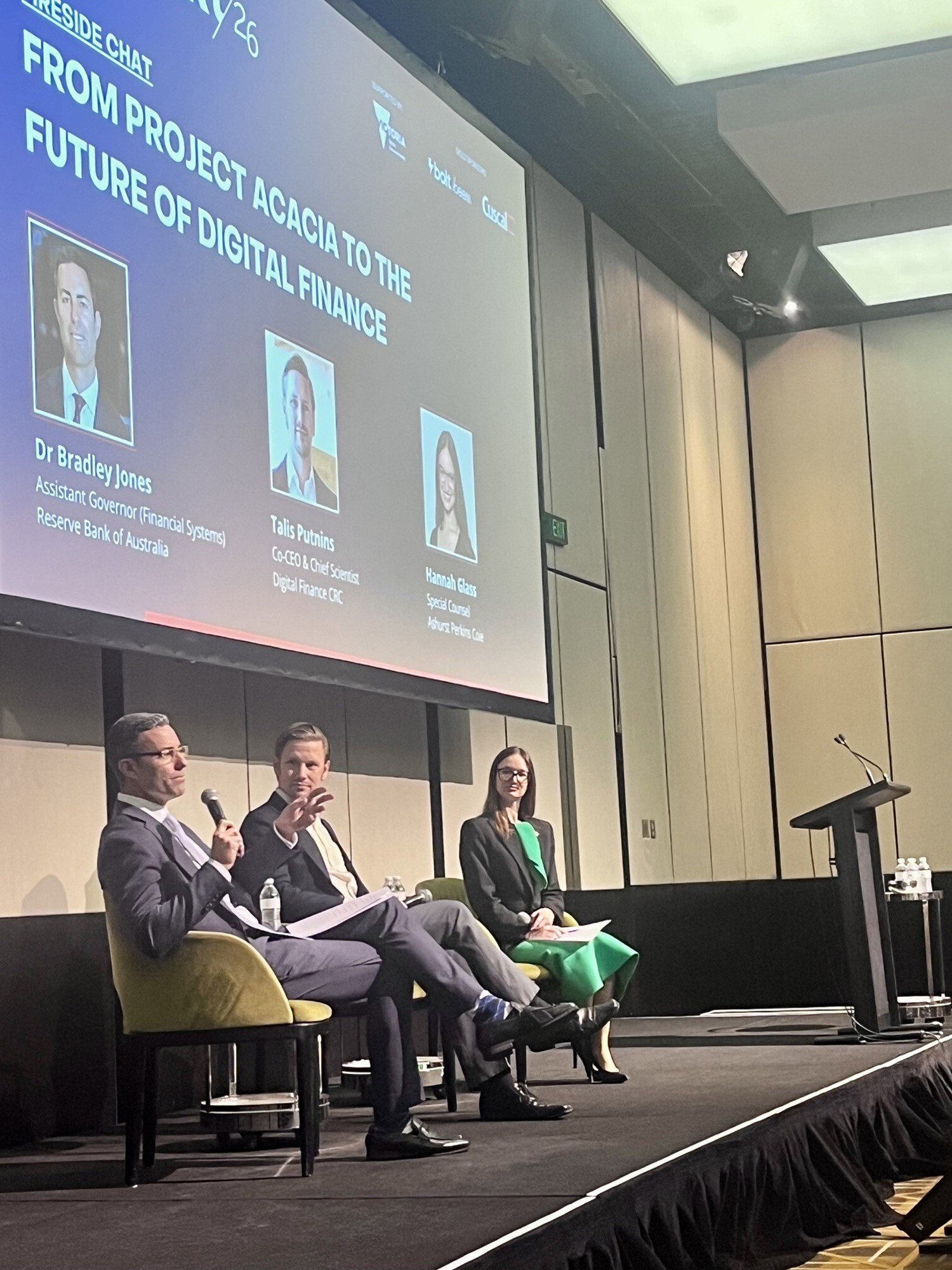
“This technology is not going to respect borders. We’ve got a really strong case for a seat at that [global] table.”
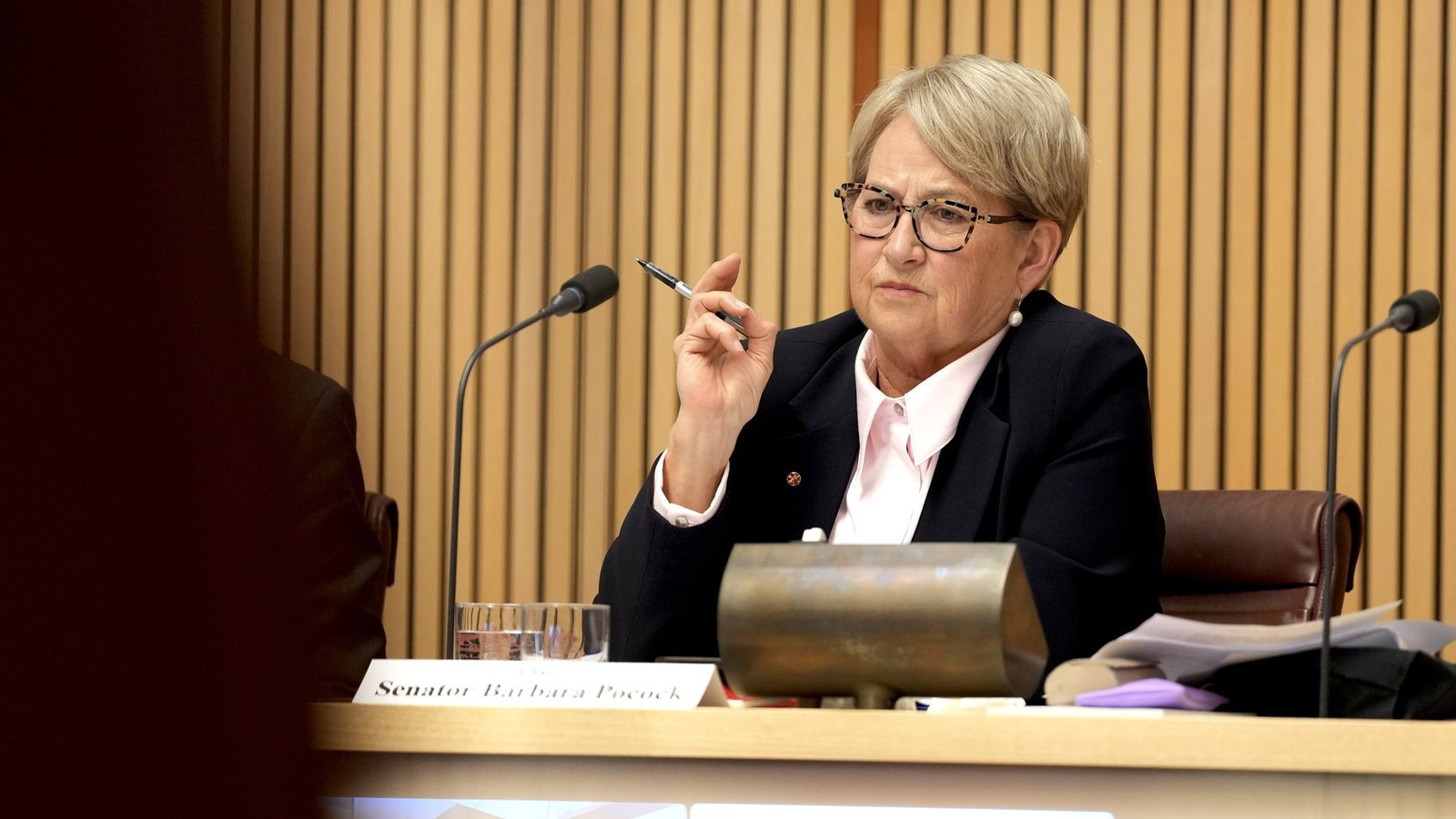
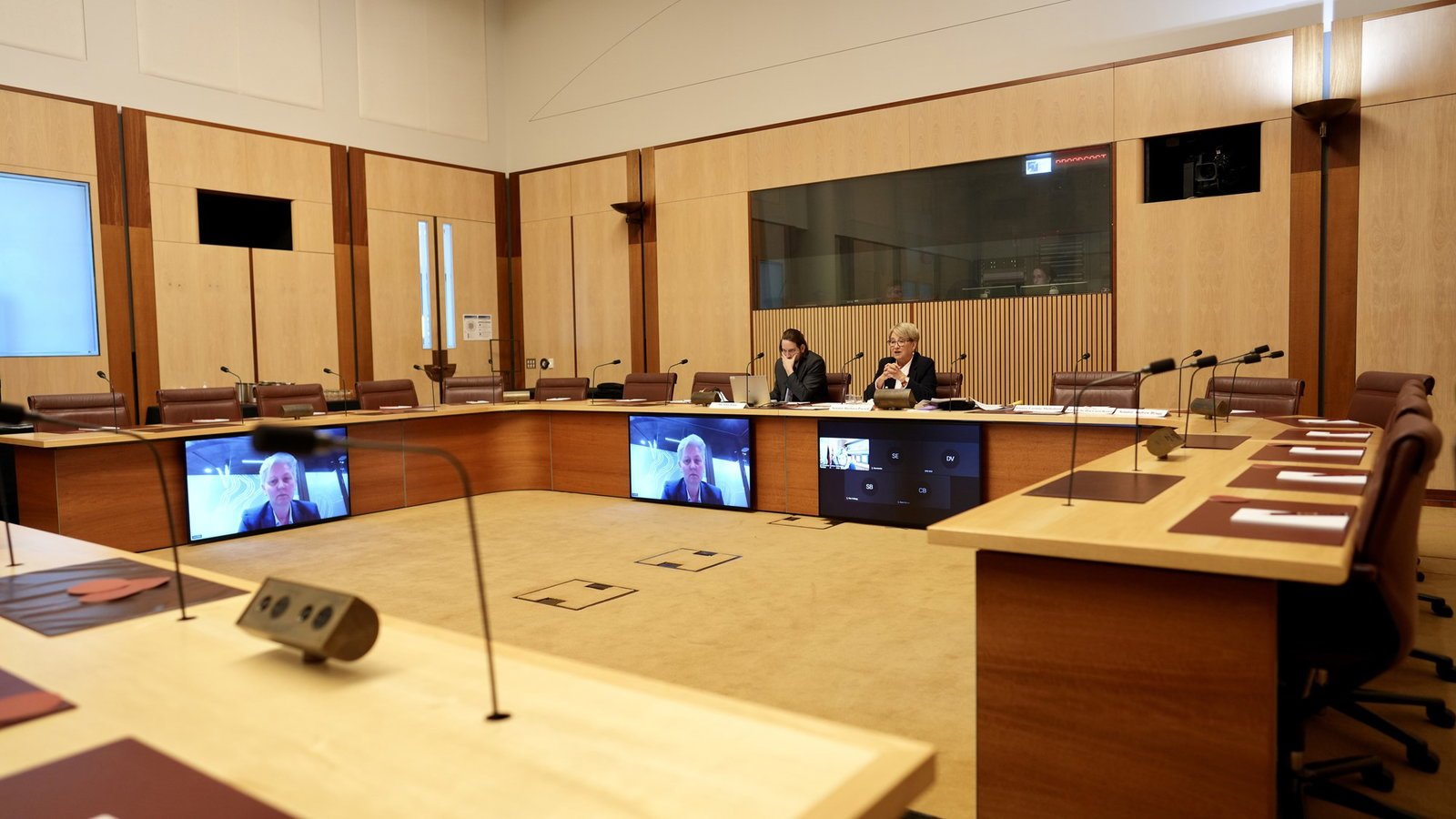
Inquiring into intergenerational housing inequity
These photos of the committee have come through from the ABC’s Callum Finn.
Greens senator Barbara Pocock, chair of the committee, speaks to Westpac chief economist Luci Ellis:
Lowe-coin still a long way away
I’m at key annual fintech event Intersekt in Melbourne where they’re talking about Project Acacia.
What’s that? Well the Reserve Bank has been exploring how digital money and “associated settlement infrastructure could enhance the functioning of Australia’s wholesale asset markets”.
That’s complicated.
We’re talking about the Koala Coin! The Eucalyptus Etherium! The former governor of the Reserve Bank (who started this process) Phil Lowe Coin!
Look, they’re still working on the name for our potential digital currency.
Dr Bradley Jones is the assistant governor (financial systems) at the Reserve Bank of Australia. It’s a complex discussion. We’ve already discussed the “fragmentation of liquidity”.
Most of the barriers have been barriers to innovation.
“The first issue is just the country has been crying out for mechanisms that are more structured … to facilitate public/private collaboration,” he says.
One of the biggest problems? Getting 57 industry participants and the four bodies of the Council of Financial Regulators (The Reserve Bank of Australia (RBA), the Australian Prudential Regulation Authority (APRA), the Australian Securities and Investments Commission (ASIC), and the Department of the Treasury) onto the same page.
They’re grinding towards a framework to make it happen. Dr Jones still sees issues around “scalability and resilience” but thinks we’ll get to a financial system that better incorporates modernised digital payment systems.
“I don’t see any of the barriers as being insurmountable,” he says.