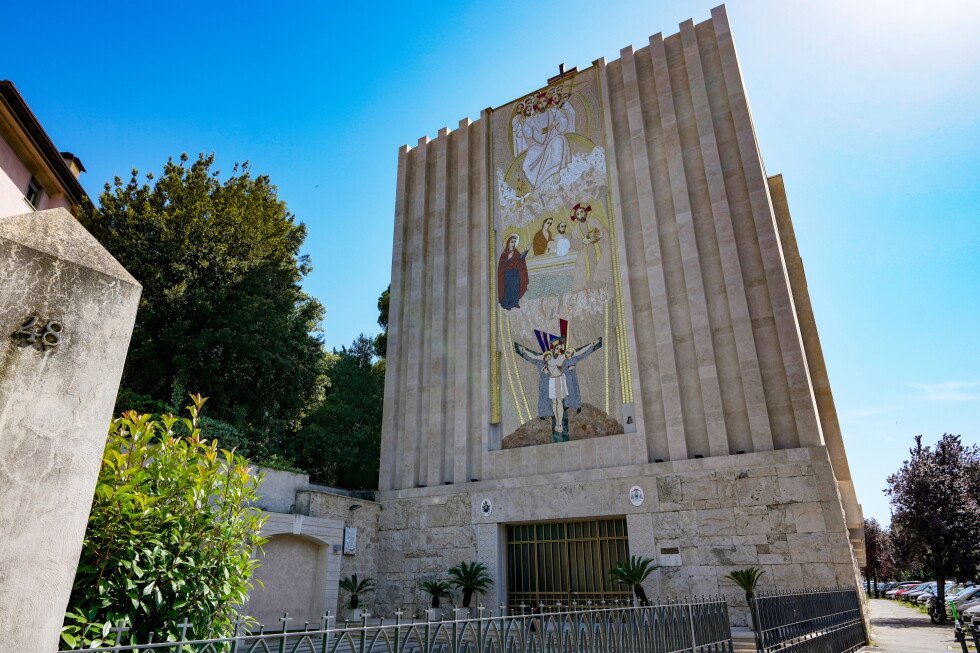
ROME (AP) — The Vatican on Wednesday confirmed that a church trial against a famous ex-Jesuit priest accused of spiritual and sexual abuse of women is ongoing and defended the secrecy of the proceedings as necessary to guarantee the process.
An Italian blog reported Monday that an acquittal verdict had been reached in the case against the Rev. Marko Ivan Rupnik, a Slovenian artist whose mosaic designs decorate Vatican chapels and churches and basilicas around the world.
A statement from the Vatican press office said the report was “totally unfounded” and that judges were continuing to “examine documentation provided by the dioceses involved, the Jesuits, the parties concerned, and from the press.”
A scandal that calls into question Pope Francis
The Rupnik scandal exploded publicly in late 2022, when Italian blogs first reported claims by women and nuns of sexual, spiritual and psychological abuse by Rupnik dating back to the 1990s that had been consistently dismissed by the Catholic hierarchy.
The Vatican has long considered any sexual relations between a priest and an adult as sinful but consensual, and only criminalizes the behavior if the adult “habitually lacks the use of reason.”
Amid the #MeToo reckoning about adult abuse in the church, the Rupnik case has become one of the most sensitive matters for the Holy See, given suggestions that the priest was protected for over three decades by his Jesuit superiors and the Vatican hierarchy, up to and including the Jesuit Pope Francis.
The Jesuits admitted that Rupnik had been excommunicated briefly in 2020 for having committed one of the Catholic Church’s most serious crimes: using the confessional to absolve a woman with whom he had engaged in sexual activity.
But the Vatican later refused to prosecute claims of other women against him, arguing the allegations were too old and involved adult women, not minors, at the time of the alleged abuse.
The Jesuits expelled Rupnik from their order in 2023 and Francis, under pressure because of suggestions he had protected the priest, waived the statute of limitations on the older claims so that the Vatican could open a proper canonical trial.
Rupnik remains a priest and his supporters have denied he did anything wrong. Maria Campatelli, director of the Rome-based Aletti Center that Rupnik founded, has said the claims against him were “defamatory and unproven” and amounted to a form of media “lynching.”
A blog report sparks outcry by victims’ lawyer
The blog report prompted the lawyer for five women who have accused Rupnik to write a scathing critique of the Vatican’s in-house canonical system, in which victims have no right to information about the investigation.
Attorney Laura Sgro complained in a letter Tuesday to the head of the Vatican’s doctrine office, which appointed the external judges hearing the case, that no one had responded to two years of emails and requests for basic information about the status of the case.
She said the report that Rupnik had been absolved had greatly “discouraged and saddened” her clients, since they had never been interviewed by the tribunal about their claims.
In its statement Wednesday, the Vatican press office said no information can be shared about the proceedings to respect the process itself and avoid causing harm to all those involved.
“Should the panel determine that it requires further information, it will take the necessary steps on its own initiative to obtain it,” the statement said in a comment that suggested the victims might still be heard.
A legal system with limits
The statement also addressed Sgro’s complaints that she had received no information about the status of the case, as would be expected in a civil or criminal trial. It noted that a canonical trial concerns only matters within the church, is carried out in accordance with canon law and is not meant to replace civil or criminal justice outside the church.
In canonical abuse investigations, victims are mere third-party witnesses to their cases. They cannot participate in any of the secret proceedings, have no access to case files and no right to know if a canonical investigation has been started, much less its status.
Only due to a Francis reform in 2019 are victims allowed to know the ultimate outcome of their case, but nothing else.
Accused priests also have limited rights in canonical abuse trials and have long complained about secrecy and violations of basic rights afforded to defendants in civil or criminal processes outside the church.
The lack of rights owed to victims in particular has been repeatedly condemned by international commissions and inquests into clergy abuse that have found that the church’s judicial procedures retraumatize victims through their secrecy and opacity.
Part of the problem is that canon law was never meant to address the needs of abuse survivors or to help them heal. The official goal of the system is institution-centric: to restore justice, reform the offender and repair scandal.
___
Associated Press religion coverage receives support through the AP’s collaboration with The Conversation US, with funding from Lilly Endowment Inc. The AP is solely responsible for this content.