The Federal Reserve held interest rates steady for the fifth consecutive policy meeting this year, amid a rebound in oil prices driven by renewed tensions in the Middle East.
The central bank voted in a split decision to hold its benchmark interest rate in the range of 3.5% to 3.75%. Minneapolis Fed president Neel Kashkari, Dallas Fed president Lorie Logan, and Cleveland Fed president Beth Hammack dissented, preferring to raise rates by a quarter percentage point.
Officials made no changes to their policy statement, reaffirming that inflation remains elevated due to the increase in energy prices from the Middle East conflict, and they repeated their commitment that the “committee will deliver price stability.”
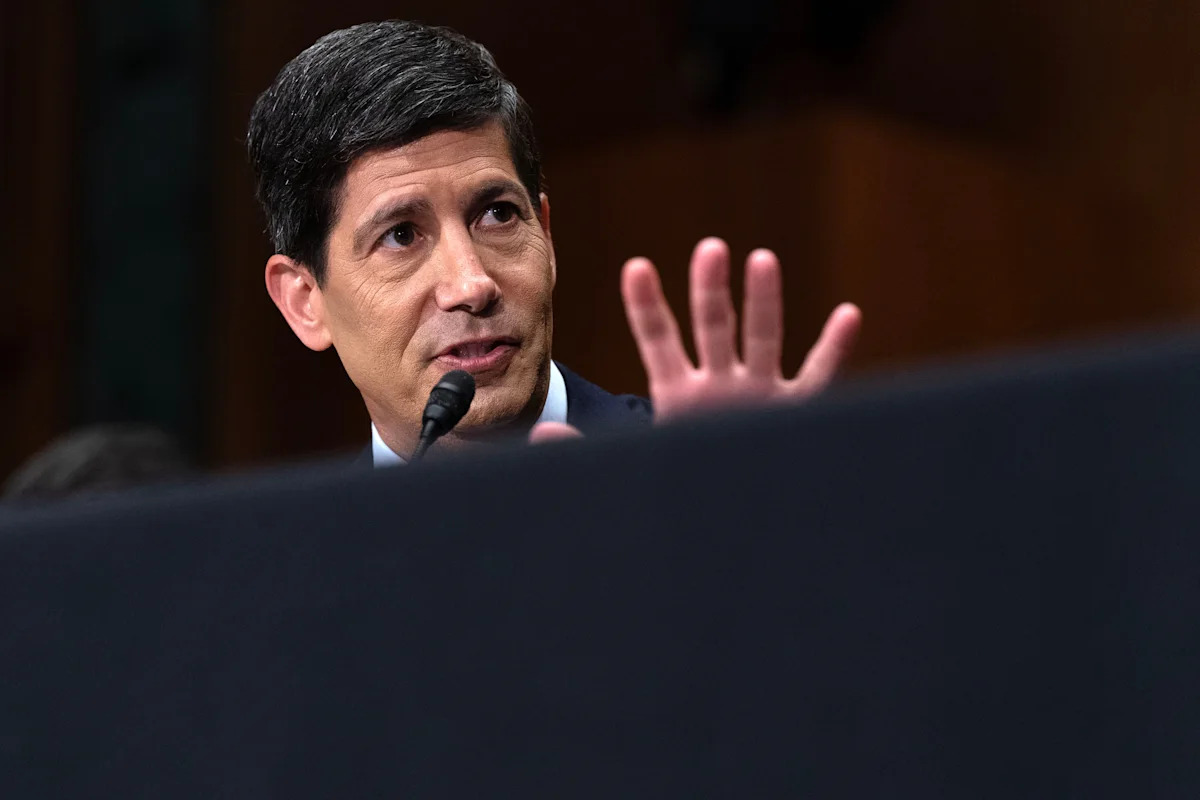
“The economy output is solid, capex and productivity are strong, labor market’s solid, steady,” Fed Chairman Kevin Warsh said in a press conference following the meeting.
However, he also acknowledged that inflation remains elevated.
“Five years of high inflation have left a mistaken impression that’s hard to shake, that the Fed’s implicit inflation target was somehow above 2%. Let me reiterate: There is no soft inflation target, there is no soft implicit target, not on this committee’s watch.
“There’s only a target and it’s 2%.”
June inflation figures showed some relief from price growth excluding volatile food and energy prices. The so-called “core” Consumer Price Index dropped to 2.6% in June, from 2.9% a month earlier, as a near 10% decline in gasoline prices helped pull headline inflation down to 3.5%, from 4.2%. Still, that’s only one month, and tensions have flared back up in the Middle East, sending oil prices north again. Fed officials are more attentive to whether higher energy prices could seep through to higher core inflation since it’s a better indicator of actual inflation.
“A lot of our focus was on trying to understand and identify underlying inflation dynamics amid (supply) shocks,” Warsh said Wednesday. “We take these shocks seriously. There have been a series of them that have been hitting this economy.
“We’re not looking through them and saying, ‘oh, they don’t matter.’ What we’re trying to understand is to what extent are these shocks broadening in their effects, broadening in their impact on prices that are quite far removed from it?”
Several officials signaled ahead of the meeting that they were content to hold rates steady this month, including Fed Governors Lisa Cook, Chris Waller, and Philip Jefferson. But they have also said that if inflation doesn’t start to cool down soon, a rate hike would be under consideration.