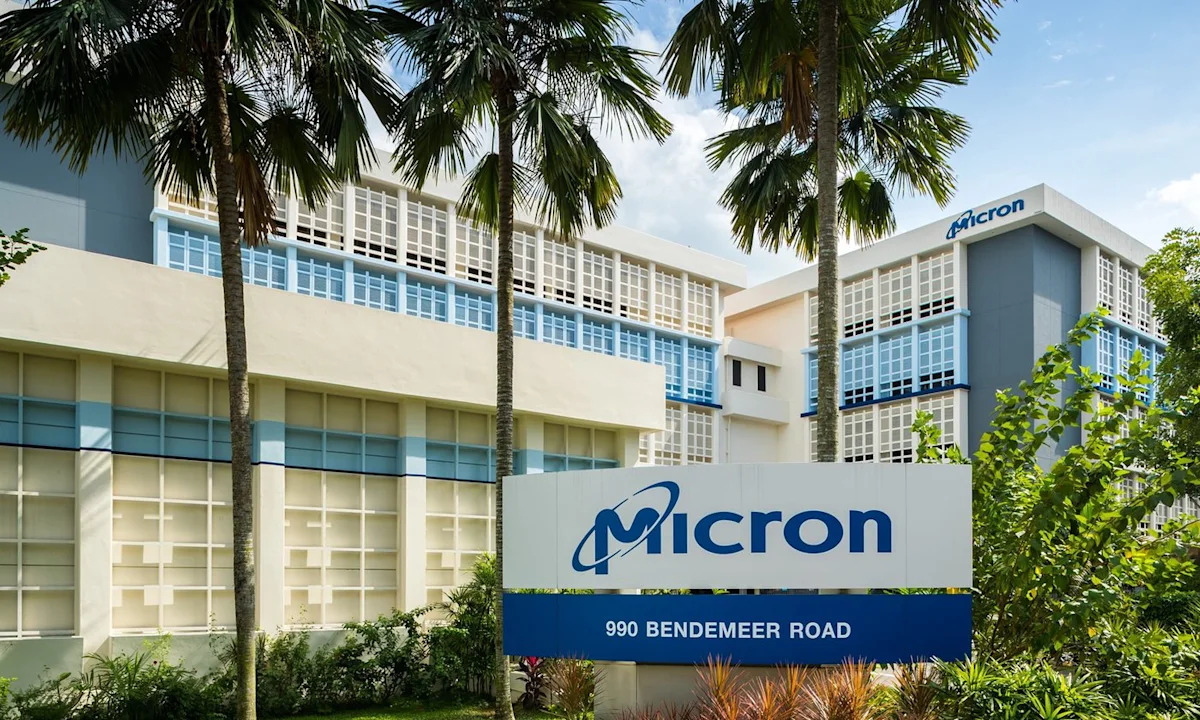
The exponential growth in earnings registered by Micron Technology (NASDAQ: MU) over the past year has translated into solid gains on the stock market, with shares of the memory giant up by a whopping 637% during this period.
The incredible demand for memory and the accompanying shortage of dynamic random-access memory (DRAM) and NAND flash storage have fueled the company’s remarkable surge. Micron stock has benefited from a parabolic jump in memory prices. You may now be wondering if this high-flying chipmaker can continue skyrocketing.
Missed Nvidia in 2009? This Rare Signal Is Flashing Again. In 2009, a “Double Down” signal flashed for a little-known chipmaker called Nvidia. For the first time in years, that same “Total Conviction” signal is flashing for a company 1/100th the size of Nvidia. Continue »
The good news is that it can indeed sustain its red-hot rally well into 2027. To see why that’s likely to be the case, we will need to take a closer look at the primary catalyst that has sent this semiconductor stock soaring over the past year.

Rising memory prices have fueled Micron’s rally, and the trend is here to stay
Artificial intelligence (AI) data centers need faster compute memory and ample storage to run training, inference, and agentic AI workloads efficiently. As a result, the demand for DRAM and NAND flash memory has taken off. High-bandwidth memory (HBM), in particular, has created a huge supply shortage as it requires three times the wafer capacity needed to manufacture conventional DRAM, according to Bank of America.
HBM is critical in AI accelerators, enabling the rapid transport of large data sets with low power consumption. Chip designers have been packing in more HBM into custom processors, graphics cards, and even server processors to ensure these chips don’t sit idle. Not surprisingly, the HBM market is anticipated to grow by a whopping 7x by 2030, generating $246 billion in revenue by the end of the decade.
However, the booming demand for HBM has created a ripple effect across the memory industry. The wafer-intensive nature of these chips has created a shortage of traditional DRAM and NAND flash, as memory makers have been prioritizing HBM production to increase profits. This is why NAND flash prices nearly doubled over the final six months of 2026, according to Taiwan-based Phison, which manufactures NAND flash controllers.
Meanwhile, DRAM prices reportedly surged 170% last year, according to a third-party estimate. This historical trend of higher memory prices has been the primary catalyst behind Micron’s astronomical jump, and there is ample evidence that prices will strengthen further, leading to more upside in this semiconductor stock.