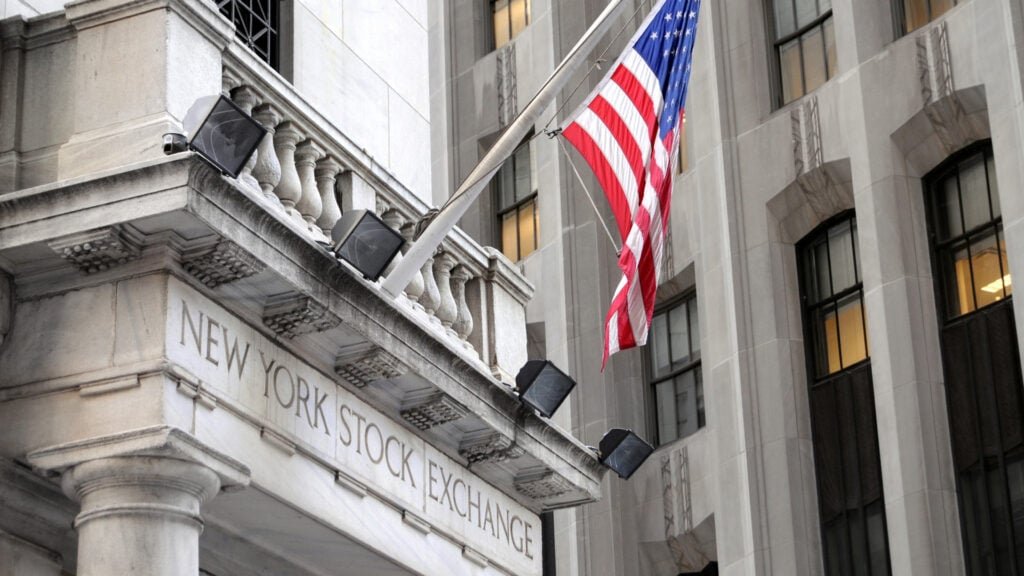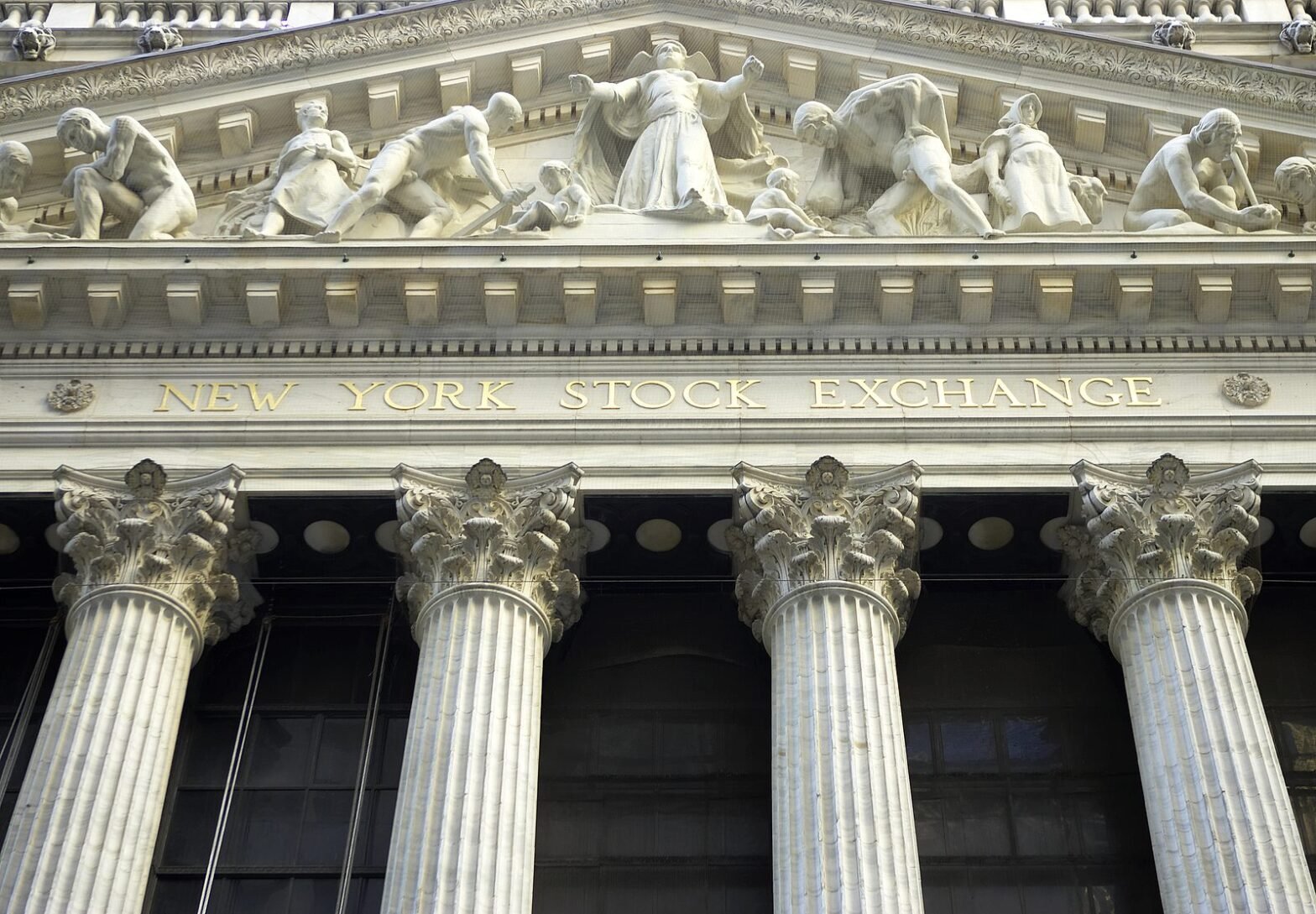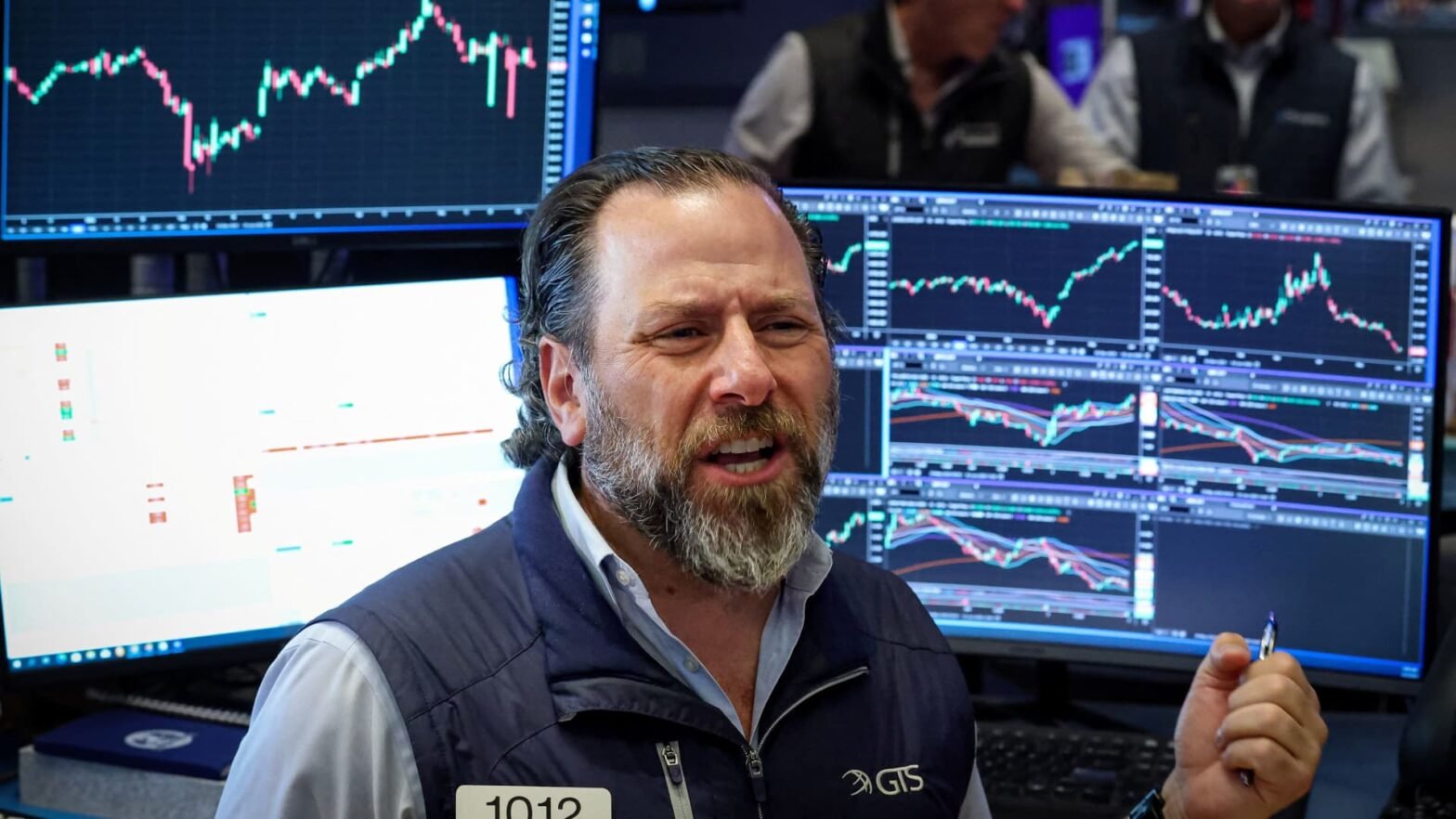
Traders work on the floor at the New York Stock Exchange in New York City, U.S., June 3, 2026.
Brendan McDermid | Reuters
U.S. stock futures hovered around the flatline Monday night after the major averages began the new week on a losing note, as tensions between the U.S. and Iran persisted and inflation concerns led to higher Treasury yields.
Dow Jones Industrial Average futures traded 25 points lower. S&P 500 futures fell marginally along with Nasdaq-100 futures.
In Asia, South Korea’s benchmark Kospi jumped 1.9% Tuesday, while Japan’s Nikkei 225 fell 0.94%. Australia’s S&P/ASX 200 edged 0.19% higher. Hong Kong’s Hang Seng Index slid 0.19%, while the CSI 300 lost 0.12%.
The moves in U.S. futures follow a losing session for stocks, as oil prices climbed more than 2% on uncertainty around a U.S.-Iran ceasefire that expired Monday. Negotiations between the countries have stalled, and President Donald Trump said he would attack Oman “if it gets in the way.”
The rise in oil prices stoked inflation fears, driving longer-dated Treasury yields higher. The 30-year Treasury bond yield reached a peak not seen since June 2007.
Leading the way lower for stocks were the Dow and S&P 500, with each benchmark losing 0.5%. The Nasdaq was a relative outperformer, though it still pulled back by 0.3%.
Sonali Basak, chief investment strategist at iCapital, still thinks there’s fuel left in the stock market, however, especially as the rally broadens beyond Big Tech.
“You look around and there’s still more room to run,” Basak told CNBC’s “Closing Bell” in an interview. “Even in the last month, the S&P Equal Weight still did not outperform the Nasdaq or the SOXX — which tells me it’s still been relatively left behind, even in recent days.”
On the economic data front, investors will pore over import and export pricing figures for July, along with housing starts and pending home sales. Home Depot will also post second-quarter earnings before the bell.
China 10-year government bond yield gap widens with U.S. Treasurys
The gap between the Chinese 10-year government bond yield and U.S. 10-year Treasury is widening again, reflecting growing divergence between the world’s two largest economies.
The spread climbed to 303 basis points Monday, matching levels seen on July 31, and headed toward a high of 315 basis points seen in January 2025, according to Wind Information data going back to 2007.
As China’s economy has struggled with weak domestic demand, the 10-year government bond yield has persistently traded below that of the U.S. 10-year Treasury yield since 2022.
Weaker-than-expected China economic data released Monday raised expectations of policy easing, which if followed through increase the yield spread further.
In the U.S., Treasury yields rose, with the 30-year hitting its highest since June 2007, as rising oil prices added to investor worries about high inflation and government debt levels.
— CNBC’s Sean Conlon and Hugh Leask contributed to this report.
South Korea stocks rise at open, Japanese benchmarks fall
Asia-Pacific markets traded largely lower Tuesday, with South Korean stocks bucking the broader decline after resuming trade from a holiday.
South Korea’s benchmark Kospi jumped 2%, powered by gains in chip giants Samsung Electronics and SK Hynix which added 3% and 5% respectively.
Japan’s Nikkei 225 was down 0.9% while the Topix declined 0.28%.
Australia’s benchmark S&P/ASX 200 was flat at the open.
— Lee Ying Shan
Asia-Pacific markets set to open lower as investors assess U.S.-Iran tensions
Asia-Pacific markets were set to fall Tuesday as U.S. President Donald Trump ruled out extending a 60-day agreement with Iran that had led to a fragile ceasefire between the two countries, while also threatening Oman with military action.
Japan’s Nikkei 225 Chicago futures contract was trading at 68,990 and its Osaka counterpart was last at 68,970 compared with the index’s previous close of 69,220.25.
Hong Kong’s Hang Seng index futures last traded at 25,355, below the benchmark’s close of 25,453.23.
Futures for Australia’s S&P/ASX 200 last traded at 8,976 compared with the index’s last close of 9,073.2.
Trump said informal talks were underway with Iran’s Revolutionary Guard but that he was “not in a hurry” to reach an agreement. “They’re good poker players, but they’re dying,” he told Fox News.
Hours later, Trump said he would not seek to extend the temporary truce. “No,” he told reporters when asked about an extension.
— Lee Ying Shan
L3Harris ousts CEO
Shares fell over 4.5% in regular trading for the defense contracting giant L3Harris Technologies after the company removed CEO Chris Kubasik.
The company ousted Kubasik after discovering he engaged “certain conduct … that was not consistent with the values of the Company,” L3Harris Technologies said in a statement Monday. Kubasik has been replaced by Sam Mehta as chief executive officer and president.
After Monday’s close, shares were up marginally.
— Ananya Chetia