What’s faster than a speeding bullet, more powerful than a locomotive, and able to leap tall buildings in a single bound? No, it’s not Superman. It’s the stock market anytime President Donald Trump is in the White House.
During Trump’s first, non-consecutive term, the timeless Dow Jones Industrial Average (DJINDICES:^DJI), benchmark S&P 500 (SNPINDEX:^GSPC), and technology-propelled Nasdaq Composite (NASDAQINDEX:^IXIC) rallied 57%, 70%, and 142%, respectively. Since the president’s second-term inauguration, these indexes have gained an additional 23%, 28%, and 32%, respectively (as of the closing bell on Aug. 24).
Missed Nvidia in 2009? This Rare Signal Is Flashing Again. In 2009, a “Double Down” signal flashed for a little-known chipmaker called Nvidia. For the first time in years, that same “Total Conviction” signal is flashing for a company 1/100th the size of Nvidia. Continue »
While the stock market typically advances under most presidents, the annualized returns of the Dow, S&P 500, and Nasdaq Composite are higher under Trump than under most presidents since the late 1890s.
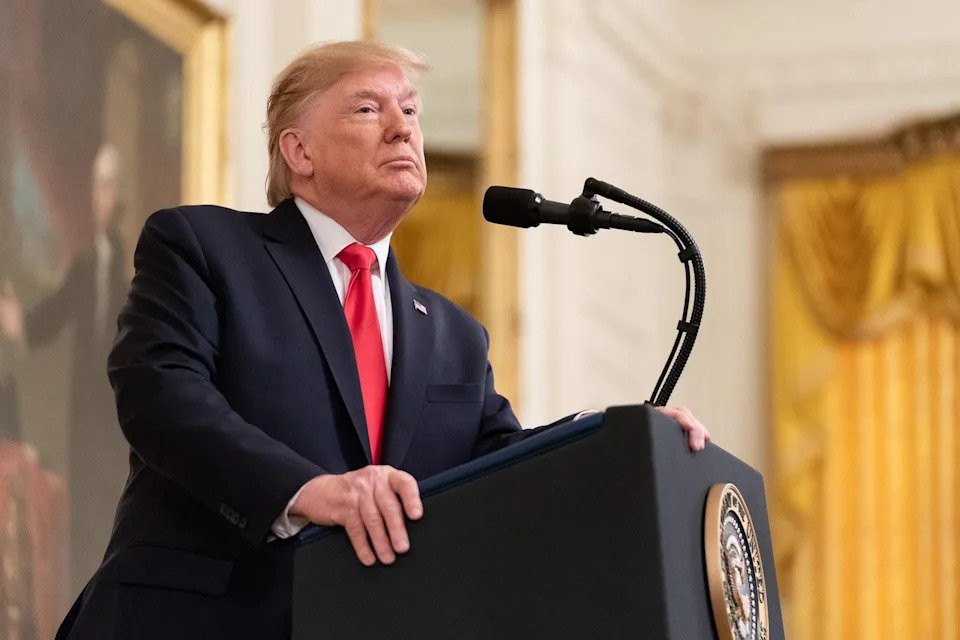
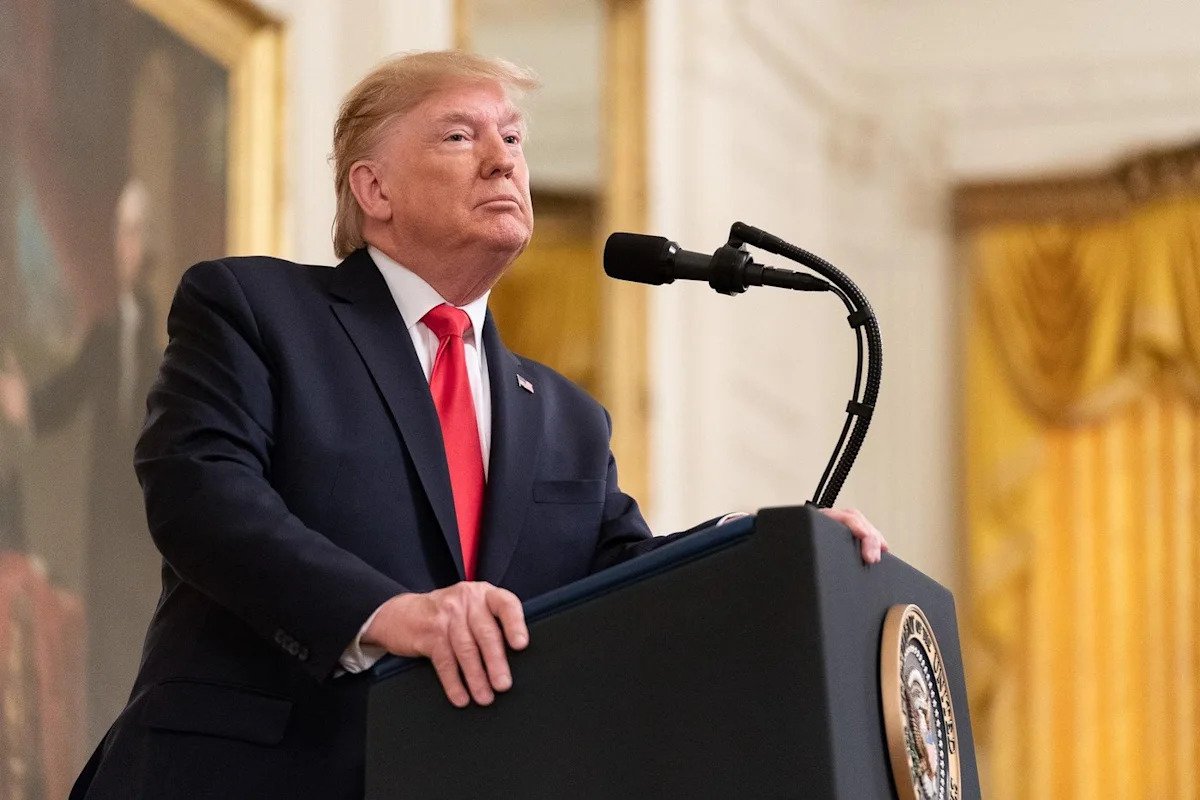
The stock market has soared under President Trump. Image source: Official White House Photo by Shealah Craighead, courtesy of the National Archives.
But these gains under President Trump have also occurred amid historic bouts of volatility. During the unforeseen COVID-19 crash, the broad-based S&P 500 shed 34% of its value in 33 calendar days. Likewise, the “tariff tantrum” in early April 2025 witnessed the S&P 500 lose more than 10% of its value over just two trading sessions.
It begs the question: Is a stock market crash imminent under President Donald Trump?
While short-term directional moves in Wall Street’s major stock indexes can’t be guaranteed, 85 years of historical precedent offers an answer — and investors might not be thrilled with it.
Trump’s second term has been packed with geopolitical/major events
Since Donald Trump’s inauguration on Jan. 20, 2025, he’s been somewhat of a magnet for major geopolitical and historical events.
There was the aforementioned tariff tantrum, involving the April 2025 unveiling of sweeping global tariffs and higher reciprocal tariffs on dozens of countries deemed to have unfavorable trade imbalances with America. The U.S. also bombed nuclear facilities in Iran in June 2025, removed Venezuela’s President, Nicolas Maduro, in early January 2026, and began military operations against Iran at the end of February 2026.
Shortly after the Trump-led Iran war began, Carson Group’s Chief Market Strategist, Ryan Detrick, published a data set to X (formerly Twitter) examining the performance of the benchmark S&P 500 at various intervals following more than three dozen stock market shock events since the start of 1940.