TOKYO, Oct 16 (Reuters) – Asian stocks rebounded on Friday following heavy selling in the previous session when investors dumped tech shares as questions about cloud company CoreWeave’s debt pile fuelled worries about the financing driving the AI boom.
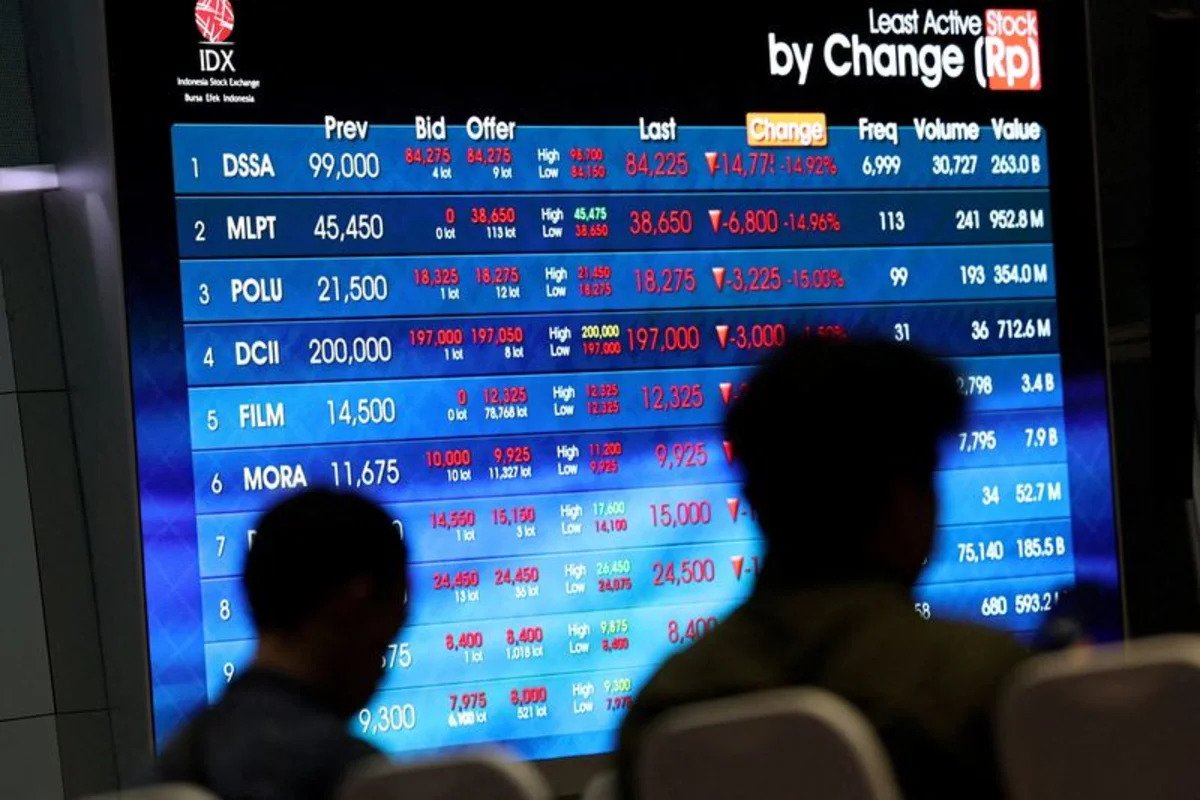
However, Indonesia’s equity benchmark slumped 11%, the most since 1998, after MSCI said the stock market no longer merited “emerging market” status.
The index provider is preparing to cut the Southeast Asian stock market from a suite of products tracked by global investors, a major setback likely to send money fleeing.
“The proposal highlights MSCI’s dissatisfaction with the pace of reforms and raises further questions about the investability of the market,” said Tan Altundag, investment manager for emerging equities at Pictet Asset Management.
“The investment implications could be significant,” added Altundag, who has no holdings in Indonesia.
Bond markets stabilised after yields plunged on Thursday as traders bought up Treasuries and other safe-haven sovereign debt. The dollar limped towards its first weekly loss in five weeks as lower US yields eroded the currency’s appeal. [FRX/]
Gold extended Thursday’s highs, while Brent crude edged down toward $105.
Japan’s tech-heavy Nikkei rose 1.9%, making back some of Thursday’s almost 5% tumble. South Korea’s KOSPI climbed 3.3%, following a nearly 8% plunge.
Taiwan’s stock benchmark rose 0.3% and Hong Kong’s Hang Seng added 1%. Mainland Chinese blue chips were little changed.
Pan-European STOXX 50 futures advanced 0.7%.
US stock futures edged up, with tech-focused Nasdaq futures and S&P 500 futures each 0.2% higher, after the respective cash indexes notched small gains on Thursday. [.N]
Shares of Nvidia-backed CoreWeave recovered some composure on Thursday after starting the session by extending Wednesday’s 15.5% slump amid reports that its bond yields had reached highs associated with distressed debt, triggering a broad, AI-centred equity selloff globally.
PRESSURE ON SHARES OF MEMORY MAKERS
Analysts also pointed to the pressure on memory maker shares this week after China’s ChangXin Memory Technologies (CXMT) reported progress on a next-generation DRAM architecture that could intensify competition with established manufacturers.
“Global markets are getting very noisy once again after a period of low volatility: Wall Street is whipsawing, bond yields are swinging, currency markets are doing backflips, and commodity prices are running in multiple directions,” Kyle Rodda, a markets analyst at Capital.com, wrote in a client note.