Stock Market Crash: Indian stock markets came under heavy selling pressure on Wednesday (October 28) as elevated crude oil prices, US-Iran tensions, and caution ahead of the US Federal Reserve’s policy decision unsettled investors.
The BSE Sensex fell as much as 826 points while the NSE Nifty 50 shed over 200 points by 11 am. FOLLOW LIVE MARKETS UPDATES
Information technology (IT) stocks led the losses. Infosys, Tech Mahindra and Tata Consultancy Services (TCS) were among the major drags on the benchmark indices. Besides, the Nifty IT index dropped 3.2 per cent, while the Nifty FMCG index declined 1.22 per cent. The broader market showed a mixed trend, with the Nifty Smallcap 100 down 0.16 per cent and the Nifty Midcap 100 trading 0.35 per cent higher.
Also Read | Layoffs Are Rising In Tech, But These Skills Are Helping People Unlock Better Pay
Here are four key reasons behind the market fall:-
1. Crude Oil Prices Surge Above $115
Rising oil prices remain a major concern for Indian markets. Brent crude climbed above $115 per barrel on Wednesday amid fears of supply disruptions in the Middle East. Reports of possible fresh military action against Iran added to these concerns. Tighter US crude inventories also supported oil prices.
Higher crude prices are a particular worry for India, which imports a large share of its oil requirements. An extended rise in energy prices can increase the country’s import bill, put pressure on the rupee and push up inflation. Companies could also face higher transportation, manufacturing and operating costs. This may hurt profit margins and weigh on investor sentiment.
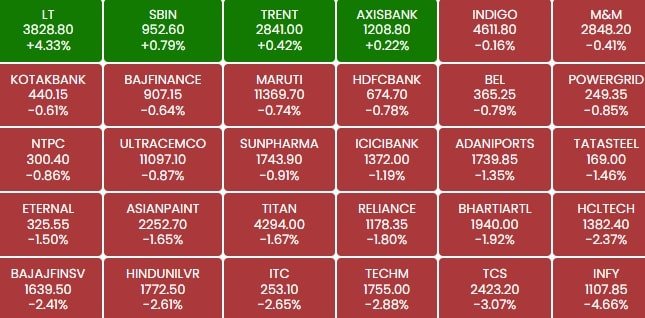
BSE Heatmap At 10:50 AM
2. US-Iran Tensions Keep Investors On Edge
Uncertainty over the conflict involving the US and Iran has added to the nervousness in global markets. Reports suggested that US President Donald Trump was considering a short, intense military campaign against Iran. However, no final decision to launch a fresh campaign had been confirmed.
Diplomatic efforts to ease tensions are continuing, but a breakthrough remains elusive. Concerns over the Strait of Hormuz, a key route for global oil and liquefied natural gas shipments, have further heightened worries about energy supplies. For India, any escalation that keeps oil prices elevated could create additional pressure on inflation, the rupee and corporate earnings.
3. Profit Booking And Cautious Trading After Expiry
Investors are also turning cautious after Tuesday’s derivatives expiry, with some traders choosing to book profits rather than take fresh positions.
4. Investors Await US Federal Reserve Decision
The upcoming US Federal Reserve policy decision is another factor keeping investors on the sidelines. The US Fed is widely expected to leave its benchmark interest rate unchanged in the range of 3.75 per cent to 4 per cent. However, investors are looking for clues about the central bank’s future policy direction.
Comments from Fed Chair Kevin Warsh and the accompanying policy statement could influence expectations around interest rates. A hawkish message, suggesting that rates may remain high for longer or could rise further, may support the US dollar and bond yields. This could make equities less attractive and affect foreign investment flows into emerging markets such as India.