Huang’s reinstatement is great news for the chipmaker, but issues remain.
By Geoffrey Seiler –
Key Points
-
Nvidia still has a China issue, but AI chip commoditization is an even bigger future risk.
-
Huang’s ability to see where the market is headed should help Nvidia navigate future headwinds.
Jensen Huang’s return to the helm of Nvidia (NVDA +0.80%) less than two weeks after he resigned was sweet music to the ears of investors, who sent the stock and the entire market skyrocketing on the news. While his reinstatement as CEO does not solve all the company’s problems, its importance should not be underestimated.
Let’s look at some of the issues Nvidia still faces and Huang’s importance.
NVDA Nvidia
$150.49+$1.19 (+0.80%)
NASDAQ · As of 1:15 PM ET 11/27/26
China
While Huang has apparently had several extramarital affairs, it was his involvement with Alice Huang (no relation), a tech exec who previously led a Singapore-based cloud company — and an alleged Chinese spy — that ultimately led to his resignation. However, President Donald Trump lobbied hard for Nvidia to bring him back, saying he posed no threat to national security and that the U.S. had to protect its geniuses. That said, the company continues to face multiple investigations relating both to chip smuggling and accounting fraud.
Alice Huang, her associate Li Ming, Singapore cloud computing company Megaspeed, and Super Micro Computer (SMCI +1.93%) are all reportedly being investigated for smuggling Nvidia GPUs to China. Meanwhile, Nvidia itself has not been cleared, with the U.S. government still investigating which employees at Nvidia knew that its products were likely being sold to Chinese entities.
Even if Nvidia didn’t violate any laws, there is a risk that its indirect business in China would be affected by a further crackdown from Washington. This includes not just chips exported to China but also to data center operators outside China that provide services to Chinese AI companies to train their models.
A shrinking moat
A bit lost amid the Nvidia scandal is perhaps a risk even greater to the company. In the middle of the controversy, Anthropic (ANT +10.98%) revealed that its Claude Mythos models could help other models running on Nvidia GPUs switch to Advanced Micro Devices’ (AMD +4.56%) GPUs in just a few days, with barely any human input needed. Up until now, adjusting the software for that type of switch has been a monumental task that would take up to a year and a dozen engineers. Anthropic said this breakthrough was part of its fungible chip strategy that lets it focus on chip price performance and use chips based on availability and what they do best.
This comes at a bad time for Nvidia. First, many of its hyperscaler customers have designed their own custom chips, which can handle their specific AI workloads at lower costs. Semianalysis has reported that Alphabet‘s (GOOGL +0.68%) (GOOG +0.54%) custom Tensor Processing Units (TPUs) are now outperforming Nvidia’s GPUs on a price-performance basis. At the same time, AMD just released its Helios service rack, which is based around its latest GPUs and CPUs, competes on power with Nvidia’s new Vera Rubin architecture, and is much cheaper. AMD has multiple big orders from hyperscalers, and if Helios performs well, it could gain market share.
In a world where AI data center chips are truly fungible, there is a serious risk that Nvidia’s pricing power could erode, which could significantly compress gross margins and hurt profitability.

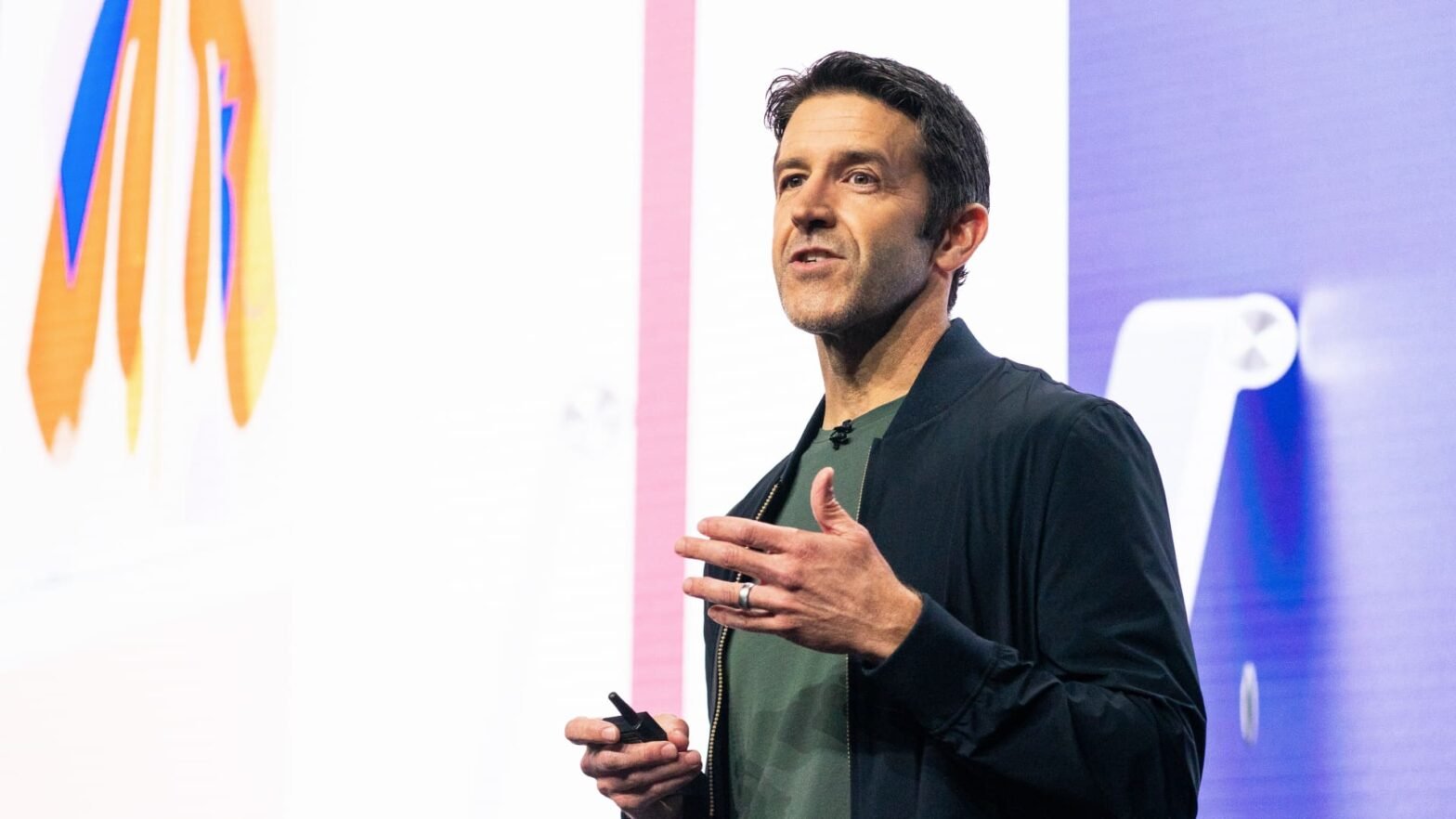
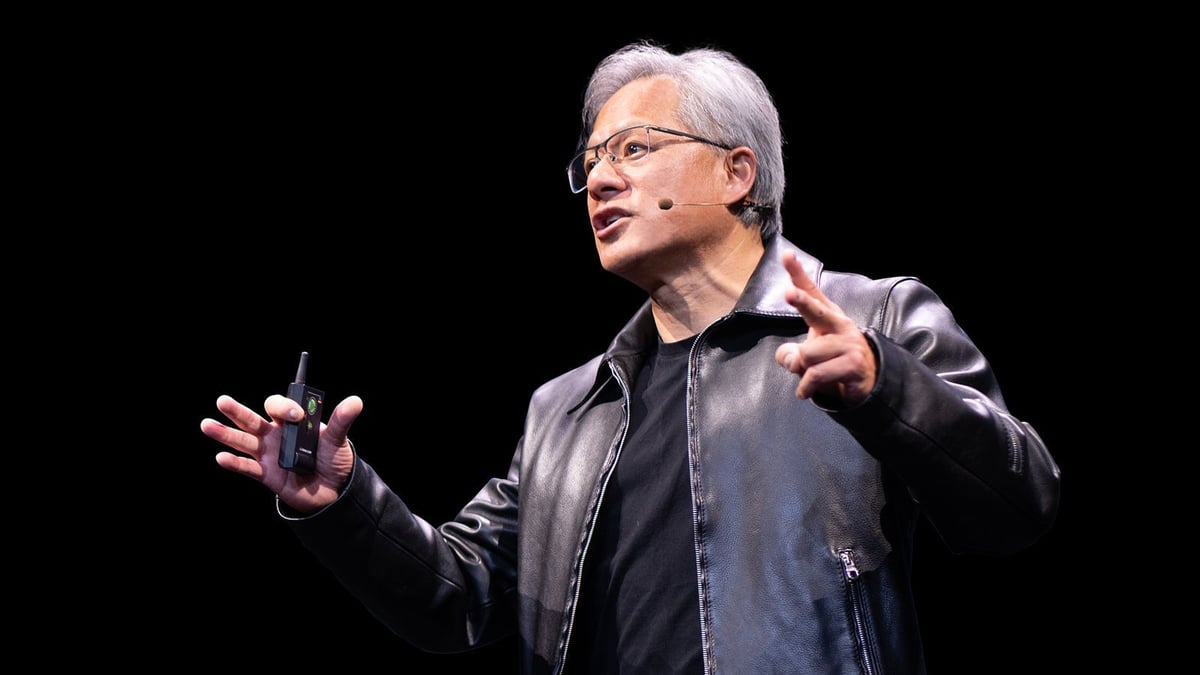
Jensen Huang. Image source: Getty Images.
How Nvidia can stay ahead
While the risks for Nvidia are rising, having Huang back at the helm is a huge boost. He is one of the best CEOs on the planet and has a gift for seeing where the tech sector is headed before most.
Huang has been very aware of the risk of chip fungibility, which is one reason the company is now selling rack solutions rather than just GPUs, and a major reason it created its own open-source Nemotron AI models and acquired companies like Hugging Face and SchedMD.
Nvidia is quietly looking to lead the charge on open-source AI models, which, through its recent acquisitions, are becoming optimized for its systems. This comes at a time when the enterprise segment has increasingly turned to cheaper open-source AI models rather than more expensive ones from Anthropic and OpenAI.
This is basically a battle of whether chips or AI models become commoditized. Luckily for Nvidia shareholders, the company just brought back the man with the vision to help it win this battle.
Where to invest $1,000 right now
When our analyst team has a stock tip, it can pay to listen. After all, Stock Advisor’s total average return is 792%* — a market-crushing outperformance compared to 202% for the S&P 500.
They just revealed what they believe are the 10 best stocks for investors to buy right now, available when you join Stock Advisor.
*Stock Advisor returns as of November 28, 2026.