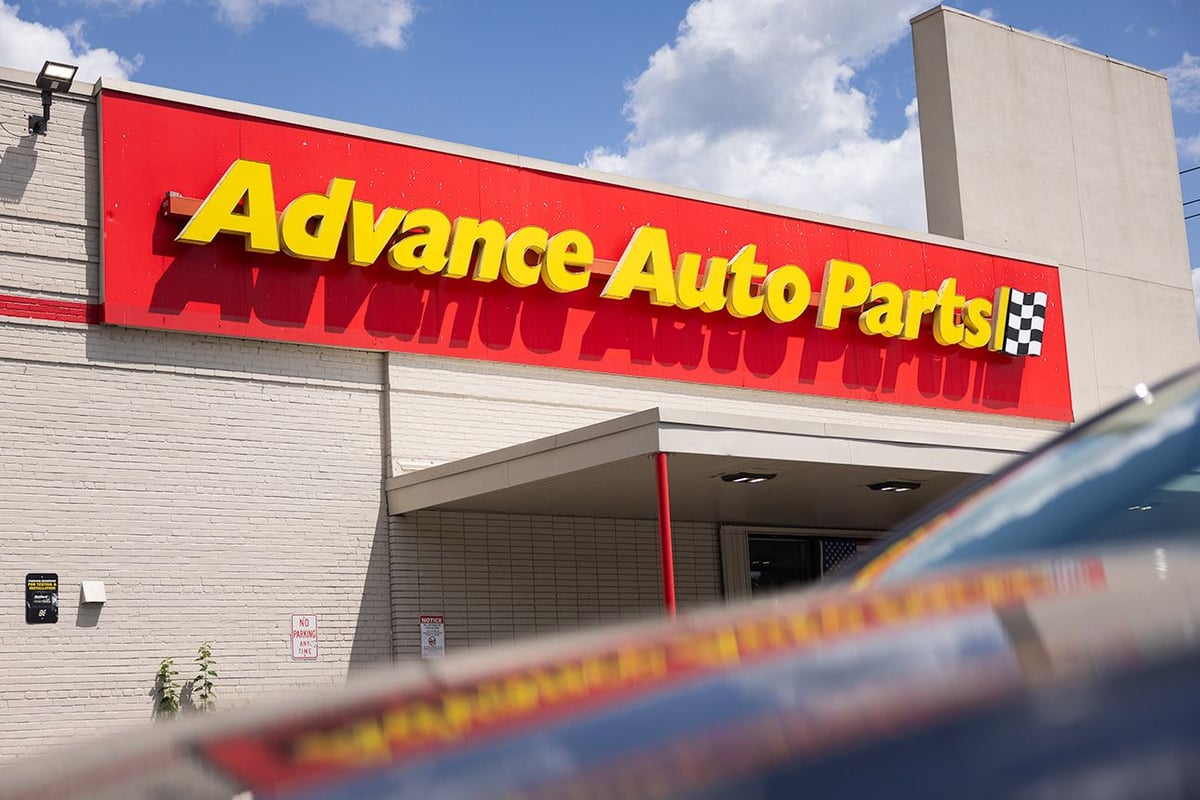
Shopify’s 32.5% revenue jump and debt-free balance sheet stand in sharp contrast to Advance Auto Parts’ flat sales and heavy leverage, but valuation may tip the scales.
By Brendan Coffey – Updated
Key Points
-
Advance Auto Parts maintains a strong market position by serving both professional installers and do-it-yourself customers.
-
Shopify continues to expand its reach as a primary cloud-based commerce platform for millions of global merchants.
-
Which stock offers the better balance of growth and valuation for your portfolio leading into 2027?
Investors today face a choice between a legacy retailer undergoing a strategic shift and a high-growth technology platform. Choosing between Advance Auto Parts (AAP -0.76%) and Shopify (SHOP +6.28%) requires weighing turnaround potential against scaling infrastructure.
AAP & SHOP: Performance Comparison
Advance Auto Parts focuses on the physical automotive aftermarket, while Shopify provides the digital plumbing for modern global commerce. This comparison examines their financial health, growth trajectories, and valuation multiples to help you decide which fits your 2027 goals.
The case for Advance Auto Parts
Advance Auto Parts is a major provider of automotive aftermarket parts, serving two distinct customer segments. About 50% of its sales come from professional installers, such as garages and dealerships, while the remainder serves do-it-yourself enthusiasts. The company also supports more than 800 independently owned Carquest-branded stores, providing a broad footprint across North America and the Caribbean.
In the 12 months ended Oct. 10, 2026, the company generated revenue of approximately $8.6 billion, representing a slight decline of about 0.3% compared to the prior period. Despite this flat growth, it reported GAAP net income of about $100 million. This performance comes as the company navigates a competitive retail environment and focuses on internal efficiencies to stabilize its bottom line.
As of its January 2026 balance sheet, Advance Auto Parts carries a debt-to-equity ratio of about 2.4x. This metric indicates that the company uses about $2.40 in total debt per dollar of shareholder equity. Its current ratio of 1.7x indicates a healthy ability to cover short-term obligations. In the fiscal year ended Jan. 3, 2026, free cash flow was negative $298 million, highlighting the capital-intensive nature of its current operations.
The case for Shopify
Shopify has established itself as a dominant force among tech stocks by offering an all-in-one commerce platform. It serves millions of merchants in over 175 countries, ranging from individual entrepreneurs to massive enterprise brands. The business model is highly diversified, with no single merchant accounting for more than 5% of total revenues, which reduces reliance on any single client.
In the 12 months ended Sept. 30, 2026, Shopify achieved revenue of approximately $14.2 billion, which is a significant increase of about 32.5% over the previous year. The company reported GAAP net income of about $2.1 billion during this time frame. This robust growth suggests that Shopify continues to capture a larger share of the global commerce market as more businesses move their operations online.
Shopify maintains an exceptionally strong balance sheet as of December 2025, with a debt-to-equity ratio of 0.0x. This indicates the company has no debt relative to its equity, while its current ratio of 6.0x shows an abundance of liquid assets to cover liabilities. In the fiscal year ended Dec. 31, 2025, it generated $2.0 billion in free cash flow. Note that stock-based compensation (SBC) represented roughly 22% of operating cash flow, which inflates reported cash generation since SBC is a non-cash expense added back in the cash flow statement.
Risk profile comparison
Advance Auto Parts operates in a highly competitive environment featuring national chains like AutoZone (AZO -0.15%) and O’Reilly Automotive (ORLY -0.42%). The company faces risks from global supply chain disruptions and potential tariffs that could increase costs. Additionally, its significant total debt may limit financial flexibility if macroeconomic conditions like inflation or high fuel costs further dampen consumer discretionary spending on vehicle repairs.
Shopify contends with fierce competition in commerce services and relies on third-party partners like Alphabet (GOOGL +0.68%) for cloud hosting. It also depends on relationships with Stripe and PayPal (PYPL +2.30%) for payment processing, which adds a layer of external dependency. Furthermore, the company must manage risks related to security breaches of merchant data and the volatility of its share price in an evolving regulatory landscape for digital commerce.
Valuation comparison
Shopify carries a much higher price relative to its sales and future earnings estimates compared to the lower multiples found at Advance Auto Parts.
| Metric | Advance Auto Parts | Shopify |
|---|---|---|
| Forward P/E | 15.7x | 75.7x |
| P/S ratio | 0.3x | 12.8x |
Valuation metrics include those sourced from Financial Modeling Prep (FMP) and may differ from those of other data providers.
The Forward P/E ratio compares the stock price to future earnings estimates over the next year. The P/S ratio measures the market capitalization against sales over the past twelve months.
Which stock would I buy for 2027?
Advance Auto Parts is in the midst of turning around the struggles it has experienced over the past few years, including sales growth, margins, and market share. The aftermarket auto parts business has been in a slump, largely due to a mix of factors: weak do-it-yourself demand, vehicle electrification, intense competition, and general pocketbook pressures on consumers.
Company management has been addressing the business’s issues by rolling out a new multi-year turnaround program. That started in late 2024, including closing stores, optimizing store footprints, and overhauling its supply chain–for instance, reducing the number of carriers by 70% through consolidated shipments. To date, the turnaround program has had mixed success. The first quarter of fiscal 2026 delivered results well above expectations: revenue of $2.6 billion and net income of $25 million. The second quarter and third quarter disappointed. In the third quarter, reported in early November, the company disappointed on revenue, with just over $2 billion in sales and net income of $15 million. Revenue was slightly below the year-ago quarter, while the business swung from a net loss in the same period.
Analysts see full-year 2026 sales slightly lower year-over-year at around $8.5 billion, with net income improving to around $132 million, more than three times 2025.
Shopify is also coming off an excellent quarterly report, tallying third-quarter fiscal 2026 revenue of $3.74 billion, up 32% year over year. It’s the business’s fourth quarter in a row with more than $3 billion in revenue, a mark it first reached in 2025. It is interesting to note that the business is growing much faster than the retail industry it serves.
Shopify appears ready to benefit from the age of agentic AI merchandising, which is just getting off the ground. Shopify supports the UCP from Google, designed to enable agentic AI commerce by allowing AI agents to interact with merchant systems throughout the shopping journey. That, along with other trends, has management projecting low-30% annual revenue growth for the current year. Long-term, management aims to expand in Europe to drive additional growth.
Shopify comes at a premium, but its tech stack and potential for further growth give it the nod over Advance Auto Parts, which, while having some success in its turnaround, isn’t a lock to deliver a transformative 2027.
Where to invest $1,000 right now
When our analyst team has a stock tip, it can pay to listen. After all, Stock Advisor’s total average return is 792%* — a market-crushing outperformance compared to 202% for the S&P 500.
They just revealed what they believe are the 10 best stocks for investors to buy right now, available when you join Stock Advisor.
*Stock Advisor returns as of November 28, 2026.