These are the early headlines and other items poised to influence the market at the start of trading Thursday. As we share this collection of market drivers, U.S. equity futures point to a mixed market open.
1. The Bureau of Labor Statistics will release the latest June employment data on Thursday at 8:30 a.m. Eastern. Typically, the jobs report is released on the first Friday of the month, but this month, that falls on the federal holiday of Independence Day. Economists surveyed by FactSet expect that employers added 100,000 jobs in June, a slowdown from the 172,000 gains initially reported for May, but still much stronger than conditions at the end of last year. (Barron’s)
If today’s jobs report provides another solid reading, it will take the remaining notion of rate cuts off the table at least in the near-term. The reality is, the market, as measured by the CME FedWatch Tool, doesn’t see any rate cut coming. Rather, it sees a rate hike coming in September. We’ve noted the decline in energy prices over the last several weeks and it was something Fed Chair Kevin Warsh noted yesterday at the ECB Forum.
The key will be for that decline in energy costs to flow through to other parts of the economy. We started to see the impact in yesterday’s June ISM Manufacturing Price index, but one data point does not constitute a trend. We’ll need to see more of this and in other data sets for the market to revisit the two rate hikes it sees between now and Q1 2027. We continue to think that is increasingly likely.
2. Nvidia moved a piece of its cloud strategy into the open this week, publishing details of a “revenue-sharing and credit-support” arrangement that lets younger cloud providers put its GPUs on the floor without carrying the whole capex load themselves. On the Nvidia blog, the company said AI clouds will sell Nvidia-powered services and Nvidia will earn “both standard product revenue and a share of the cloud revenue on the supported capacity.” The named first partners are Sharon AI and Firmus, alongside a broader shout-out to Baseten, Fireworks AI and Together AI as inference-side customers. (AI Weekly)
On the one hand this showcases the growing importance of access to AI compute power, but it’s also another step by Nvidia (NVDA) to help fund adoption of its chips. Under the program, AI cloud providers will deliver cloud services powered by Nvidia technology, allowing the Nvidia to generate revenue from hardware sales while also receiving a share of the cloud providers’ future earnings.
We see it as Nvidia aiming to strengthen its position across the artificial intelligence ecosystem through partnerships spanning cloud infrastructure and data centers. Not a bad thing, but how this factors into current Wall Street revenue and EPS expectations is what we’ll focus on. We say that since NVDA shares closed last night at a price-to-earnings growth (PEG) ratio near 0.5x on consensus 2026 EPS of $8.57 per Refinitiv.
3. OpenAI has discussed giving a 5 per cent stake to the US government as the $852bn AI start-up seeks to clear political obstacles by securing financial buy-in from the Trump administration. Sam Altman, chief executive of the ChatGPT maker, has argued that giving the public a financial stake in the company is the best way to share the upside of AI and has suggested a stake of this size in early conversations with the administration, according to two people familiar with the talks. (FT)
Coming off the recent challenges for Anthropic, we’re not surprised by OpenAI’s move as it looks to bolster its competitive position. However, we question Altman’s argument about it being the best way to share the upside of AI, and our thinking is more along the lines of looking to court preferential treatment as the White House accelerates plans for AI model standards. Those standards could be announced as soon as next week, and per reports could set benchmarks for models with cutting-edge cyber capabilities and establish release timelines in an effort to streamline future launches.
4. SAP SE said it will cut back hiring and travel to save costs as Europe’s largest software company devotes more resources to developing artificial intelligence technologies and fending off new competitors. Going forward, SAP will “exclusively focus new hiring on selected profiles only, mainly core Al roles, that are critical for our long-term success,” the executive board said in an email to staff on Wednesday evening that Bloomberg reviewed. Internal travel unrelated to AI development will be paused, and the company will look for ways to cut spending with suppliers… SAP Chief Executive Officer Christian Klein is reorganizing the company around AI, taking on more personal oversight of its management as investors pull back on legacy software companies. (Bloomberg)
When we see a company like SAP SE (SAP) discuss such changes to its hiring and spending, it’s a clear signal to us about how it needs to pivot its business as AI adoption increases and usage expands. When we look at the carnage in software stocks over the last 12-18 months, it’s clear those companies not only need to adapt to the changing landscape, but for their stocks to work they will need to better communicate how they are repositioning themselves for the future. This should make for some very interesting earnings season conference calls from the likes of ServiceNow (NOW) and others found in the iShares Expanded Tech-Software Sector ETF (IGV) in the coming weeks.
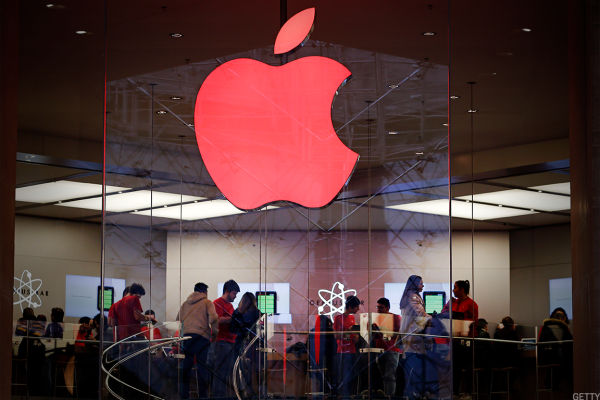
5. Apple plans to manufacture and sell around 10 million foldable iPhone Ultra models, according to a new report. That’s roughly a third more than the average build targets previously expected. Nikkei Asia reports that Apple has raised the foldable iPhone production target to around 10 million units. Previous estimates ranged from 7 to 8 million units. The report adds another 70 million units would consist of the new iPhone 18 Pro and iPhone 18 Pro Max. The additional 80 million units of new iPhone models being introduced in the second half of 2026 would bring the total units ordered for the year to 220 million, per the report. IDC recently forecasted that Apple would ship close to 240 million iPhones in 2026… Apple is expected to unveil the iPhone 18 Pro, iPhone 18 Pro Max, and foldable iPhone Ultra in September. (9to5Mac)
The Pro Portfolio has been tracking Apple’s (AAPL) expected foray into the foldable smartphone market, a move that is expected to start later this year. What the above doesn’t take into account is that Apple isn’t expected to replace the standard iPhone 17 with the iPhone 18 until spring, a move that would extend the life of the iPhone 17 from the typical 12-month run to around 18 months. Following Apple’s recent price hikes, odds are we will see higher price tags for its upcoming iPhone models and that could stoke demand for existing ones. Our point is this – there is more than meets the eye to that 220 million order for Apple’s upcoming iPhone models.
As it relates to Apple’s foldable product, one logical thought is organic light emitting diode company Universal Display (OLED). However, the question one has to wrestle with is can an uptick in the foldable market offset the expected declines in overall smartphone volumes and those for other consumer electronic device markets given the growing memory shortage?
6. U.S. grill masters and home chefs face sizzling beef prices for summer cookouts as drought and wildfires have discouraged ranchers from expanding cattle supplies that are at their lowest levels in 75 years. The record-high beef prices have strained the wallets of U.S. consumers who also saw gas prices spike because of the Middle East conflict. Though demand has remained generally strong for steaks and hamburgers, some shoppers have shifted to other proteins, such as chicken, to save money. Ahead of Independence Day on July 4, a major holiday for grilling, the Wells Fargo Agri-Food Institute estimated the cost of a summer barbecue for 10 people will rise by 2.4% from last year to $161, with hamburger beef up 14%. (Reuters)
The above is another data point about consumer pricing pressure and also one for those companies ranging from Shake Shack (SHAK) to Texas Roadhouse (TXRH) that are feeling the pain of higher beef prices. Prices are set to remain high after a persistent drought burned pasture lands and hiked costs of cattle feed, forcing ranchers to slash their herds.
Once ranchers decide to expand operations by retaining female heifers for breeding, it takes at least two years before new animals are ready to be processed into beef. That timeline keeps supplies tight and prices high.
7. Economic data today per TipRanks: Employment Report (June), Factory Orders (May).
8. Companies reporting today per TipRanks: Lindsay Corp. (LNN).
More Pro Portfolio:
- It’s Time to Lock in Big Gains on This Holding
- 30 Signals Across the Portfolio’s 10 Themes and Strategies
- Weekly Roundup: What We’re Watching as Markets Get Jiggy
Note: A quick reminder that U.S. equity markets are closed tomorrow for the Independence Day holiday. 🎉🎊
The next edition of 8 Key Items Shaping the Stock Market will be on Thursday, July 9.
At the time of publication, TheStreet Pro Portfolio was long AAPL and NVDA.