The Bank of England’s (BoE) deputy governor has warned of a fall in global stock markets, saying near-record valuations are unsustainable.
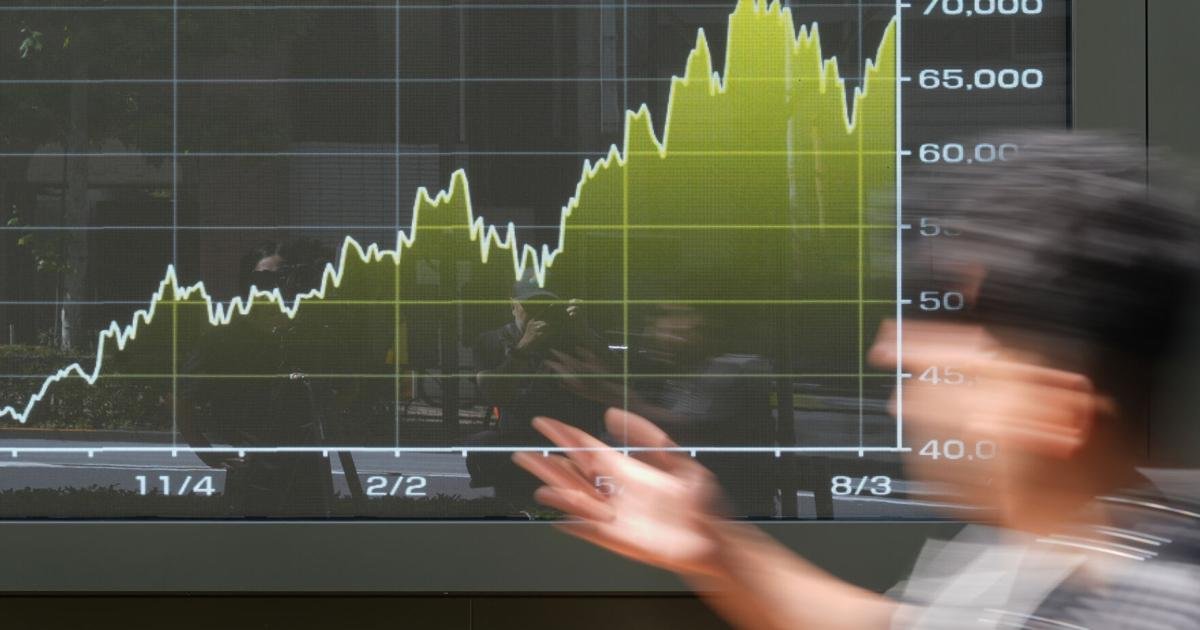
Both the UK and US stock markets are sitting near all-time highs due to investors continuing to bet on big future earnings, but Sarah Breeden said the bank expects an “adjustment at some point”.
The BoE appears concerned about the stability of financial systems if a market drop occurs in conjunction with other issues, including the Iran and Ukraine wars that are driving up inflation globally and private credit, which has grown exponentially and is provided by private firms, not banks. There are some worries that it may become a more widespread problem if the companies that have borrowed that money become unable to pay it back, which in turn could lead to shortfalls for their backers.
Ms Breeden said: “There’s a lot of risk out there and yet asset prices are at all-time highs. We expect there will be an adjustment at some point.
“The thing that really keeps me awake at night is the likelihood of a number of risks crystallising at the same time – a major macroeconomic shock, confidence in private credit goes, AI and other risky valuations readjust – what happens in that environment and are we prepared for it?”
The most recent significant market crash was in 2020 as a result of the Covid pandemic, which saw steep drops in most markets but also very swift rebounds. Since then, the US market in particular suffered drops in 2022 and 2025, the latter after Donald Trump first announced his plan to slap tariffs on trading partners around the world.
Stock market falls happen when share prices of multiple companies drop in tandem after being sold off in large amounts. There’s no specific amount a market has to drop to be termed a “crash”, though 20 per cent or more in a short period of time is usually considered one.
While a falling or even crashing stock market will not always lead to an economic decline or recession, there is a knock-on effect on both the businesses on the market and those who invest in them.
London’s major index, the FTSE 100, is up 5.2 per cent this year so far despite the impending economic hit to the UK and the rest of the world over oil prices, while across the past year it is up 24.4 per cent. Adding to the lack of absolute correlation is the globalisation of many businesses within the FTSE indices and the fact that they operate in markets outside the UK economy.

In the US, the S&P 500 is up 3.8 per cent for the year and 32.2 per cent over a year, having hit a new all-time high earlier this week despite the Iran war. The biggest six public companies in the world – led by Nvidia, Alphabet and Apple – and ten of the top 12, are listed in the US.