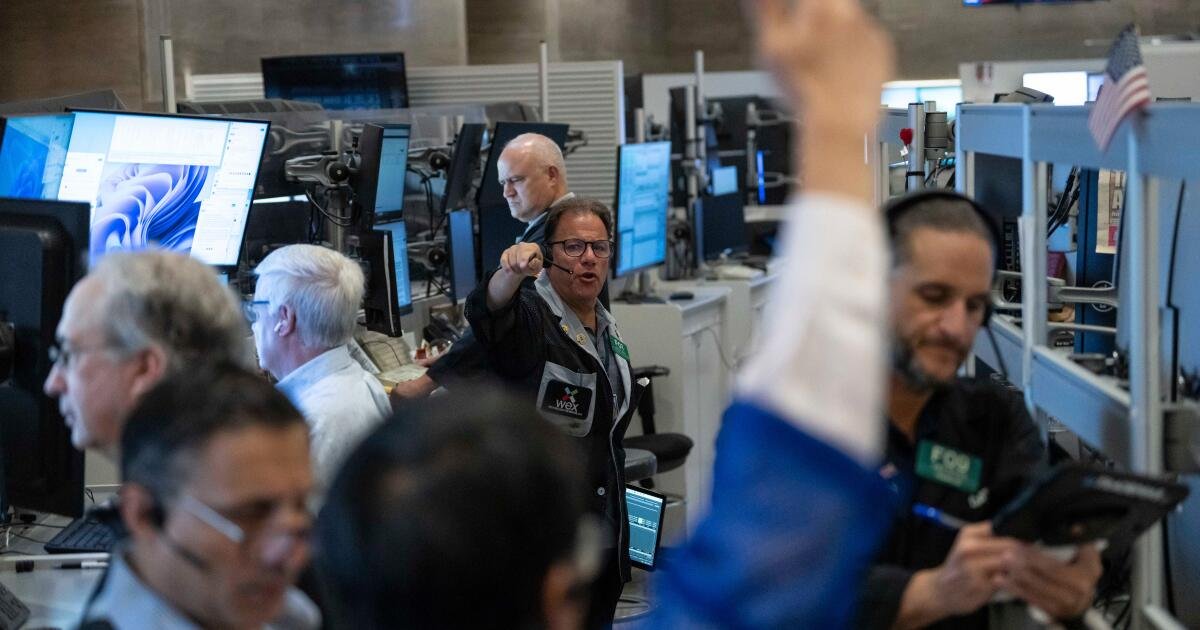
Bank of America is urging investors to look beyond some of 2026’s most crowded market trades, highlighting contrarian opportunities across bonds, China, gold, artificial intelligence and the November U.S. midterm elections. The bigger warning for S&P 500 investors through SPDR S&P 500 ETF Trust (SPY) is that several consensus positions could reverse together if yields, politics or AI financing shift unexpectedly.
BofA’s Anything But Bonds contrarian trade favors long-duration assets including SPDR S&P Biotech ETF (XBI), SPDR S&P Regional Banking ETF (KRE), REITs and small caps.
The reasoning is unusual: another major jump in bond yields could become so damaging to markets and the economy that policymakers may eventually have to respond, potentially creating a rebound in rate-sensitive assets.
BofA is also pushing against the Anywhere But China consensus, seeing potential opportunity in deeply unloved Chinese property assets if the sector stabilizes.
On the dollar, BofA still sees gold as a favored hedge against currency debasement, fiscal stress and geopolitical risk.
AI gets a more nuanced treatment. Rather than simply betting against AI stocks, BofA favors short exposure to AI-related bonds while pairing AI equities with commodities and natural-resource companies that could benefit from the enormous power and materials required for data-center expansion.
The bank’s political trade may carry the biggest tail risk. BofA said an unexpectedly strong Democratic result in November could produce a stock-market decline greater than 10%, alongside weaker yields and a softer dollar.
Political risk is already rising. A Reuters/Ipsos poll published Aug. 17 put President Donald Trump’s overall approval rating at 33%, a second-term low, as voters remained concerned about inflation, the economy and the Iran conflict.
Investor Takeaway
The common thread across BofA’s ideas is crowded positioning.
Investors should watch long-term Treasury yields, gold flows, Chinese property stabilization and AI companies’ growing reliance on debt and external financing.
The November midterms are another catalyst. All 435 House seats and roughly one-third of Senate seats are up for election in 2026, making control of Congress a potentially meaningful market variable.
For SPY holders, BofA’s framework argues less for abandoning equities than for adding diversification where consensus exposure is weakest. If yields fall, China stabilizes or political expectations shift sharply, today’s least-loved trades could become tomorrow’s leadership.