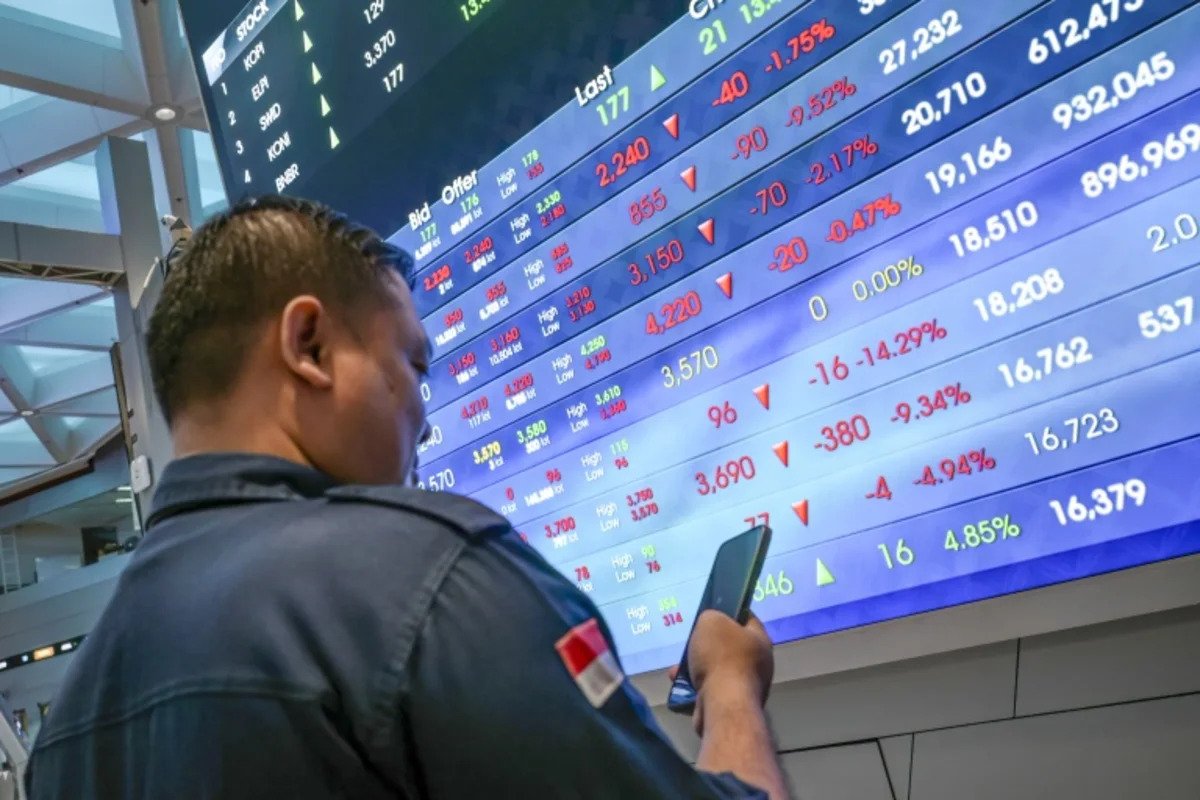

Ever since the US attacked Iran on 28 February, investors have warned about an imminent stock market crash. It still hasn’t happened.
Iran isn’t the only thing worrying markets. There’s constant chatter about an artificial intelligence bubble as hyperscalers pour trillions into infrastructure, while giant potential IPOs such as SpaceX, OpenAI and Anthropic fuel the frenzy. Then there’s the shadow banking sector, which has already caused painful losses for two major FTSE 100 banks, Barclays and HSBC Holdings. There’s always something to worry about.
Iran looked the biggest danger because the closure of the Strait of Hormuz risked triggering a historic energy shock. Yet the FTSE 100 rose 2.66% last week. It’s up 5.18% this year. That’s not spectacular, but hardly a disaster either.
Why aren’t investors more worried?
It’s a bank holiday today (25 May), otherwise I suspect markets would be flying on reports that Donald Trump says he’s struck a deal with Iran. It has apparently agreed to surrender uranium and open Hormuz. I wouldn’t assume anything is settled though. The uncertainty could easily drag on. That doesn’t mean we can’t enjoy ourselves though.
There’s always something to worry about. If it wasn’t Iran, it would be AI, shadow banking, the Labour leadership, poor productivity, toppy valuations, whatever. It’s best to look past that, and stick to the fundamentals.
At The Twelfth Magpie, we prefer to buy individual stocks rather than track the index. A key advantage is that whatever the state of the overall market, there are always bargains to be found. That’s why I bought HSBC Holdings (LSE: HSBA) on 5 May.
Are HSBC shares still worth buying?
I’d wanted the stock for ages but feared I’d missed my moment. HSBC shares have climbed roughly 210% over five years and typically yielded around 5% too.
Higher interest rates boosted profits across the banking sector by widening lending margins. Asia-focused HSBC has benefited enormously from that global trend, making huge pre-tax profits:
-
2025 – $29.91bn
-
2024 – $32.31bn
-
2023 – $30.35bn
-
2022 – $17.06bn
-
2021 – $18.91bn
As you can see, profits dipped slightly in 2025 but that followed a record 2024, and was largely due to one-off impairments. I swooped after its shares dipped more than 5% on mildly disappointing Q1 2026 results, which showed rising costs and credit losses. Its generous share buyback policy remains on hold.
Can it deliver over the long term?
I thought it was a brilliant opportunity to get in at a slightly reduced valuation. I’m already up 5% but these are early days. As with every stock I buy, I’ll measure my success in years.