Can Space Exploration Technologies (NASDAQ: SPCX) actually become the first company ever to generate $1 trillion in annual sales? Elon Musk thinks so.
SpaceX is growing fast, and it reported $14.6 billion in third-quarter revenue, a 161% year-over-year increase. However, CEO Elon Musk thinks it can grow much, much faster.
Missed AI’s “Act 1”? Act 2 Could Be 14x Bigger. Most investors think they missed the AI boat because they didn’t buy Nvidia in 2005. But according to our analysts, we’re only at the end of “Act 1″—the R&D phase. “Act 2” is the global rollout. Continue »
“What this implies for SpaceX’s annual recurring revenue by the end of 2027 is somewhere between $500 billion and $1 trillion,” he said on the Oct. 20 earnings call, referring to the growth of its newly renamed “super intelligence” business.
Let’s consider what this could mean for the stock.
SpaceX is growing like wildfire
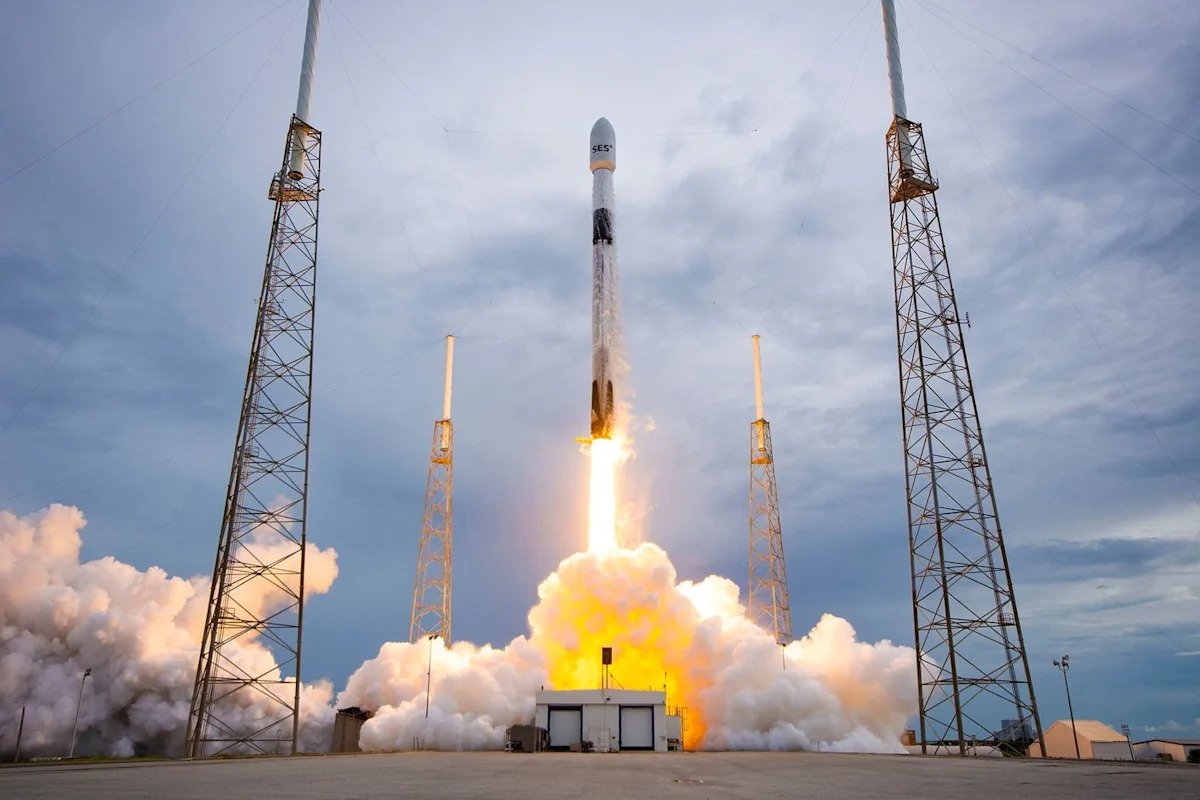
SpaceX has certainly started off its era as a publicly traded company with a bang. Revenue increased 92% year over year in the second quarter and 161% in the third quarter, and it posted its first quarterly net profit of $4.4 billion. There was momentum across its three segments: the rocket launch business, its Starlink satellite broadband, and the super intelligence (SI) unit.
SpaceX had its first revenue-generating Starship mission, and it launched three missions from three different launchpads in under 13 hours. It’s expanding its deals with three new NASA International Space Station crew missions, 18 national security space launch missions, and three commercial Starfall missions, in addition to a contract for Starship to deliver a payload to the moon. Revenue increased 84% over last year, and it reported a $7 million loss.
Starlink added 1.6 million subscribers in the quarter to bring its total to 13.6 million, and average revenue per user increased 5% to $69 monthly. Revenue was up 69% from last year, and its operating income doubled from $1.2 billion to $2.4 billion. Starlink is now installed on more than 3,800 aircraft, and the service has deals with United Airlines, American Airlines, and many other global carriers.
The major growth, though, is coming from SI, which increased its revenue by 830% year over year. That growth was driven by new cloud computing agreements, the company’s acquisition of code-writing AI specialist Cursor, and scaling the Grok AI model’s enterprise business.
“We’re seeing the fastest growth of a product that I’ve ever seen in my life for Grok Bot,” Musk said in reference to the agentic AI product. The SI segment also produced an operating profit of $431 million, up from a $1.7 billion loss last year.