Kali Hays,Technology reporterand
Jemma Crew,Business reporter

 Getty Images
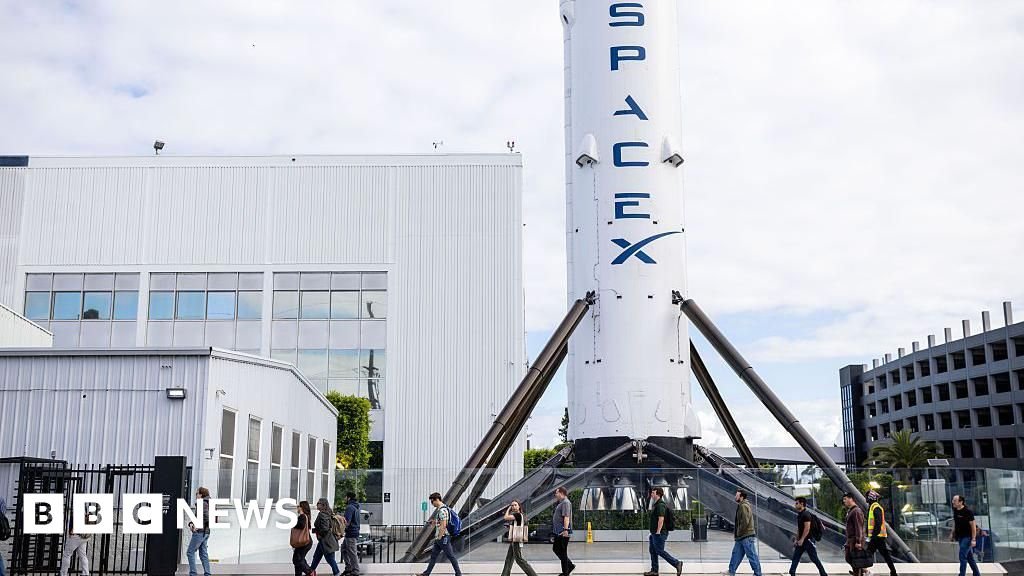
SpaceX has raised $75bn (£56bn) from financial firms ahead of becoming a publicly traded company on Friday, in what is expected to be the highest-value stock listing in history.
In a filing with the US Securities and Exchange Commission, the space exploration and artificial intelligence (AI) company said it had sold $75bn in shares at $135 each.
The price matches the estimate SpaceX gave last week, leaving the firm’s expected initial stock market value to be nearly $1.8tn.
At that value, chief executive Elon Musk – already the world’s richest man – is set to become the first trillionaire.
SpaceX is selling only 5% of the total shares available at first.
Once trading starts, their value could rise or fall depending on how many shares are made available for sale in the Initial Public Offering (IPO), strength of demand, and what investors decide they are worth. It is essentially an auction on the open stock market.
If they sell at or above $135, SpaceX will immediately become one of the most valuable public companies in the world.
Interest in acquiring a stake in SpaceX among investment funds and individuals, often referred to as “retail investors,” is expected to be high.
 Peta Cooper
Peta Cooper, 43, a copywriter who lives in Cornwall, plans to invest about £750 in SpaceX to add to her portfolio which mainly includes tech and crypto firm shares.
“It’s really exciting. I really love the space industry. [SpaceX] have had a really great track record so far with their launches and their innovation,” said Cooper, who grew up in California.
She expects the share price to dip at some point but plans to “keep it in my portfolio and let it grow” over the long term.
Many see today’s IPO as a huge bet on AI, and some analysts are sceptical.
“It’s a huge roll of the dice,” said Sinead O’Sullivan, an economist who has worked at Nasa.
“There’s so much built into one company, one share price here. Do I believe that Elon Musk is great at executing technological innovation? Yes. Do I believe that the share price is representative of the future value he’s going to create? Probably not…”
SpaceX chief operating officer Gwynne Shotwell told CNBC she had not been sure the company would go public, but it “feels like the right time now”.
“We’ve been feeling over the last few years a lot of pressure from everyday Americans and our friends that wanted to buy stock,” she told the US business news network.
Shotwell said SpaceX has long-term ambitions and she does not want to focus on quarterly results.
“I’m not saying we’re not going to do right by our investors, but what folks that invest in SpaceX need to know… is that what we’re doing is very futuristic.”
The listing on the technology-focused Nasdaq index is being viewed by some as a test case for other companies with private valuations nearing $1tn, including Anthropic and OpenAI.
Becoming a public company will lead to more scrutiny, but Musk will keep almost total control.
He will maintain roughly 40% of SpaceX total equity through his holding of different types of shares, which come with extra voting rights meaning he effectively controls 85% of the company.
With so much control consolidated with Musk, SpaceX will not even need to have on its board of directors anyone considered to be “independent” – who does not have a direct personal or financial interest in the company.
Such control creates potential risk for investors, according to analysis from Harvard Law School, because SpaceX insiders will be able to make decisions on business deals, including possible acquisitions of other Musk-owned entities, and his compensation.
Already, SpaceX has acquired Musk’s startup xAI, which itself acquired the social media platform X in 2025. Musk bought the platform formerly known as Twitter in 2022.
Asked about the governance structure, chief operating officer Shotwell told CNBC: “There is no-one who can run this company other than Elon, frankly. We want Elon to have that kind of control.”
Musk has divided public opinion in recent years, using his power and wealth in controversial ways.
He helped fund Donald Trump’s second run for office before their relationship imploded, secured billions in US government contracts and has dabbled in the internal affairs and politics of other countries.
His posts and comments about matters in the UK, Germany and other European states have frequently angered politicians. Sometimes they appeared to have come at a cost to his businesses.
Tom Mueller, SpaceX’s first official employee and now founder of Impulse Space, told the BBC’s Michelle Fleury “it’s unbelievable” to see what the company has become.
Mueller recalled when SpaceX got its first rocket engine running, and when that engine exploded, and when another rocket crashed before “finally” making a successful launch to orbit in 2008.
“It’s just been an incredible ride,” he said.
Mueller left SpaceX in 2020 and maintains a considerable financial interest in the firm.

Get our flagship newsletter with all the headlines you need to start the day. Sign up here.