5 min read
In This Article:
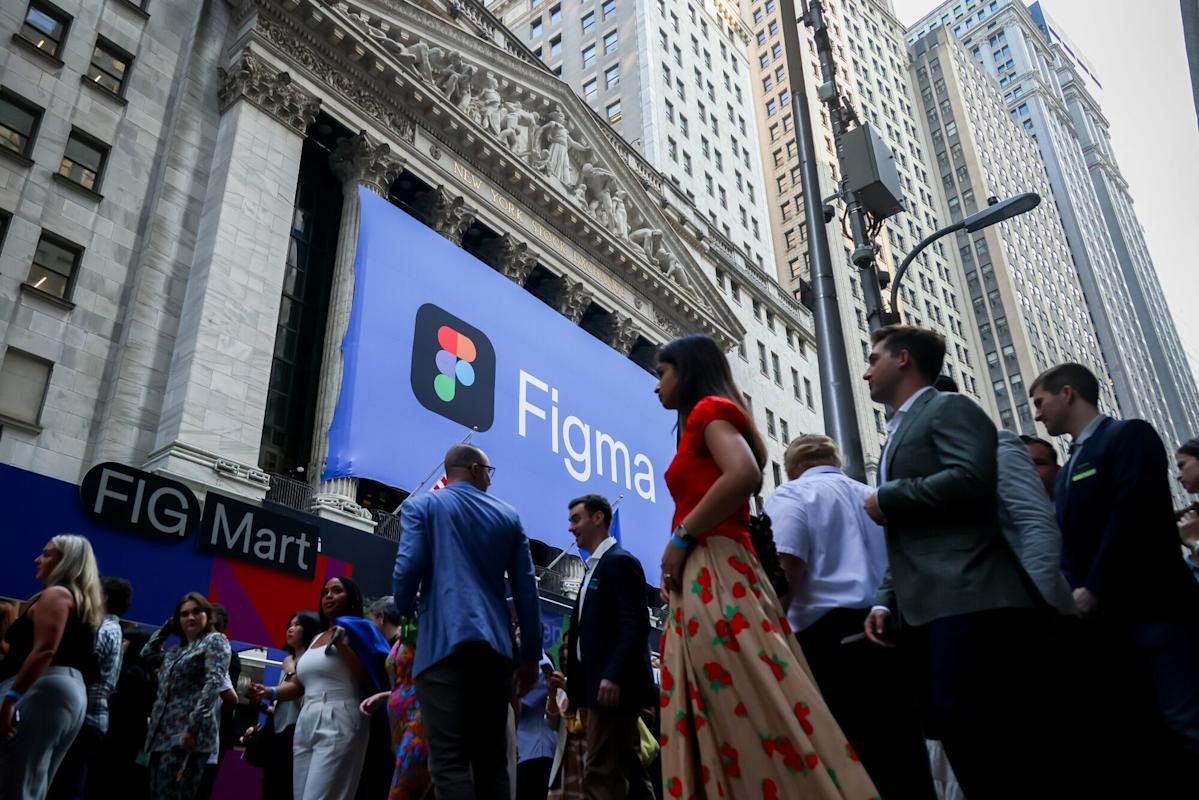
(Bloomberg) — Figma Inc. shares are indicated to begin trading at $105 to $110 each, after the design and collaboration software company and some of its backers raised $1.2 billion in one of the year’s most-anticipated US initial public offerings.
Most Read from Bloomberg
The indications, which are signals from market makers of the level where trading may begin, imply as much as a 233% gain above the IPO price of $33 apiece. The shares were marketed for $30 to $32 per share, after the company increased the range earlier in the week.
The company sold 12.47 million shares in the IPO, which priced Tuesday, while investors including Index Ventures, Greylock Partners and Kleiner Perkins sold 24.46 million shares.
The IPO pricing gave Figma a market value of $16.1 billion, based on the outstanding shares listed in its filings. Accounting for employee stock options and restricted stock units, the company has a fully diluted value of roughly $18.5 billion.
Including restricted stock units for Chief Executive Officer Dylan Field, which are subject to vesting conditions, the fully diluted value would rise above $19 billion.
The figure is likely to climb well above the $20 billion valuation Figma would have fetched in a planned sale to Adobe Inc. that fell apart in 2023.
The shares offered in Figma’s IPO were ultimately more than 40 times oversubscribed, with more than half of the orders receiving no stock, Bloomberg News reported. The robust demand points to a strong open for the first sizable software offering in the US since SailPoint Inc.’s debut in February.
Figma is used to design web and mobile application interfaces. It has expanded its suite of products in an attempt to be more useful for software development and general workplace collaboration.
Like many software firms, Figma charges clients based on the number of users and the kind of seat those users have. It added Dev Mode to the platform in 2023 to enable closer collaboration with developers, and has more recently incorporated AI technology into many of its own tools. This year it introduced Figma Make, an AI-based product that lets the user turn prompts into functional prototypes.
Now that the company is public, “we have to continue to sprint, to push hard, and we can’t let the public markets distract us,” Field said in an interview.