Sangmi Cha and John Cheng
5 min read
In This Article:
(Bloomberg) — South Korean stocks, already this year’s best performers among the world’s major markets, are becoming a magnet for foreign investors as bold regulatory reforms to lift valuations and empower minority shareholders gain traction.
Most Read from Bloomberg
-
Trump Awards $1.26 Billion Contract to Build Biggest Immigrant Detention Center in US
-
The High Costs of Trump’s ‘Big Beautiful’ New Car Loan Deduction
Just this month, policymakers voted in favor of pivotal law changes to make board members legally accountable to all shareholders. They are now focusing on the next wave of reforms — including improvements to the voting system for selection of board members, and reducing treasury stock holdings — all with the goal of reining in the nation’s many family-run conglomerates, or chaebols.
From Wall Street to London, investors are taking notice.
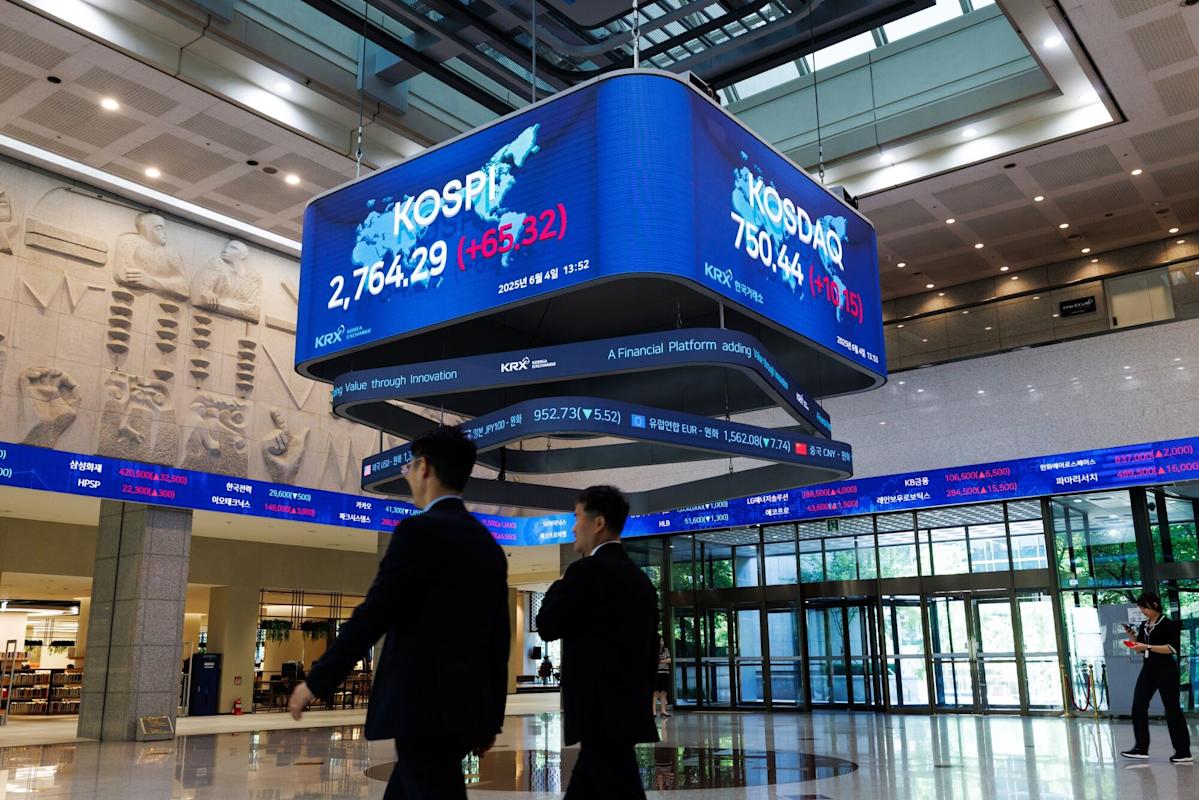
Overseas funds, which dumped Korean stocks for nine straight months through April, are piling back into the market. Strategists at global banks including Goldman Sachs Group Inc., JPMorgan Chase & Co., Citigroup Inc. and Morgan Stanley are among those who have upgraded Korea since the start of June. The benchmark Kospi has surged 33% in 2025, helping propel the equity market’s value above $2 trillion for the first time in three years.
Reforms “will contribute to the continuation of a culture shift already underway and will reduce the ability of controlling shareholders to compel restructurings that benefit them at the expense of minority shareholders,” said Jonathan Pines of Federated Hermes, whose $4.5 billion Asia Ex-Japan equity fund has beaten 92% of its peers over one year. “We remain very significantly overweight Korean stocks.”
South Korean authorities have been seeking to replicate the success seen in Japan, where a push for corporate reforms helped boost valuations and spur a world-beating equity rally. Optimism that the nation is serious about tackling the so-called “Korea discount” has grown since newly elected President Lee Jae Myung made raising governance standards and improving stock-market returns one of his top priorities.
Net inflows from foreign funds have crossed $3 billion in July alone. That’s more than their combined purchases in the previous two months.
“We’re seeing a big change in the corporate governance,” said Joshua Crabb, head of Asia Pacific equities at Robeco Hong Kong Ltd., noting more capital discipline, buybacks and dividends. “This does not require a great global environment. These are things that are almost like a bit of self-help.”