Markets tumbled around the world on Tuesday, as renewed doubts about sky-high valuations appeared to take hold of investors in some of the largest AI, chip and memory stocks.
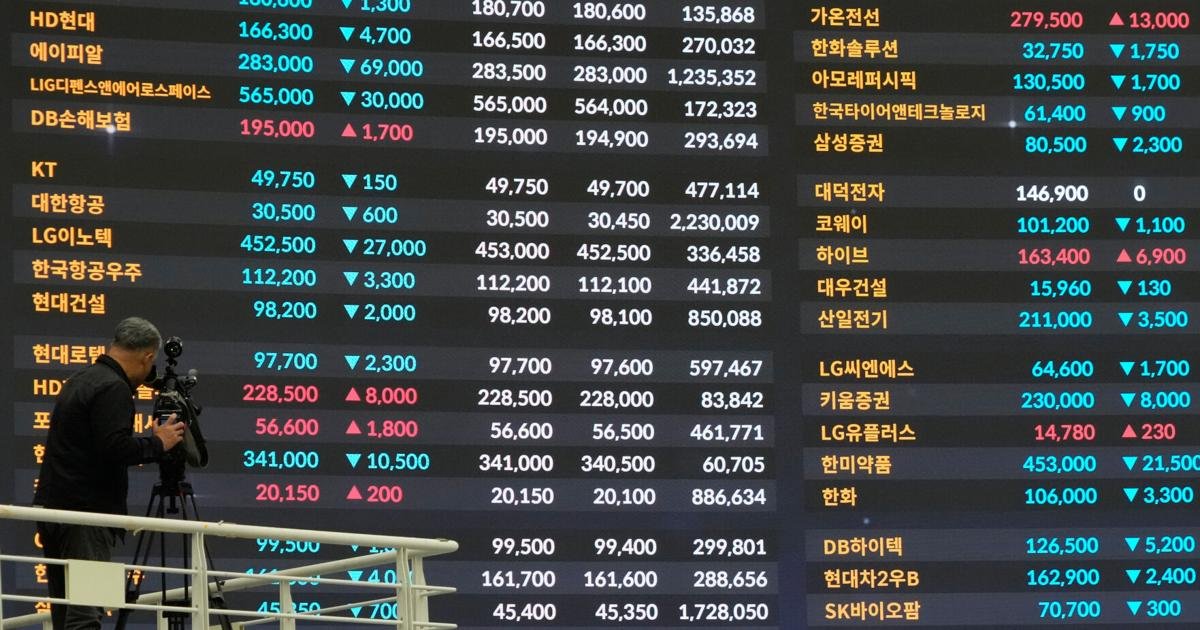
The deepening sell-off in technology stocks was led by artificial intelligence and chip stocks, starting overnight with two of Korea’s largest companies.
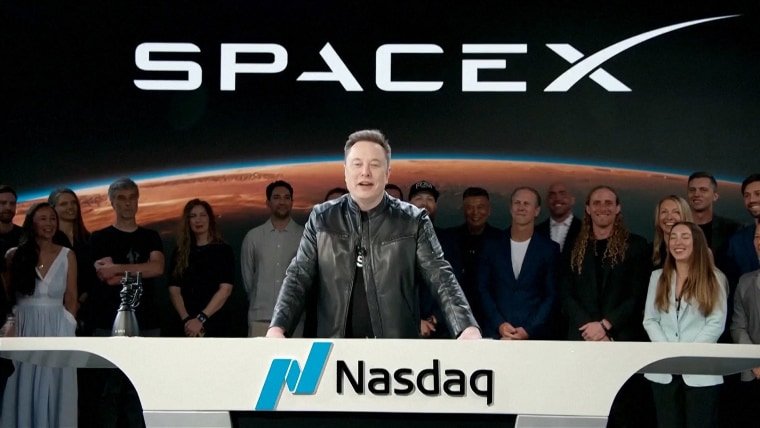
Market sentiment was also also hurt by Elon Musk’s SpaceX, which has slid for days after a blistering June 12 debut on the U.S. market. Earlier Tuesday, shares fell as low at $147 before turning higher in volatile trading.
This latest tumult was caused in part by worries over the sustainability of stunning surges in tech stocks and fears that rising inflation stemming from the Iran war and the closure of the Strait of Hormuz could lead to higher interest rates and more expensive borrowing for the ever-expanding global AI infrastructure buildout.
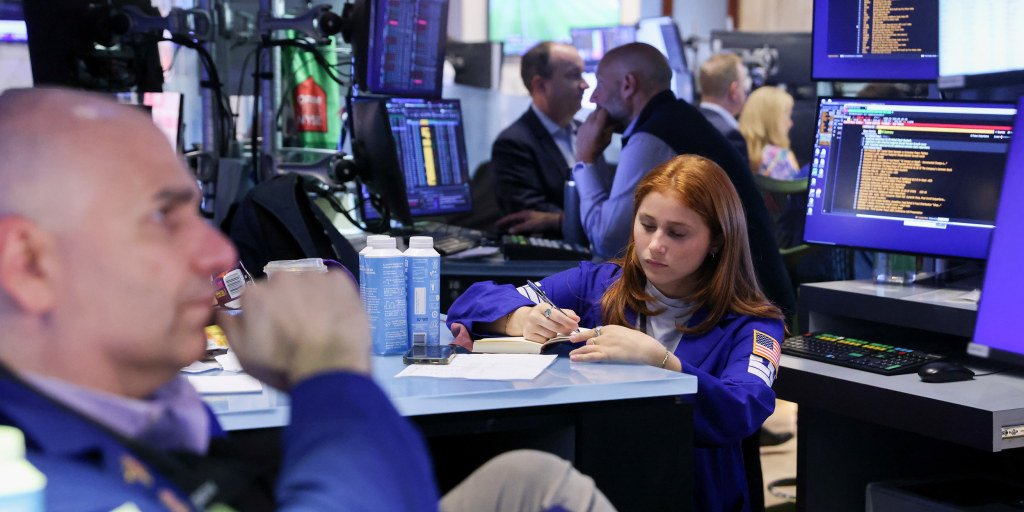
By 11:45 a.m. ET, the Nasdaq Composite dropped 2%. The Nasdaq 100, the hundred largest non-financial stocks traded on the exchange, plunged more than 3%.
The S&P 500 slid 1.5%, while the Russell 2000, which tracks small and mid-cap stocks that often avoid the volatility in major tech stocks, was down 1%.
The Dow rose briefly, but returned to negative territory, weighed down by falling shares of Caterpillar, Nvidia and Cisco.
Shares of Sandisk, Micron Technology, Western Digital, Arm, Marvell and Qualcomm all fell around 9%.
Shares of Nvidia, the largest publicly-traded company in the world and a focal point of the AI boom, tumbled 3.5%.
U.S. government bond yields dipped only slightly across all durations, including the 10-year Treasury yield, which heavily influences consumer borrowing rates.
Recent selling in SpaceX shares has wiped out more than $900 billion in value from the company’s peak of more than $225 per share, which it hit one week ago. On Monday alone, shares fell nearly 17%, erasing $400 billion in value — the second largest one-day wipeout for any stock on record, according to Bloomberg.
Selling in SpaceX accelerated Monday after the company announced an “inaugural bond offering,” likely to be used in large part to fuel its AI ambitions. Bloomberg reported the company wanted to raise about $20 billion in the bond offering, which would be on top of the $85 billion it raised through its IPO just two weeks ago.
The war over AI talent also caused selling in Alphabet.
On Monday, shares of the Google parent company recorded their worst single day in a year after high-profile AI talent left the company. Shares continued their downward trajectory in early Tuesday trading, falling another 1%.
Shares of major tech companies around the world also sold-off.
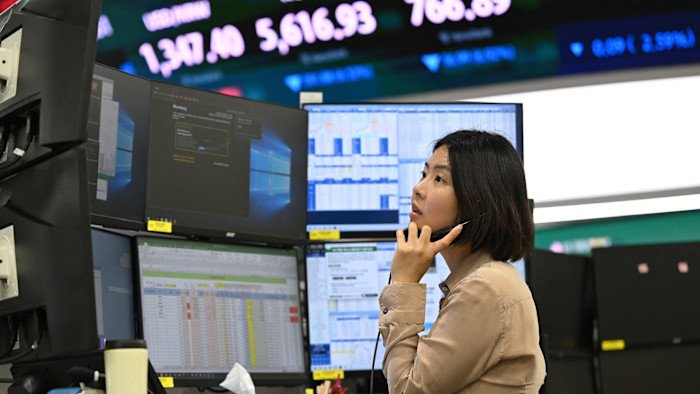
In Korea, the country’s flagship Kospi index closed sharply lower by 10% after two of its most valuable companies, Samsung and SK Hynix, both slid more than 12%.
However, the Kospi has been volatile this year and earlier in June the index plunged 8.2% and then recovered by the almost the same exact amount the following day.
In Europe, the Stoxx 600 lost nearly 1%, while Germany’s flagship DAX index tumbled 1.1%. Semiconductor maker Infineon was the biggest decliner on the DAX, down more than 6%.
“Gravity strikes,” JPMorgan traders wrote in a note to clients Tuesday about Asia indexes and U.S. and E.U. futures.
In a separate note, JPMorgan analysts said the selling could reflect some “anxiety” before memory maker Micron reports earnings on Wednesday afternoon.
Dan Ives, head of tech research at Wedbush Securities, agreed.
“With Micron set to report earnings this Wed there is some added nervousness on the important memory chip trade,” he wrote in a note.
Micron shares were down 10% in early Tuesday trading.
Still, Micron stock is up more than 280% since the start of this year and more than 790% over the last 12 months.
Likewise, Samsung shares remain higher by 160% this year and 412% over the last 12 months. SK Hynix shares are still holding onto a more than 800% gain over the past year.
“In this market we will continue to go through a number of ‘gut check moments’ in the tech trade as the AI Revolution remains in the 3rd inning,” Ives also said. “This morning is just another one of those moments.”
Meanwhile, oil prices dipped slightly lower after traders continued to digest the latest headlines surrounding talks to definitively end the war between the U.S. and Iran.
While small amounts of traffic have passed through the Strait of Hormuz since the initial agreement was announced, including 15 tankers on Monday according to S&P Global, traders appear to remain concerned about resuming significantly higher flows.
“A tentative U.S Iran truce has eased immediate oil supply concerns, triggering a $25–30/barrel decline in prices,” Société Générale said in a note to clients on Tuesday. “Despite this, the back end of the Brent curve remains elevated, with long-dated Brent still around $10/barrel above pre-war levels.”
“A rapid return to normal is unlikely given logistical constraints, including mine clearance, routing bottlenecks, and Iranian transit frictions,” SocGen’s analysts added. “Recovery in Hormuz flows is therefore expected to be gradual rather than immediate.”