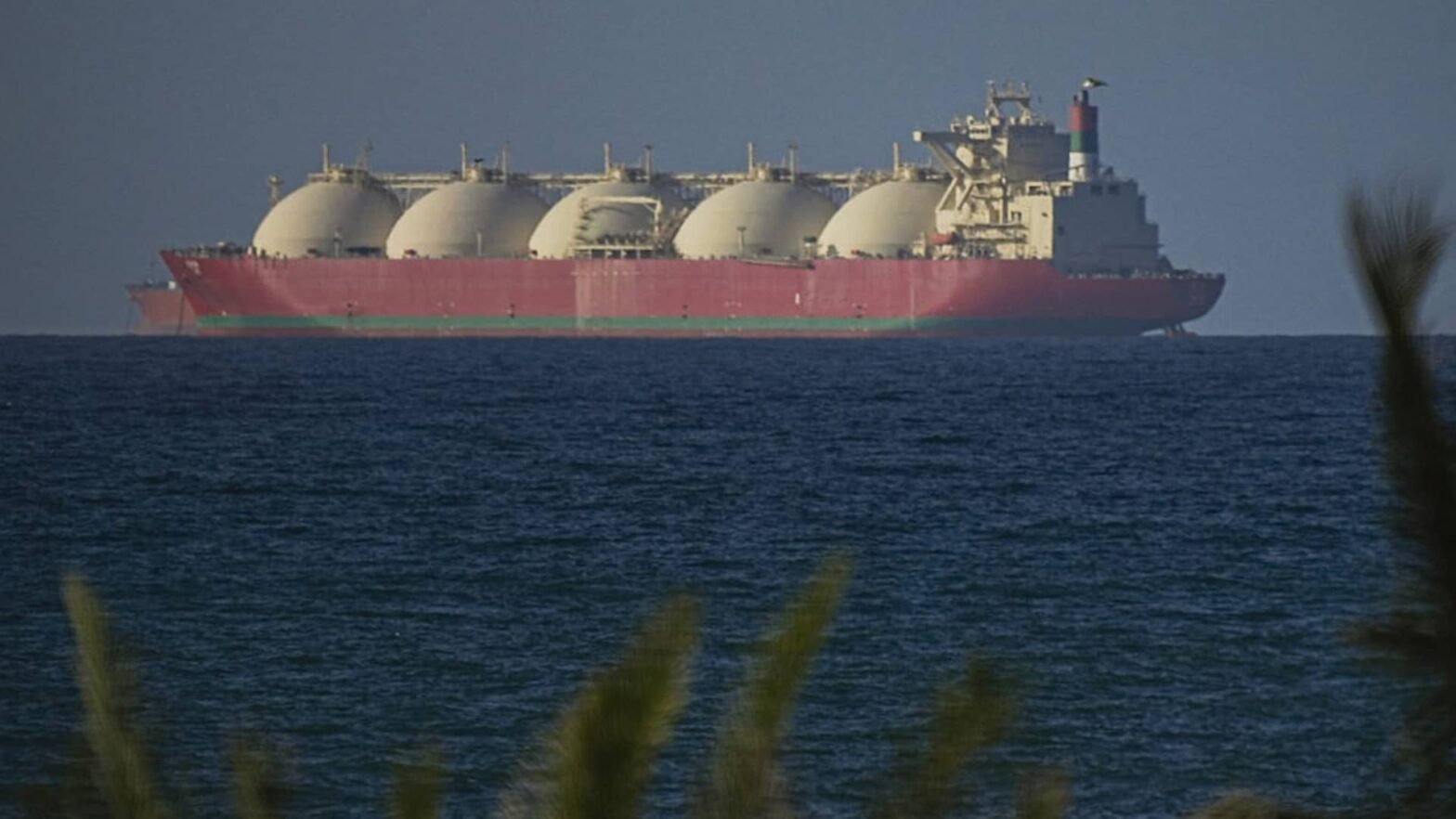
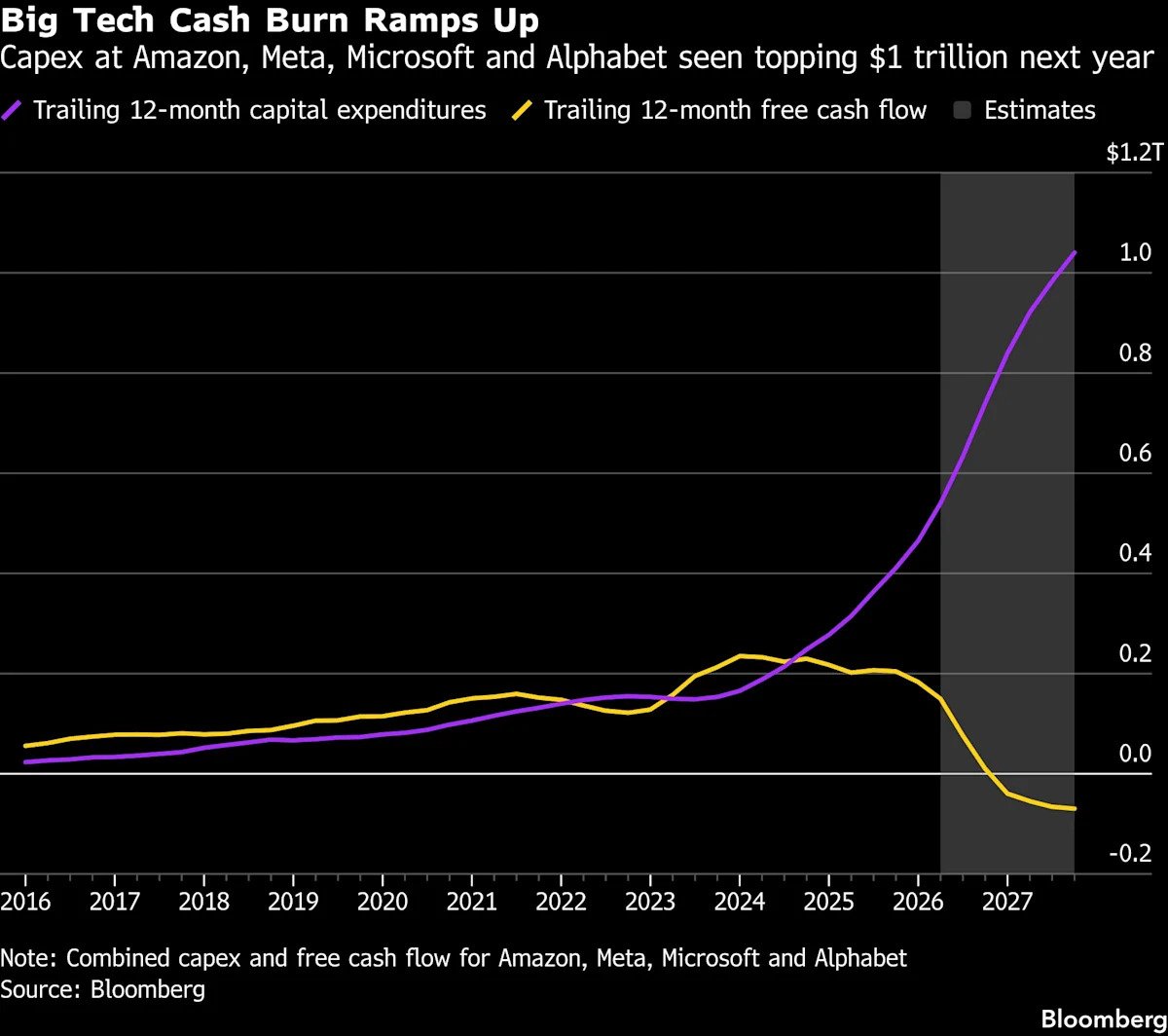
When the stock market opens on Monday, we will once again face the interaction between bonds and oil. Over the weekend, we saw the breakdown of the Strait of Hormuz opening deal and the ramp-up of President Donald Trump ‘s willingness to go back to bombing mode. I read that there are no more targets, and I regard such writing as ignorant. There are real targets involving the infrastructure in Iran that Trump has been reluctant to hit but might feel that he has to press on with to bankrupt Iran, perhaps to cause food riots, which have always preceded regime change. None of us knows what will occur — and so far, guessing about the outcome has been frightfully dangerous and has yielded nothing investable. However, what has been investable, or at least helpful, is a near-constant examination of the bond market. It’s been a tremendous predictor in that it has been stable with yields varying only slightly to the downside. (Remember, bond prices and yields move in opposite directions. So, when people buy bonds, yields go down — and when people sell bonds, yields go up. Lower bond yields tend to support stocks.) The big stock rally Friday had as much to do with bond yields going down as it did with oil plunging. If yields are stable Monday despite an increase in crude, then we will not be hammered in stocks as much as would be expected. The stock market is still incredibly overbought at a positive 7.89% on my trusted momentum indicator, the S & P Short Range Oscillator . This is a negative because we never like to see swings this hard in either direction. However, Oscillator history does show that stocks tend not to fall hard from these highly elevated levels — and, instead, work them off over time. Again, something that should hearten the bulls. For me, a stable bond market means that except for companies directly impacted by oil — the airlines and their derivatives, including Club name Boeing and GE Aerospace , as well as travel and leisure, like Marriott and Disney — you can actually focus on the earnings that are at hand. If that’s the case, then we shouldn’t be nearly as stressed as we would otherwise expect. One of the most vibrant signs of last week’s market is one that I do not expect to change, which is the re-igniting of the “Magnificent Seven” megacap tech stocks as a force to be reckoned with. We own six of them — Alphabet , Amazon , Apple , Meta Platforms , Microsoft , and Nvidia . We do not own Tesla . Until the last 10 days, we were believers that these companies had spent too much money on equipment — as not to be left behind in the artificial intelligence arms race — and their balance sheets were too stretched. What’s changed? Something that’s not talked about enough but needs to be focused on if we are going to make money in this next leg of the stock market: a grudging recognition by the market that the Mag 7 has plenty more firepower than we thought. They are beginning to reap the gains of their spending, even as we don’t hear anyone saying anything about it other than Nvidia CEO Jensen Huang. That’s the real reason why Oracle stock has sprung back to life. That’s why Marvell Technology and Club name Broadcom have roared. That’s the strength behind neo-cloud CoreWeave and cloud infrastructure partner Vertiv . And, of course, it’s why Nvidia has, at last, moved ever so slightly versus the other Mag 7 names. It might even be why Microsoft is playing catch-up, although that may be a stretch. We’ll see. The whole downfall of the Magnificent Seven occurred because they no longer had the balance sheets to self-finance. The spawning of the mag 7 took place during the mini-banking crisis of March 2023, when credit froze for many companies. These companies didn’t need credit. They had cash. As long as that was the case, these stocks could continue to run. But once they had to come to the bond market because they didn’t have enough money to build or finance the power and the data centers they needed, they were just, for lack of a better term, “average” stocks that went up or down with the flow of funds into and out of the S & P 500 . It would be terrific if these companies could all explain that not only do they need to spend to keep up, but they can because their other businesses are so robust. For some reason, they haven’t been willing to do so. Think of it like this: Alphabet’s Google, YouTube, and Google Cloud are spewing cash. Same with Amazon Web Services (AWS) and Amazon Prime. Tesla is now a tech company, and the market will give it all the money it needs. Apple doesn’t have to spend at all; it is a free rider. Microsoft has the cash to do something special beyond Copilot. Meta has some sort of new, winning strategy that the market thinks will produce profits. And, let’s not forget, Nvidia’s next-generation chip platform, Vera Rubin, is about as sold out as you can get. At the same time, we have seen the emergence of Anthropic and OpenAI, which are losing gobs of money but they have, at least right now, the hope of endless financing from both institutions and the public. OpenAI uses Microsoft’s Azure cloud as well as Oracle and CoreWeave. Anthropic has a deal with CoreWeave backed up by Google. Plus, SpaceX will soon go public, and that will generate more funds for this complex because xAI will need to build out its infrastructure. Tesla’s Elon Musk is behind SpaceX and xAI, which has the chatbot Grok. All of these have no choice but to spend because it’s an immense horse race with winners changing regularly. Right now, it seems like Anthropic’s Claude model has the edge, but I wouldn’t count out any of these companies, given all sorts of nuances like retail for Amazon and traditional search for Alphabet and OpenAI’s ChatGPT, as well as Meta’s possibilities. I am, by no means, giving you the complete picture of what is going on in this universe. All I can tell you, though, is that the robust nature of both OpenAI and Anthropic and their ability to raise money with ease has re-ignited this group, and the profits that they are now getting from their Nvidia spend and their own spend on chips has turned this universe and all of its accoutrements back into a positive for the market instead of a negative. Consider the broad expanse of what’s happening right now in tech that’s created a much more fecund world, one that has gone from novelty to big business. We are on the cusp of an explosion of AI agents. The agentic economy right now can eliminate much of call center hiring, code writer hiring, and analyst and research hiring. These are real savings that are worth real profits to enterprise clients, even as it has meant a dramatic slowing for enterprise software. You need a ton of compute to make all of this happen, and that means you need Nvidia’s Vera Rubin chips. Agents run on CPUs (central processing units), not GPUs (graphics processing units), which is why Intel , Advanced Micro Devices , and newly added Bullpen stock Arm are going higher. I think Intel’s comeback is for real, and I am kicking myself for missing it. The company reports this week, and while it missed last quarter and got slaughtered, this time, more analysts are itching to get behind it, not bury it. In the data center itself, there’s a revolution out of copper and into fiber. We like Corning , which has been a killer in the portfolio, but Lumentum and Coherent to solve the optical interconnect problem that copper causes. Marvell is known as the third pillar of optical alliance. All three are partners with Nvidia. There’s still one more wave of spending that involves the actual energy buildout: Club names GE Vernova and Eaton , as well as Bloom Energy and Caterpillar , stand to benefit, as well as the aforementioned CoreWeave and Vertiv. I do not pretend to be sophisticated about the technology involved beyond speaking to the CEOs and reading the relevant research. My focus here, though, is to say that you just needed to follow the money. The whole complex that is the fourth industrial revolution seemed stalled as we couldn’t figure out where all the money could come from. Now we see it coming from the profits from earlier spending, as well as the money that OpenAI and Anthropic keep spending, as well as the next tranche that comes from their IPOs and the SpaceX offering. No other segment of the economy is attracting this level of money. This re-ignition of the Mag 7 complex is, fortunately, much broader than the one that occurred from March 2023 until September 2025, when Oracle and Nvidia topped out, the two stocks most levered to the data center explosion. Unfortunately, we don’t have another center of spend to key on. Let’s not forget that we are a consumer-led economy. Don’t despair, though. As long as bond yields stay low, we are going to see a Federal Reserve that is at least prone to cut policy interest rates. Yes, inflation is still too high to justify more than one cut. But as long as the economy is slowing, the Fed is on your side, and it can easily asterisk oil and other commodities behind inflation, and say they are fleeting even as the consumer’s decline isn’t. Too rosy? All I can say is that we can repeal some of what we reaped in the last two weeks in the stock market — but if we do, buyers will surface, and you won’t be alone if you stay long. (See here for a full list of the stocks in Jim Cramer’s Charitable Trust.) As a subscriber to the CNBC Investing Club with Jim Cramer, you will receive a trade alert before Jim makes a trade. Jim waits 45 minutes after sending a trade alert before buying or selling a stock in his charitable trust’s portfolio. If Jim has talked about a stock on CNBC TV, he waits 72 hours after issuing the trade alert before executing the trade. THE ABOVE INVESTING CLUB INFORMATION IS SUBJECT TO OUR TERMS AND CONDITIONS AND PRIVACY POLICY , TOGETHER WITH OUR DISCLAIMER . NO FIDUCIARY OBLIGATION OR DUTY EXISTS, OR IS CREATED, BY VIRTUE OF YOUR RECEIPT OF ANY INFORMATION PROVIDED IN CONNECTION WITH THE INVESTING CLUB. NO SPECIFIC OUTCOME OR PROFIT IS GUARANTEED.
Here are things going right for stocks despite new Iran war setbacks
Apr 19, 2026