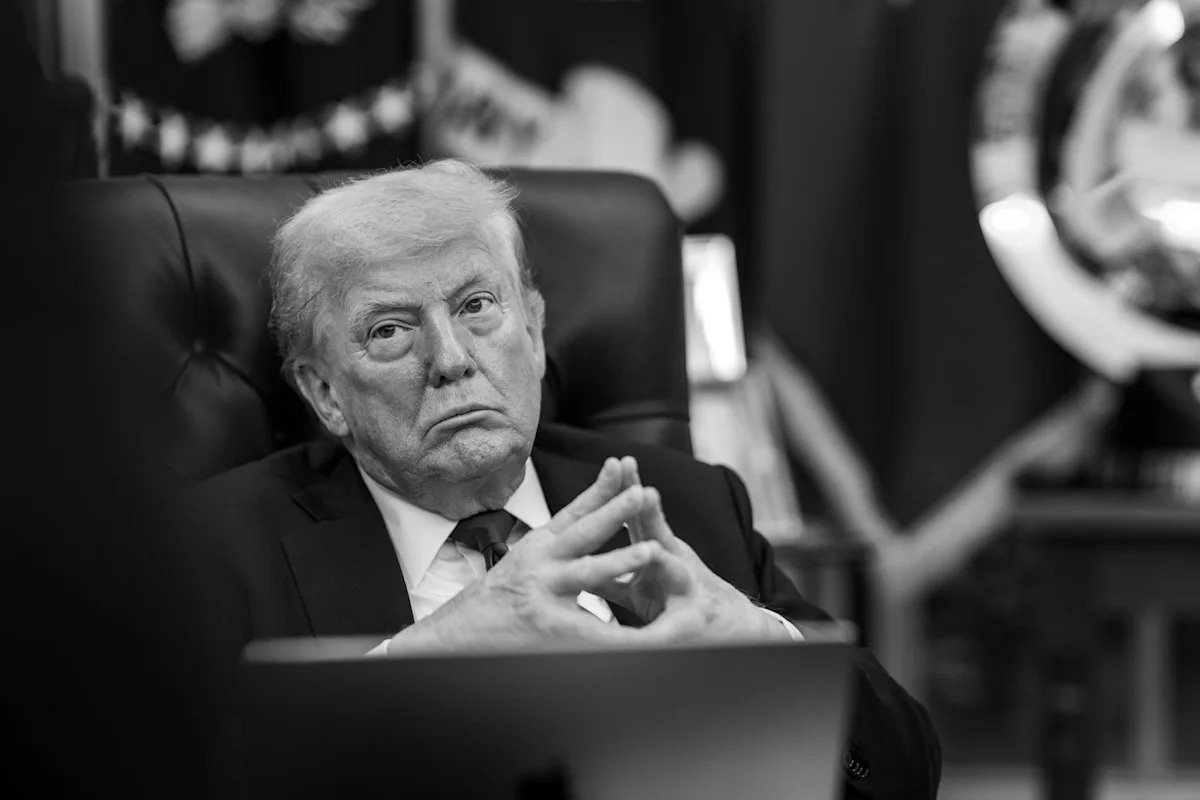
Today, Americans charted a path forward for our great country by heading to the polls or mailing in their ballots. In addition to shaking up Congress, voters may also be, inadvertently, altering the near-term outlook for the iconic Dow Jones Industrial Average (DJINDICES:^DJI), broad-based S&P 500 (SNPINDEX:^GSPC), and tech-driven Nasdaq Composite (NASDAQINDEX:^IXIC).
According to prediction markets, the odds of Democrats sweeping both houses of Congress have soared throughout the day. Even if Democrats only retake the House of Representatives, it would mean that President Donald Trump will be working with a divided Congress come January 2027.
Missed AI’s “Act 1”? Act 2 Could Be 16x Bigger. Most investors think they missed the AI boat because they didn’t buy Nvidia in 2005. But according to our analysts, we’re only at the end of “Act 1″—the R&D phase. “Act 2” is the global rollout. Continue »
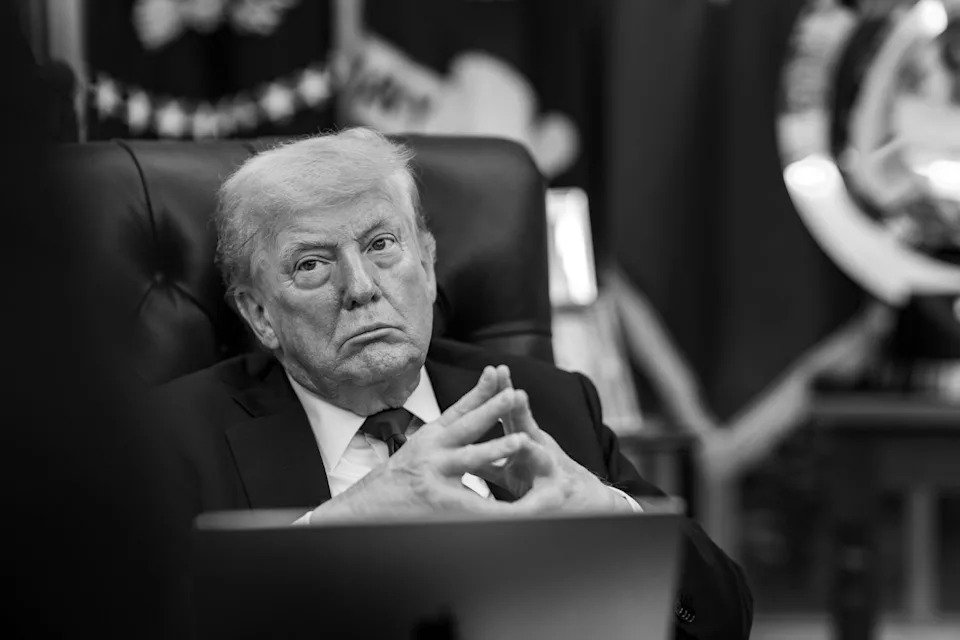
President Trump will almost certainly be working with a divided Congress come January 2027. Image source: Official White House Photo by Daniel Torok.
Nearly 100 years of history says a worst-case scenario is unfolding for the stock market on Election Night. However, most investors are overlooking an election silver lining that isn’t getting enough attention.
Statistically speaking, stocks are in for a challenge
Although no predictive tool can ever guarantee a short-term directional move in the Dow, S&P 500, and Nasdaq Composite, close to a century of S&P 500 return data calculated by online retirement planning platform Retirement Researcher, spanning 1926 to 2023, points to a choppy road ahead.
Retirement Researcher examined the average annual return of the benchmark S&P 500 under four political scenarios. Only one stood out as a dubious outlier:
-
Split Congress with a Democratic president (15 years): 16.63% average annual return
-
Unified Republican (13 years): 14.51%
-
Unified Democrat (36 years): 14.01%
-
Split Congress with a Republican president (34 years): 7.33%
If prediction markets are correct, the historical worst-case scenario, a split Congress with a Republican president, will take shape over the next two years.
Two factors could drive this underperformance.
Firstly, debt-ceiling negotiations are more challenging when Congress is divided. If Democrats retake one or both houses of Congress, the odds of a government shutdown in the first half of 2027 (i.e., when the debt ceiling is next projected to be reached) go up.
Secondly, and perhaps most importantly, Democrats favor more restrictive regulations for artificial intelligence (AI). While Trump wants as little regulation of AI as possible, Democratic lawmakers have largely favored limiting data center expansion and vastly increasing the testing and vetting of large language models. Anything that draws interest to AI regulation could be bad news for Wall Street’s No. 1 catalyst.