By Monica Johnson, International Banker
On March 4, Fitch Ratings lowered Indonesia’s sovereign credit-rating outlook from Stable to Negative. The ratings firm justified its decision in part by the heightened investor concerns over the transparency—or lack thereof—of the country’s stock markets. And with funds continuing to leave its shores in substantial quantities throughout the first quarter ahead of a crucial decision in May regarding its market status, Indonesia’s financial regulators have much work to do to restore sustained investor confidence.
The turning point came in late January when MSCI (Morgan Stanley Capital International) announced several index adjustments for Indonesia’s equity market after stating it was concerned about “opacity in shareholding structures” and “possible coordinated trading behaviour”, as well as low minimum free-float requirements (currently 7.5 percent, compared to 25 percent in India). MSCI applies rule-based criteria to determine how much of a company’s market capitalisation is considered investable and thus how much weight it carries in global indices. When those metrics deteriorate—whether due to reduced free float (the number of available shares for trading), ownership limits or falling liquidity—index weightings are duly adjusted downward.
In Indonesia’s case, several large stocks were either down-weighted due to lower foreign-inclusion factors (the portion of shares available to foreign investors) or excluded from certain index segments altogether, as they no longer met MSCI’s thresholds for foreign accessibility and trading liquidity. As such, Indonesia now occupies a smaller share of benchmark portfolios, leading to automatic reductions in capital allocation. Should Jakarta fail to sufficiently improve market accessibility and transparency levels by May, moreover, MSCI may reduce the weighting of all Indonesian securities in its Emerging Markets Indexes or even downgrade the country entirely to “frontier market” status.
Not surprisingly, these developments have led to a significant exodus of capital from Southeast Asia’s largest economy. The benchmark Jakarta Stock Exchange Composite Index (JKSE) lost 7.4 percent on January 28; approximately $80 billion in market capitalisation was erased over the two trading days following MSCI’s warning. By the end of March, the market was down 21 percent, reflecting substantial capital outflows and a massive erosion in investor confidence, thereby placing significant downward pressure on equity prices.
Elsewhere, Goldman Sachs downgraded Indonesian equities to “underweight” and projected an additional $7.8 billion in capital outflows should Indonesia fall to frontier-market status. And reports have confirmed local brokers’ estimates of as much as $60 billion of foreign holdings being at risk of withdrawal from Indonesia should it be reclassified as a frontier market.
MSCI’s classification and weighting decisions play a critical role in shaping capital flows, such that changes in classification or weighting can trigger significant investor rebalancing. And with reduced foreign participation lowering market liquidity, the growing likelihood of a dangerous doom loop emerging could justify further reductions in index weightings. “Risks of substantial capital outflows remain after recent domestic market volatility spurred by capital market governance concerns,” Fitch noted when downgrading Indonesia’s sovereign rating. “Investor sentiment remains fragile, which creates the risk of more depreciation pressure that could raise borrowing costs and erode external buffers.”
Regulators must now determine the ultimate ownership and shareholdings in a system that is decidedly opaque and frequently shields tycoons from accountability. Among the key challenges is the market’s low free float amid a multitude of family-owned conglomerates across industries such as mining and petrochemicals that operate through both listed and private entities, often controlled by relatives or related parties. According to PT Trimegah Sekuritas Indonesia’s figures from June 2025, the 20 largest tycoon-linked companies comprise 43 percent of the weighting of the Jakarta Stock Exchange Composite Index and around half of the MSCI Indonesia Index, indicating very high market concentration.
Such persistent problems mean that reforms to improve Indonesia’s market transparency have become essential. “The stock exchange…will influence maybe the perception from the foreign investors. But it will be, I think, temporary. They will see the real fundamentals. I mean the big guys with the real money, they have better intelligence than many other countries,” Indonesian President Prabowo Subianto told Bloomberg in a mid-March interview, insisting that analysts had “got it wrong” and that regulators had mishandled the MSCI announcements. “But yeah, I mean, we’ve regulated, we’ve taken measures. We want complete transparency. A lot of small people can get their money lost in a stock exchange that is not transparent.”
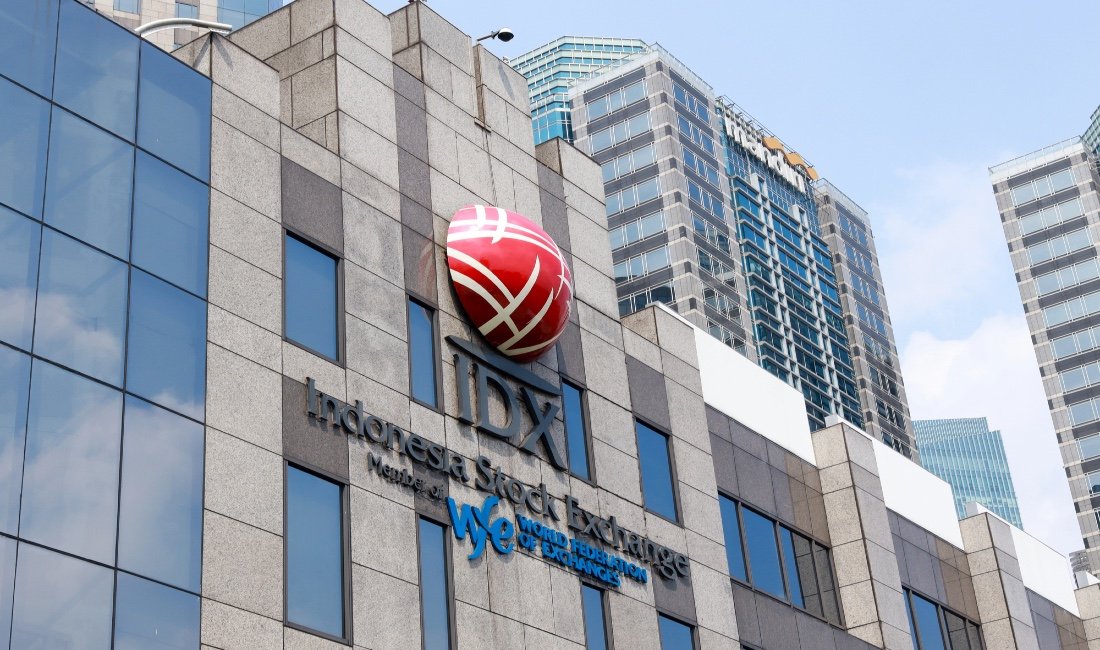
Since MSCI’s announcement, regulators have announced reforms to strengthen Indonesia’s market credibility, integrity and transparency. Specifically, the Indonesia Stock Exchange (IDX) and the Indonesia Central Securities Depository (PT Kustodian Sentral Efek Indonesia, or KSEI), along with guidance provided by the main financial regulator, the Financial Services Authority (Otoritas Jasa Keuangan, or OJK), have been exploring several options:
- Expansion of share-ownership disclosure. Share-ownership data is no longer limited to holdings above 5 percent. Additional monthly disclosures covering ownership stakes above 1 percent will be introduced to enhance market transparency.
- Enhancement of investor classification within the Single Investor Identification (SID). The SID framework currently recognises nine investor types. The KSEI will collaborate with market participants to enhance data granularity by introducing 27 investor classifications as subcategories under the SID investor types Corporate (CP) and Others (OT).
- Increase in the minimum free-float requirement. To enhance market deepening and align with the eight action plans to accelerate capital-market integrity reform in Indonesia, regulators will gradually increase the minimum free-float requirement from the current 7.5 percent to 15 percent.
All of these initiatives are targeted for delivery before the end of April. “Going forward, IDX and KSEI, with guidance from OJK, reaffirm strong commitment to maintaining timely, proactive, and constructive engagement with MSCI,” the February 5 IDX press release confirmed. “These actions are expected to deliver tangible improvements in market transparency and further enhance the global competitiveness of Indonesia’s capital market.” Also, Iman Rachman, the IDX’s chief executive, and Mahendra Siregar, the OJK’s chair, resigned.
According to the OJK’s chief capital market supervisor, Hasan Fawzi, moreover, the specific reforms MSCI requested have already been completed. “We are optimistic,” Hasan Fawzi replied when asked whether Indonesia could avoid a downgrade. “As of today, our position is in line, if not even more (transparent) and detailed than the conduct of regional and global markets.”
But in the eyes of many investors, the most important step for regulators to take is to ensure that any concluded reforms are sufficiently robust and comprehensive. If not, a further deterioration in market confidence could be in the offing. “It would be difficult for the Indonesian government to enact all the changes in time, to convince the inside holders of these families to give up shares, and you gotta convince someone to buy the shares,” Warren Chiang, a portfolio manager at Grantham, Mayo, Van Otterloo & Co, told Bloomberg in late March. While the changes are likely to be positive in the long term, Chiang added, the road ahead “would be relatively painful”.
Indeed, that pain was evident when data from Bloomberg recorded global funds selling a net $1.2 billion of Indonesian stocks on a single day, March 26—the most since 2005—while on the same day, around $1.1 billion of shares in the Fangiono family-backed FAP Agri were traded in two blocks. While the motivation for the FAP Agri trades was unclear, Bloomberg suggested that the outsized activity that day—almost two months after the initial MSCI warning—was crucial in driving the largest market outflow observed in Indonesia in 21 years.
Elsewhere, Indonesian officials have opened investigations into the roles of financial firms as it strives to restore investor confidence in its asset markets. On February 7, the OJK suspended Singapore’s UOB Kay Hian Sekuritas’ underwriting license, preventing it from participating in initial public offerings (IPOs) for a year, as well as fining the firm Rp250 million ($15,000) for breaches linked to the 2019 IPO of PT Repower Asia Indonesia Tbk (REAL). However, its brokerage operations will not be affected by the action.
The OJK is also collaborating with the National Police (Bareskrim Polri) to conduct separate investigations into PT Mirae Asset Sekuritas Indonesia (MASI) and PT Shinhan Sekuritas Indonesia (SSI), alleging capital-market fraud involving market manipulation, insider trading and suspicious transaction activity.
However, whether those investigations expand to encompass the biggest and most influential offenders remains to be seen. “Indonesia is known for being selective” in investigations, Dipo Satria Ramli, an economist at the Core (Center of Reform on Economics) Indonesia think tank, recently told the Financial Times. “This practice of gorengan [a nickname for stocks with unusual daily trading volume and value] is not only [in] the smaller [stocks] but the mid-caps and some big caps too. I hope the government is objective enough to investigate all of it.”