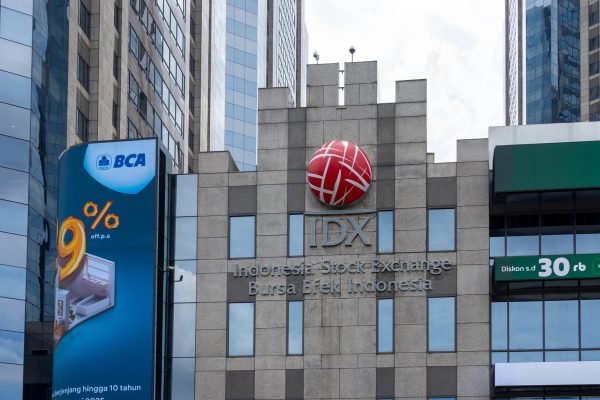
Indonesia’s stock market fell more than 11 percent on Friday, the steepest one-day drop since 1998, after the global index provider MSCI proposed the country’s removal from its global stock indexes.
In a statement on Friday, MSCI said that it had launched “a consultation on a proposal to reclassify the MSCI Indonesia Indexes from Emerging Market to Standalone Market status.”
The proposal is more serious than MSCI’s earlier threat, announced in January to downgrade Indonesia from “emerging market” to “frontier market” status due to a number of transparency concerns in its stock market. Chief among these were the high concentration of ownership in certain companies and the limited “free float” of shares – i.e., those openly available for public trading.
On Friday, MSCI again cited “significant concerns regarding the investability of the Indonesian equity market, including persistent opacity in shareholding structures and suspected coordinated trading behavior.”
MSCI said it would procure feedback from market participants until the end of April 2027, and then announce its decision by June 30.
MSCI’s role as the primary benchmark for institutional investors gives it considerable power over emerging economies. As Reuters explains, a downgrade to “standalone” status “would exclude Indonesian stocks from indexes tracked by global funds, potentially triggering billions of dollars in capital outflows.”
Markets responded to the news as one would expect, with the Jakarta Composite Index falling by 11.6 percent, losing $65 of value. It was the largest single-day drop since the Asian financial crisis.
After MSCI’s January announcement, which also caused a hemorrhage in Indonesian equity markets, Indonesia announced a long list of reforms to address MSCI’s concerns, including a doubling of the minimum free float for listed companies to 15 percent. Top executives of the exchange and regulatory body also stepped down.
However, in its statement on Friday, MSCI said that “sufficient progress has not been observed consistently across the Indonesian equity market.”
“Despite the announced reforms, significant concerns remain around market dysfunction, including continued suspected coordinated trading behavior and lack of evidence of meaningful enforcement,” it stated. “Feedback from market participants suggests that a reclassification to Frontier Markets would not properly recognize the depth of the market problems.”
MSCI said that it “expects to proceed with the proposed reclassification” barring clear evidence of “material improvements in market governance and functioning.”
If downgraded, Indonesia would join Argentina, Lebanon, Palestine, Ukraine, and Zimbabwe in the standalone category, becoming both the largest economy and the only Asia-Pacific market in the grouping. MSCI has said that reclassification to “standalone” status is typically done in cases of “severe deterioration in market accessibility or size and liquidity.”
The announcement, which came ahead of MSCI’s expected verdict on Indonesia’s reclassification to “frontier” status next month, came as a shock to many observers. Rully Arya Wisnubroto, head of research at Mirae Asset Sekuritas in Jakarta, told Reuters that the proposal “goes well beyond what we had considered our worst-case scenario.” Another analyst described it as “a wake-up call for Indonesia.”
Reza Priyambada, an analyst and director at Reliance Sekuritas, told the Jakarta Globe that given the reputational impact a downgrade to “standalone” status would have, the government had to act urgently to show it was serious about reform.
“Reforms should not focus solely on market development and the enforcement of sanctions,” he told the paper. “Authorities also need to ensure a level playing field in market mechanisms and address other issues that shape international investors’ assessments of the quality of Indonesia’s capital market.”
If the government fails to stave off a downgrade, it would severely impact Indonesia’s attractiveness as a destination for foreign investment and put significant pressure on President Prabowo Subianto, whose administration has marked a break with the conservative financial stewardship of its predecessors.
Coming to office in late 2024, the former general set an ambitious goal of 8 percent annual GDP growth for the rest of his term, and has introduced a number of high-spending populist policies, including a multibillion-dollar free meal program, that, along with the global spike in fuel prices, have widened the fiscal deficit. Prabowo has also increased the state’s involvement in the Indonesian economy in a bid to maximize the country’s returns from natural resources and international trade.
The president’s pugnacious and highly personalized style of governance, which has affected everything from fiscal policy to foreign relations, is at the root of much investor concern. In March, both Moody’s and Fitch announced ratings outlook downgrades for the country, with the latter citing the “increasing policy uncertainty and erosion of Indonesia’s policy mix consistency and credibility” and the “growing centralization of policymaking authority.”
Perceptions have also been shaped by the growing sense of volatility and unpredictability in how Indonesian institutions as a whole operate. A good example is the jailing in June of Gojek co-founder Nadiem Makarim, previously a leading member of Indonesia’s tech scene, on flimsy corruption charges related to the procurement of Google Chromebooks during his time as education minister.
As one observer noted at the time, the Nadiem case confirmed many investors’ perception of Indonesia as a country where “the line between a business decision, a policy misjudgment, and a prosecutable offense is drawn after the fact by whoever holds power at the time.”
As a reflection of the general economic malaise, the rupiah has fallen to record lows this year, passing the psychological threshold of 18,000 rupiah to the U.S. dollar in June.
In addition to the aforementioned reforms, the Prabowo administration has reshuffled its economic team in a bid to restore investor confidence. In July, the governor of the central bank stepped down, followed by Prabowo’s replacement of his finance minister in September. It will no doubt also announce a host of new reforms in the days and weeks to come.
Whether all of this has much effect on MSCI’s verdict remains to be seen. Judging by the wording of its latest announcement, some kind of downgrade for Indonesia is certain; it is now merely a question of how severe the shock will be.