WASHINGTON (AP) — Dozens of mayors and other city leaders gathered in the ballroom of a Washington hotel on a snowy January morning this year gripped by anger and anxiety about the federal government’s increasingly aggressive immigration enforcement operation that included the killings of two U.S. citizens in Minneapolis.
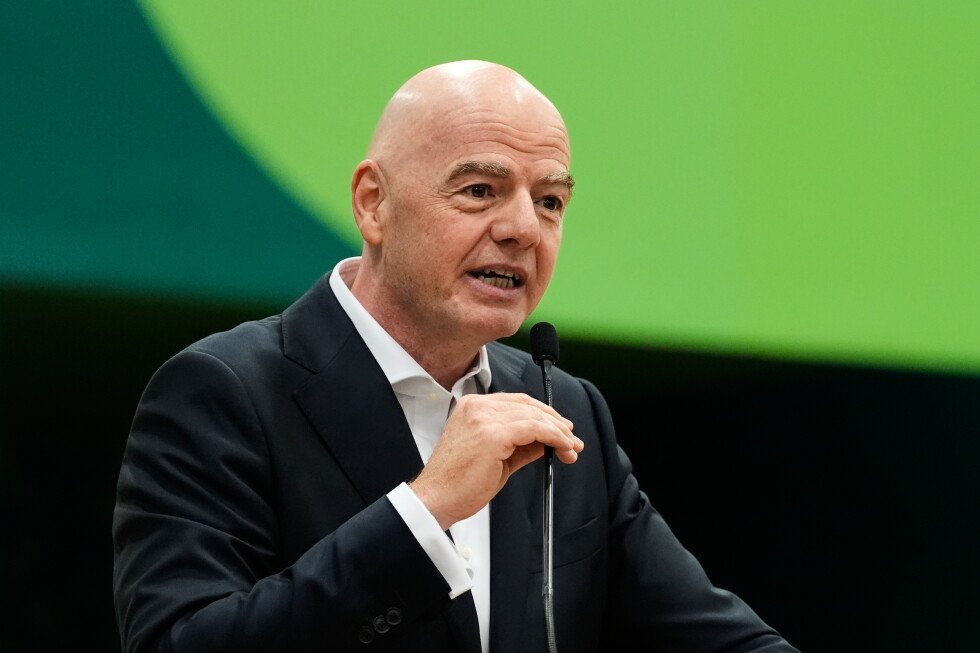
And then FIFA President Gianni Infantino took the stage.
“For the first time in 250 years of history of the United States of America, well, you will not just be invaded but you will be conquered,” he said as the audience at the National Conference of Mayors largely reacted with silence.
“You will be conquered by soccer,” he added in an attempt to land the joke and get the crowd energized about the World Cup, which will be hosted jointly by the U.S., Mexico and Canada from Thursday through July 19.
Ahead of the tournament, Infantino has successfully cozied up to President Donald Trump, creating a peace prize that was awarded to him and frequently visiting the White House, including a stop last week, when he was photographed alongside the Republican president admiring changes outside the Oval Office.
Infantino has struggled with virtually everyone else.
In a deeply polarized country, few things unite elected leaders outside the White House quite like skepticism of Infantino and FIFA, the governing body for the world’s most popular sport. It’s a sentiment that cuts across the divide and spans from Washington to state capitals and city halls.
Ticket prices attract bipartisan criticism
There are mayors like Zohran Mamdani of New York and Karen Bass of Los Angeles, Democrats who’ve balked at ticket prices. Mamdani eventually secured 1,000 tickets for New Yorkers at $50 per seat. The attorneys general in New York and New Jersey, also Democrats, started an investigation into ticket prices last month. In New Jersey, Gov. Mikie Sherrill, another Democrat, demanded help from FIFA to cover millions of dollars in transit costs before ultimately turning to new advertising revenue to help cover the gap.
Despite his ties to Infantino, even Trump has criticized World Cup ticket prices, telling The New York Post he wouldn’t pay the $1,000 prices to watch the U.S. play its opening game against Paraguay.
In an interview, Republican Sen. Todd Young of Indiana, who played Division 1 soccer at the U.S. Naval Academy, said FIFA has been “detached from regular people around the world.”
“It really is a cabal run by elites,” Young added. “They really have had problems with corruption over the years, and one really does get the sense that they may overlook their singular mission, which is to help grow the sport, especially among young people around the world who wouldn’t otherwise have the resources to access soccer.”
“Every good soccer fan who loves international football wishes Infantino would be a little less in the news and more promoting the game,” Rep. Rick Larsen, D-Washington, said in an interview.
A FIFA representative didn’t respond to a request for comment. FIFA’s skeptics said they were still enthusiastic about the 48-team tournament. Some lawmakers said Infantino was navigating a challenging political environment in the U.S.
Infantino is “doing the job he needs to do in terms of cultivating the Trump administration,” said Rep. Darin LaHood, R-Ill., the chair of the Congressional Soccer Caucus.
Sports are central to Trump’s second term
The World Cup kicks off a series of events that are central to Trump’s second term effort to burnish his image and legacy through his association with high-profile sporting events. He’ll hold a UFC bout on the South Lawn of the White House this month. It all culminates with the Olympics in Los Angeles in 2028, the final year of Trump’s presidency.
But the soccer tournament opens against the backdrop of an intensely divided political climate in the U.S. — with Trump at the center. Just 37% of U.S. adults approve of the way Trump is handling the presidency, according to a May poll from The Associated Press-NORC Center for Public Affairs Research.
Still, Trump is intensifying efforts to put himself in the middle of American life, particularly as the country celebrates the 250th anniversary of its independence. He has embarked on a massive renovation of Washington and plans to headline “The Great American State Fair” on June 24.
Trump plans to attend the NBA Finals between the New York Knicks and the San Antonio Spurs on Monday. As the head of state, Trump is expected at the World Cup final in July.
Trump’s World Cup challenge
But the World Cup presents a challenge for an administration that has placed aggressive immigration enforcement at the top of its agenda.
The most visible aspects of Trump’s anti-immigration measures, including high-profile arrests in cities like Chicago and Minneapolis, have largely calmed. And the administration has sought to strike a welcoming stance toward World Cup visitors, suspending, for example, a requirement that those traveling from countries that qualified for the tournament and have bought tickets pay as much as $15,000 in bonds to enter the U.S.
But the White House is still considering hard-line options to punish perceived opponents. Homeland Security Secretary Markwayne Mullin has threatened to halt customs processing at airports serving cities whose local governments resist Trump’s immigration policies. And intense clashes at a New Jersey immigration center about 10 miles (16 kilometers) from where the World Cup final will be held are a reminder of the tests facing the White House.
“I see the 2026 World Cup at the intersection of two really stark realities,” said Ashleigh Huffman, who was the chief of sports diplomacy at the State Department during the Biden and first Trump administrations. “Unprecedented opportunity to heal a country that is deeply divided and a world that is struggling. And unprecedented scrutiny. Everything that’s going on has the power to unite us, but it also is forcing conversations around access and human rights and immigration and who gets included in this celebration.”
Speaking to reporters in Miami last week, Andrew Giuliani, the executive director for the White House Task Force on the World Cup, said that “if you’re inside the country legally, then you have nothing to worry about.”
“We want people to be able to come here and enjoy this World Cup while also making sure that we can keep the country safe,” he said.
There are signs that the political divisions that course through so much of American culture also apply to the World Cup.
Democrats and independents are more likely than Republicans to say they plan to watch World Cup games, according to an Ipsos poll conducted in May. Earlier polling found Democrats were more likely to be “very” or “somewhat” interested in the matches.
While Republicans are less eager to tune into games, they feel a stronger sense of national pride than Democrats do from the U.S. team’s performance and participation in the World Cup. About two-thirds of Republicans said the U.S. team’s participation makes them proud to be American, compared with slightly less than half of Democrats.
But for soccer enthusiasts in Washington, the hope is that the tournament could provide a rare break from the constant partisan battle.
“There’s a real opportunity to use this platform as a stage for unity and commonality across nations,” Young said.
For Larsen, “when the whistle blows until the end, I’ll be yelling for red cards and cheering goals.”
___
Associated Press writer Gisela Salomon in Miami contributed to this report.