
Intel and NVIDIA could cooperate on developing and building AI CPUs, says a fresh report from Korean financial firm GF Securities. The firm’s analyst, Jeff Pu, made the remarks as part of his mid-quarter coverage for Intel and outlined that the firm could also benefit from headwinds stemming from agentic AI capabilities of GPT-6 AI models. Pu also discussed Intel’s Foundry business and outlined that the yields of the 18A chip manufacturing process technology family were at 80%, with those of other larger products improving from June.
Intel’s 18A and 14A manufacturing process technologies are key for its foundry business through which it aims to establish a foothold in the global contract chip manufacturing industry. This industry has boomed in the current AI era, with almost all of the orders for the high-end AI chips heading toward’s Taiwan’s Taiwan Semiconductor Manufacturing Company (TSMC). TSMC is the world’s largest contract chip maker in terms of revenue and accounted for 72% of the global market in the second quarter.
On this front, Intel has made bold claims for the 14A process technology and the 18A’s enhanced variant called 18A-P. The 14A is the firm’s next-generation technology platform, and in broad marketing terms, should be equivalent to TSMC’s 1.4-nanometer platform.
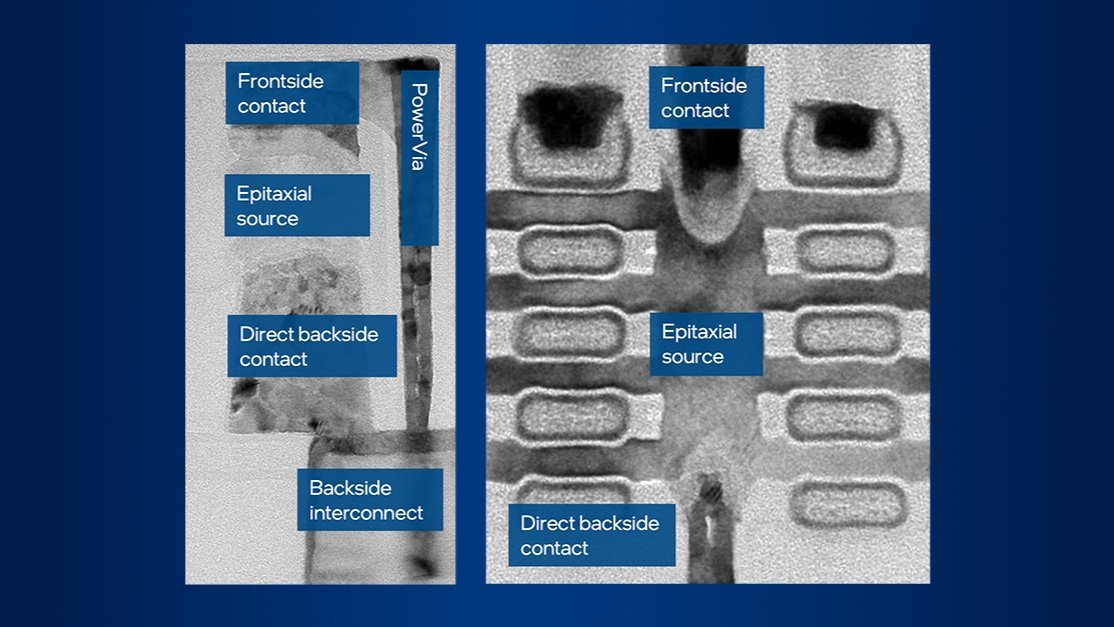
In this context, a fresh report from GF Securities’ analyst Jeff Pu shares details about Intel’s 18A yields, progress with the 14A manufacturing process and a possible collaboration with NVIDIA for AI CPUs. Pu believes that the 18A technology is currently at an 80% yield. These figures are for Intel’s Panther Lake chip lineup and they follow an earlier report in July, which had claimed that 18A yields had improved to 85% compared to the 65% figure in the second quarter.
Yields are an important metric in chip fabrication as they determine the number of usable chips in a silicon wafer. Pu’s details for Intel’s next-generation 14A chip manufacturing process technology family reveal that production could sit at 6,000 wafers per month in 2027 and 24,000 wafers per month in 2028.

The details about the production stand in contrast to similar ones reported for TSMC’s 1.4 nanometer process technology family. These reports have claimed that the technology could enter mass production in 2027 due to expedited construction timelines of the manufacturing plants.
As for the NVIDIA bit, today’s report claims that Intel might potentially collaborate with NVIDIA in the personal computing segment. Pu goes as far as to claim that NVIDIA’s Rosa Feynman will have a variant with an Intel CPU. Earlier reports for the next-generation NVIDIA GPU have claimed that the Rosa CPU could rely on TSMC’s 2-nanometer or 1.6-nanometer process technology families instead.
Intel mid-quarter update
•Raise TP to $150 on SOTP, citing better-than-expected server CPU (18A) & EMIB yields + foundry client expansion
•CPU tailwinds: GPT-6 agentic capabilities expected to boost server CPU demand.
•CWF (Clear Wafer Forest): small volume late-2026 →…— Jeff Pu (@sssjeffpu) September 15, 2026

About the author: Ramish is a seasoned technology writer and editor with more than a decade of experience. He specializes in semiconductor fabrication and market analysis. With a background in finance and supply chain management – via his bachelors in Finance and a micromasters in supply chain management from MIT – Ramish combines financial rigor with deep industry insight to deliver accurate and authoritative coverage.
Follow Wccftech on Google to get more of our news coverage in your feeds.