The Consumer Price Index (CPI) measure of inflation hit a 40-year high of 8% in 2022, which far exceeded the U.S. Federal Reserve’s annualized target of 2%. As a result, the Fed aggressively increased the federal funds rate (the overnight interest rate) to put the brakes on a red-hot economy at the time.
The policy worked because the CPI gradually moved closer to 2% in the years that followed, and the Fed has now cut interest rates six times since September 2024. But that progress is now in jeopardy because of the ongoing war in Iran, which has triggered a spike in energy prices. In fact, the CPI just increased at the fastest rate in three years, and Wall Street now believes an interest rate hike will be the Fed’s next move.
History suggests rising interest rates could spell trouble for the S&P 500 (^GSPC +0.37%) stock market index.

Image source: Getty Images.
Oil prices can significantly influence inflation
The conflict between the U.S. and Iran led to the closure of the Strait of Hormuz, a critical waterway through which 25% of the world’s seaborne oil supply transits every day. Despite a ceasefire and ongoing negotiations to permanently end the war, Iran continues to disrupt the Strait’s commercial shipping lanes, so the price of a barrel of West Texas Intermediate oil is still trading above $100, roughly 85% higher than where it opened in 2026.
Higher oil raises the cost of any product that requires transportation by boat, plane, or truck. Therefore, consumers aren’t just feeling the pinch at the gas pump; they’re also feeling it at the grocery store and at their favorite retailers. The price hikes are starting to show up in the official inflation numbers, too, which is a big problem for the Fed.
In April, the U.S. Producer Price Index (PPI) increased at an annualized rate of 6%. This measures the change in the price of input costs for businesses, which are typically passed on to consumers. The energy component of the April PPI soared at an annualized rate of 22.7%, highlighting the significant impact of rising oil prices.
Those wholesale cost increases started showing up in consumer inflation in April. The CPI jumped at an annualized rate of 3.8%, the highest since May 2023. The Fed was raising interest rates back then, and that will probably be the outcome this time too, according to Wall Street.
The CME Group‘s FedWatch tool tracks the probability of interest rate moves by analyzing the 30-Day Fed Funds futures market. Right now, it implies a 57% chance of a hike in January 2027, and the odds only increase thereafter. However, if the CPI continues to climb, I won’t be surprised if Wall Street starts pricing in a hike before the end of 2026.
Higher interest rates are bad news for the stock market
When interest rates rise, debt repayments eat up a larger share of household budgets, so consumers have less money to spend on goods and services. Plus, higher rates increase the cost of credit for businesses, which directly impacts their bottom line. All this is bad news for corporate earnings — and earnings tend to drive stock prices.
That’s why the Fed’s last bout of interest rate hikes in 2022 and 2023 led to a terrible stretch of performance for the S&P 500. The index plummeted by more than 20% at its low, triggering a technical bear market.
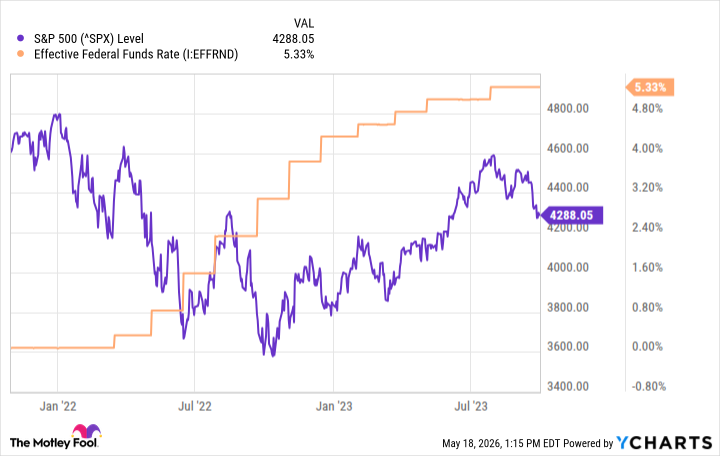
Interest rates were coming off historic lows when the Fed last started raising them, so the overall increase this time will probably be much smaller. That could translate to a lesser impact on the stock market, but investors might have to see a sustained decline in oil prices before they feel confident in that potential outcome.
Unfortunately, many of the biggest oil producers in the Middle East have slashed production because of the shipping restrictions in the Strait of Hormuz, and it could take several months for them to bring it all back online — even if the U.S. and Iran were to reach an agreement to permanently end the war right now. Therefore, oil prices are likely to remain elevated well into the second half of 2026, which could stoke even more inflation.
In summary, there is clear evidence that any significant increase in interest rates will likely disrupt the current bull run in the stock market, so Wall Street will be keeping a very close eye on inflation over the next few months.