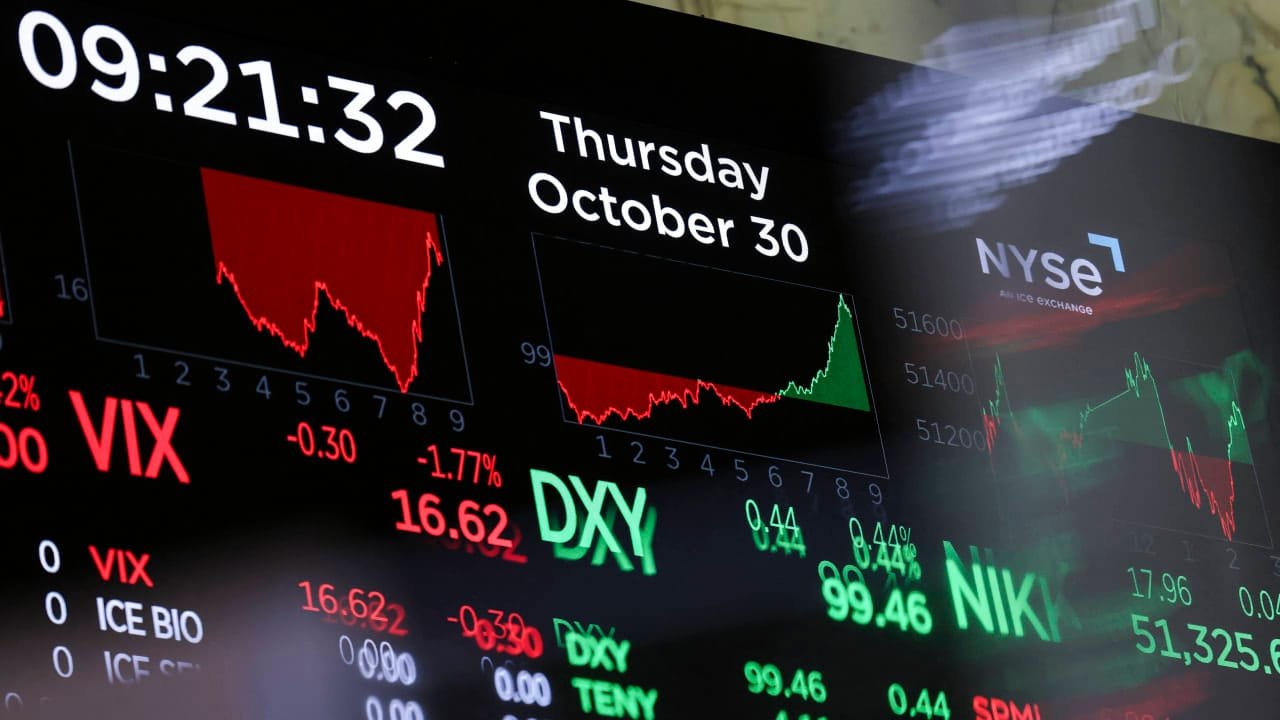
Allianz Life released a survey last month that said 74% of Americans are concerned that a correction is coming as they see recent market highs as unsustainable. That was on Sept. 22 and the S&P 500 went on to hit an all-time high on Oct. 6 of 7,818. Currently, the large cap benchmark is at 7,720, up about 13% year-to-date.
CNN’s Fear and Greed Index also indicates that investors are fearful about the market. This index, which examines seven different indicators to gauge the mood of the market, currently has a score of 35 out of 100, indicating fear. But just a week ago, the index plummeted to 19, which indicates extreme fear. This happened after a major tech sell-off that saw the Nasdaq fall 2.6% on Oct. 23.
Missed Nvidia in 2009? This Rare Signal Is Flashing Again. In 2009, a “Double Down” signal flashed for a little-known chipmaker called Nvidia. For the first time in years, that same “Total Conviction” signal is flashing for a company 1/100th the size of Nvidia. Continue »
Fear, or concern, is not necessarily a bad thing. Investors should be aware that the S&P 500 is overvalued and could potentially correct or undergo a deeper, longer decline. The more important thing is how you react to that fear or caution. There are really two broad tenets that you should follow when that fear starts to arise.

Don’t miss the best days
When markets are overvalued, like they are now, and the economy is showing signs of strain from rising prices, trade wars, and elevated interest rates, your radar should be up.
But what you don’t want to do is to make drastic moves and get out of the market in any significant way. That’s because, if you get out of the market, you are likely to miss the markets best days. According to an analysis by the Hartford Funds, 48% of the market’s best days over the past 30 years have occurred in bear markets, while 28% of them happened in the first two months of a bull market.
Further, a study by Invesco found that even missing the 10 best days over the past 30 years can have a significant impact on returns. Specifically, Invesco found that an average annualized return of 10.3% over the past 30 years drops to 7.4% when missing the 10 best days.
But what you may want to do is gird your portfolio for a potential downturn in advance. The best way to do this is look for stocks in your portfolio that are well above their historical valuation ranges. You may want to trim those back, because if you have stocks that are wildly overvalued, they will likely be hit harder if and when a correction or downturn comes.