DUBAI, United Arab Emirates (AP) — President Donald Trump said Monday that Iran had requested a meeting with U.S. counterparts, though one of Iran’s top negotiators said no further talks had been scheduled after attacks across the Persian Gulf over the weekend challenged negotiations to end the war.
The U.S. president has tried to preserve a fragile interim deal, but hostilities mounted in recent days in the Strait of Hormuz, through which a fifth of the world’s oil had been shipped before war began. After four days of trading strikes, both sides appeared to pause their attacks Monday.
Trump said on social media that a meeting with Iran would happen Tuesday in Doha, Qatar. Trump special envoy Steve Witkoff and Jared Kushner, the president’s son-in-law, are flying to Qatar for the meeting, White House press secretary Karoline Leavitt told Fox News’ “Fox & Friends.”
But Kazem Gharibabadi, a senior negotiator for Iran, denied any talks had been scheduled.
The U.S. and Iran agreed to an interim deal earlier this month that calls for Tehran to dilute its stockpile of enriched uranium. It also waives U.S.-backed sanctions on the country while opening the Strait of Hormuz and giving each side 60 days to hammer out broader agreements.
Oil prices fell sharply after the signing of the interim deal, but if they were to reverse course in a meaningful way it could undermine Trump’s claims to voters ahead of November elections that inflation was easing.
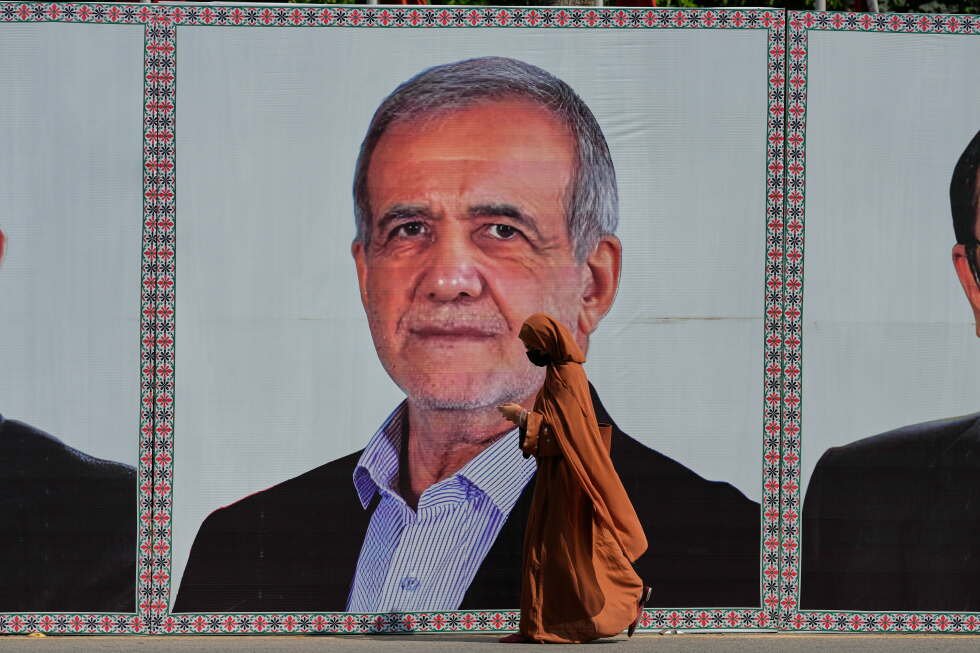
Earlier on Monday, Iran’s president said that $6 billion in frozen Iranian assets would be released by Qatar. Masoud Pezeshkian’s mention of the funds appeared aimed at selling the Iranian public on the interim deal, particularly as its grip on the strait has been tested.
Increased tension in waterway vital to world energy supplies
During the war that began Feb. 28, Iran’s attacks and threats stopped cargo ships and tankers from moving through the Strait of Hormuz, creating a global energy crisis.
In recent days, Iran has twice attacked vessels in the strait — including a tanker filled with Qatari crude — following efforts to open Oman’s territorial waters to both inbound and outbound traffic from the Persian Gulf.
The attacks drew retaliatory American airstrikes and raised concerns that negotiations to reach a formal end to the war could be disrupted. Iran launched drone and missile attacks targeting Bahrain and Kuwait on Sunday.
Iran and Oman held a meeting about the strait Monday in Oman.
The strait has long been considered an international waterway despite its location in Iran and Oman’s territorial waters.
Sign up for Morning Wire: Our flagship newsletter breaks down the biggest headlines of the day.
Pezeshkian says $6 billion coming to Iran
Pezeshkian offered praise for the interim deal in comments published Monday by the state-run IRNA news agency, calling it “a great victory for the Iranian people.”
“Based on the plans made, $6 billion out of the total $12 billion of Iranian resources in Qatar will be released and returned to the country, and necessary follow-ups are being carried out,” he said. He did not elaborate.
Pezeshkian, a reformist within Iran’s theocracy, is the highest-ranking official within Iran to reference the release of the funds held by Qatar, a key mediator along with Pakistan in the negotiations.
So far, U.S. officials say no frozen Iranian assets have been released. Qatar as well as has not acknowledged any such transfer.
Confusion mounts over next round of Iran-US talks
Pakistan, a key mediator, has said talks would resume Tuesday. The Trump administration on Sunday said nothing has been canceled and technical talks are on track for the coming days.
Gharibabadi, the Iranian negotiator, cast doubt on the meeting in comments published by IRNA.
“Reports by some media about technical talks by the working groups being held in Doha are not confirmed,” he said.
Technical talks involve lower-level diplomats working on the specifics of any deal that would draw top leaders from Iran and the U.S. back to the table.
Trump touts falling oil prices
Trump celebrated on Monday morning that U.S. oil futures were trading at roughly $69 a barrel, a decrease that he credited to the interim deal with Iran.
Even though the president has previously said oil prices and domestic political concerns were not influencing his approach to Iran, Trump has repeatedly focused on lower oil prices with the reopening of the Strait of Hormuz as a key victory.
The president falsely claimed that oil prices are lower than they were before the war.
Oil futures in the U.S. were trading at a range of roughly $65 to $66 per barrel before the war began in late February.
Brent crude, the international standard was trading at about $72 a barrel before the war began, and rose above $126 per barrel in April. On Monday, Brent traded at around $73.25 a barrel.
___
Boak reported from Washington. Associated Press writers Nasser Karimi and Amir Vahdat in Tehran, Iran, and Russ Bynum in Savannah, Georgia, contributed to this report.