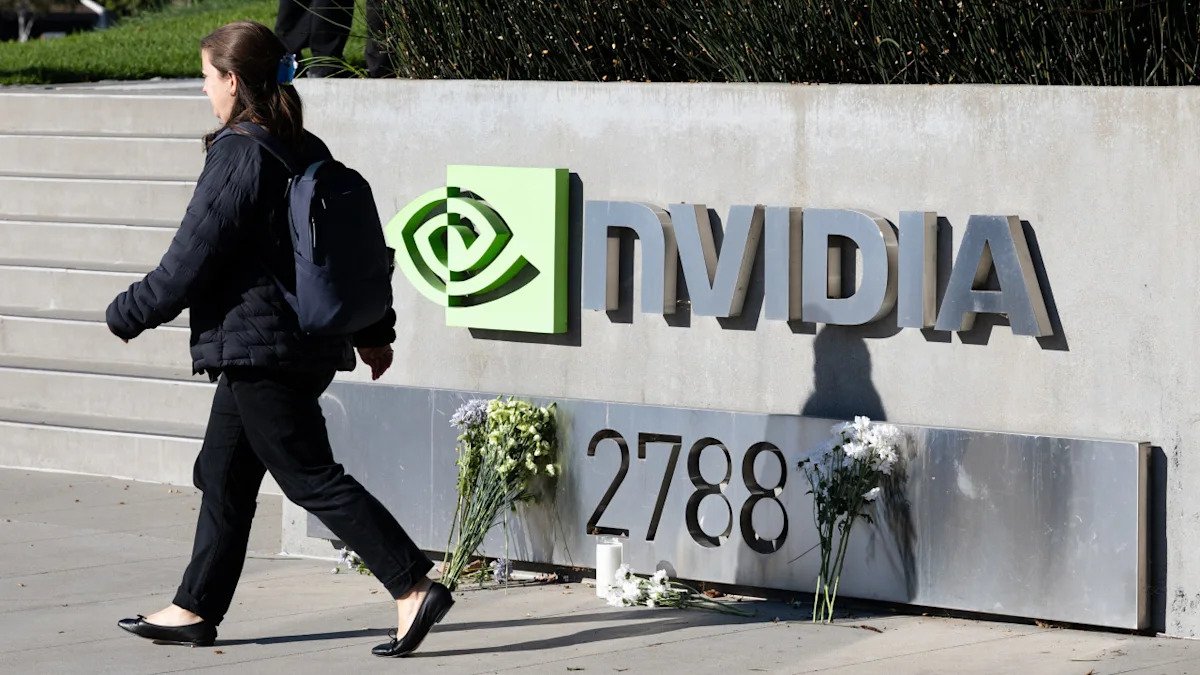
Powered by the AI boom, Nvidia (NASDAQ:NVDA) became the world’s biggest company in recent years. Shares tripled in value in 2023, then more than doubled the following year. The stock’s impressive performance even played a major role in driving the gains the broader market has enjoyed in the post-pandemic era.
Must Read
-
Jeff Bezos backs a platform that lets anyone invest in rental homes for as little as $100 — 5 ways to build wealth like a landlord without actually being one
-
Dave Ramsey warns nearly 50% of Americans are making 1 big Social Security mistake. Here’s what it is and 3 simple steps to fix it ASAP
-
A single line on your car insurance policy could be inflating your premium by up to 30% — here’s what to change
In 2026, however, the stock began to struggle amid questions about the future of AI. Everything came to a head in November, though, when it came out that Nvidia’s CEO had multiple affairs, including one with a suspected Chinese spy.
The affair rumors weren’t just tabloid fodder. Nvidia’s share value plummeted amid the scandal, and news of the CEO’s resignation will only make things worse. This is a cause for concern for many investors, since Nvidia’s size and explosive growth led many ETFs and mutual funds to hold large positions in Nvidia. Many investors, even those who didn’t buy Nvidia directly, are exposed.
Unfortunately, the incident has left some nervous investors feeling like the market is simply too risky. Let’s say, for example, that Gareth has long been suspicious of stocks, and the scandal has now convinced him he can’t trust his hard-earned funds to the market since a totally unexpected event like this can have such an impact.
He’s thinking about putting all his money into bonds instead, because he believes that at least that market likely won’t move because of one man’s affair. But is that the right move?
Develop an asset allocation that makes good sense
While it may be tempting to move all of your money into bonds when there’s turbulence in the stock market, the reality is that bonds aren’t risk-free and you don’t want too many of your assets in any one particular type of investment, even if it’s seen as a relatively safe one.
“An all-bond allocation may make you feel safe until inflation or longevity rears its head. If rates decline, bond prices may go up, but lengthening duration or reaching for yield can raise their own issues,” Mehdi Zare, a CFA and founder of Bina Capital, told Moneywise.
Bonds have also consistently underperformed stocks over a long time horizon, so you’d essentially be limiting your potential returns. And you’d be putting all of your eggs in one basket, so if the bond market performs poorly, your portfolio will suffer.