(Bloomberg) — Japanese shares tumbled the most since 2020, with the benchmark Topix index sinking more than 10% from its July peak as the fallout from tighter monetary policy roiled one of the world’s best-performing markets.
Most Read from Bloomberg
-
Kamala Harris Wipes Out Trump’s Swing-State Lead in Election Dead Heat
-
Ackman’s IPO Dream Implodes From $25 Billion to Zero in Weeks
-
While ‘Pod Save America’ Tries to Unite Democrats, Its Staff Rebels
-
Stocks Sink Before Jobs as Tech Hit on Earnings: Markets Wrap
Exporters took a hit from the yen’s recent rally while financials retreated on concerns that their recent gains may have been excessive. The benchmark sank as much as 5.7%, heading for a two-day drop of about 8% in the wake of Bank of Japan’s earlier-than-expected rate hike Wednesday and Governor Kazuo Ueda’s hawkish messaging. If the Topix closes at current levels, it will join the Nikkei 225 Stock Average in entering a technical correction.
The sharp reversal in Japanese stocks in recent weeks comes as the yen’s rally to a four-month high against the dollar hammers exporters including Honda Motor Co., while higher yields drag down real estate firms such as Mitsui Fudosan Co. Just three weeks earlier, Japanese stocks climbed to fresh records, with financials welcoming the prospects of a BOJ rate hike.
“I didn’t expect stocks to fall this much — it’s a disaster,” said Kiyoshi Ishigane, chief fund manager at Mitsubishi UFJ Asset Management Co. in Tokyo. “This might be temporary, but Japanese stocks are in their worst situation.”
Investors took profit on financials, which had been the Topix’s best performers on the view that they should benefit from higher interest rates. The equity gauge that tracks the banking sector sank more than 8%.
“Its looks like heavy forced selling,” said Andrew Jackson, head of Japan equity strategy at Ortus Advisors Pte. “I can imagine many platform-based pod like structure firms are aggressively cutting risk causing blind selling across anything that’s even mildly crowded.”
The big concern for the equity market is is the yen, which reached 148.51 against the dollar on Thursday, its highest since mid March. Strategists at Amundi and TD Securities are suggesting that the Japanese currency may advance as far as 140.
“In short, it’s mostly the yen,” said Kyle Rodda, a senior market analyst at Capital.Com. “Markets are deepening bets of US rate cuts because of concerns about slowing economic activity at a time when the Bank of Japan is only starting to tighten its policy settings.”
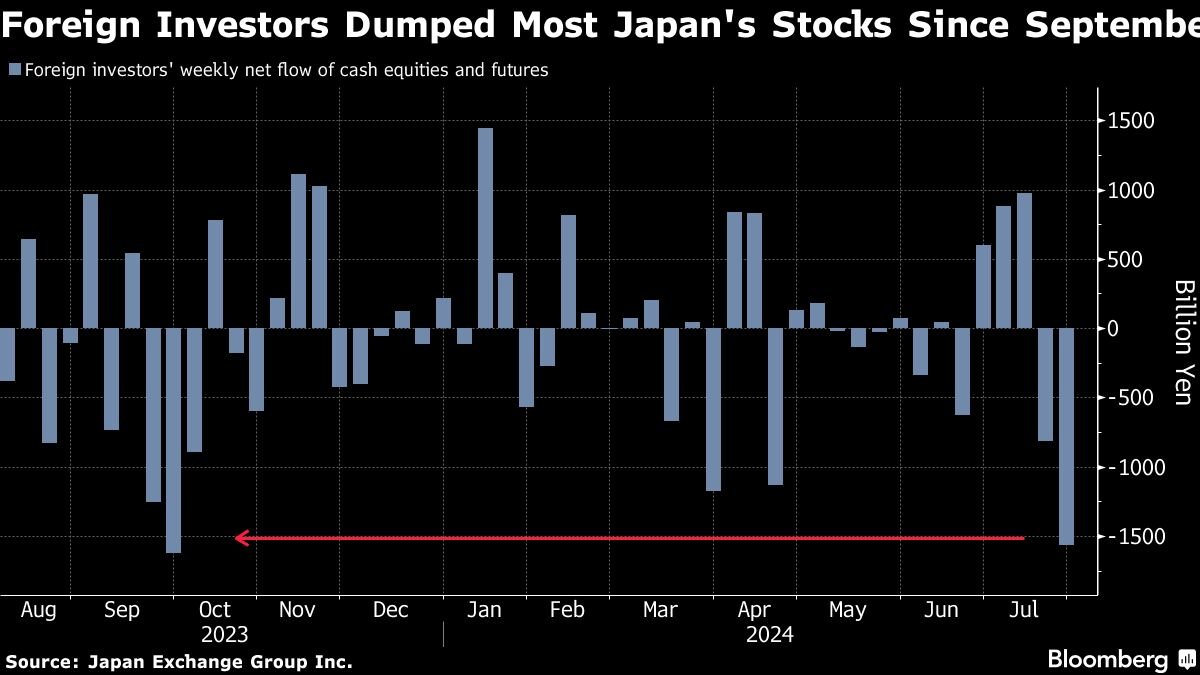
Once the main drivers of the market’s ascent, foreign investors sold net ¥1.56 trillion ($10.4 billion) Japanese cash equities and futures combined in the week that ended July 26, according to data from Japan Exchange Group Inc. The Topix tumbled more than 5% during that period, the most in four years.
A rotation out of large tech shares exacerbated the slump as signs of strain in the US economy led traders to reconsider whether Jerome Powell’s Federal Reserve is wise to hold off cutting interest rates before September. Data released Thursday showed US unemployment claims hit an almost one-year high while manufacturing shrank.
Tech shares were among the biggest decliners on the Nikkei, with Tokyo Electron Ltd. tumbling as much as 12% and Screen Holdings Ltd. retreating 11%.
“Foreign investors appear to be selling as the outlook for corporate earnings is changing over concerns on the US economic slowdown and a stronger yen,” said Ryuta Otsuka, a strategist at Toyo Securities Co. “The market has clearly turned bearish in the short term, and the mid-term trend of Japanese stocks may be starting to change on concern over US and Chinese economies.”
(Updates prices)
Most Read from Bloomberg Businessweek
-
Retailers Locked Up Their Products—and Broke Shopping in America
-
Inside GunTube, the YouTube Subculture Linked to the Trump Shooter
©2024 Bloomberg L.P.