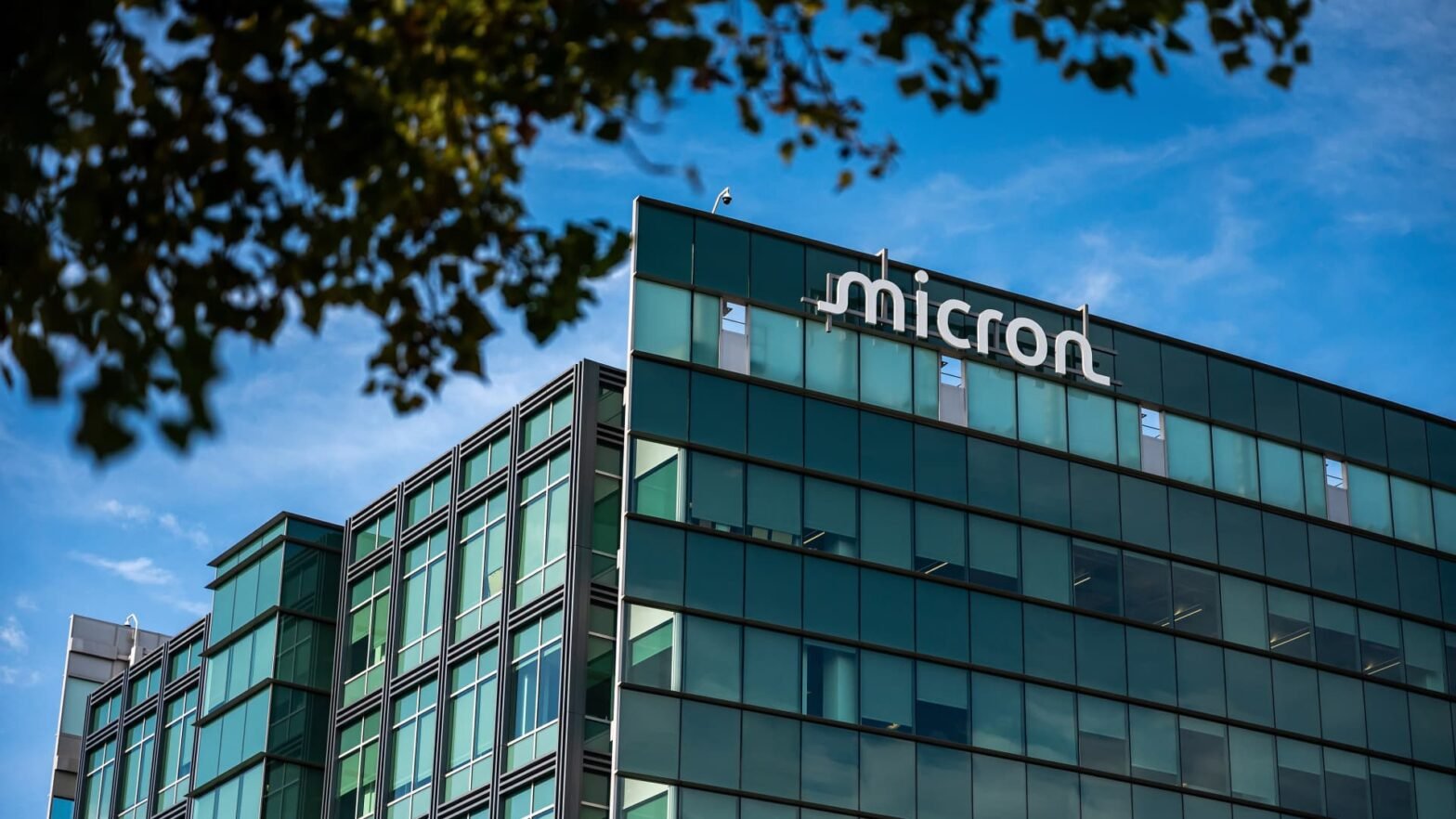
So many things have never happened before. That’s what’s so amazing about this market. Everywhere we turn, we see changes made that aren’t believed and yet are totally true. Take, for example, the following unbelievable year-to-date performances: SanDisk up 496%, Seagate up 238%, Club name Micron up 208%, and Western Digital up 171%. All four of these storage and memory companies have been, for whole chunks of time, terrible and dangerous investments. There would be periods of spectacular growth followed by horrendous swoons that would wipe out all of the gains. The swoons were often brought on by their own desires to capitalize on demand by putting up new plants. They don’t do that anymore. They have long-term supply agreements that amount to what SanDisk calls the “New Business Model.” They have all gotten disciplined, so no one pits one against the other. They have all gotten a little more specialized. SanDisk, Seagate, and Western Digital take a huge percentage of their profits and plow them back into buybacks. SanDisk has a $6 billion buyback, while Seagate has a $5 billion buyback, and Western Digital has a $4 billion buyback. Only Micron doesn’t buy back stock. MU SNDK,STX,WDC YTD mountain Year to date performances These are now enormous companies: SanDisk has a $244 billion market cap, while Seagate has a $220 billion market cap, and Western Digital has a $195 billion market cap. Micron has a $1 trillion stock market value. The Big 3 with the buybacks should not be able to move their stock with that much buying. But it is integral to people believing that their stocks are cheap. The non-GAAP gross margin of Seagate’s last quarter was 47%, a record; last year it was at 35%. Western Digital was 51%; it was at 40% just five quarters ago. SanDisk went from 22% to 78% in one year. Micron was at 85%, up from 30%. This is not supposed to happen. But it is why Micron went from a $136 billion market cap to $1 trillion in a year; Seagate went from $30 billion to $220 billion; Western Digital went from $21 billion to $195 billion; and SanDisk went from $6 billion to $244 billion. SanDisk’s buyback would have bought the whole company one year ago. Here is what’s so amazing: these remain the most hated and feared stocks in the entire market, because very few believe that someone won’t break ranks and build. People have a hard time getting their heads around the endless demand. They don’t believe the agreements with customers will hold up. They think that Samsung will break ranks and put up factories that will compete or that the semiconductor capital equipment companies won’t find ways to build more equipment faster. This week, we bought a position in Micron because we believe that the discipline is real, even as Micron keeps building plants. It does have the agreements that I am talking about, though, and they are going to make fortunes from them. That said, I am not comfortable owning a stock that has moved up as much as Micron has. We bought it at a big discount as it was trading with the prices of the South Korean rivals — Samsung and SK Hynix — not Seagate, Western Digital, and SanDisk. But no one is really comfortable buying stocks this high. I consider Micron more of a growth stock than the others, so I can console myself with the idea that it is not just restricting output. We all know, though, that it has to end someday, doesn’t it? And won’t these fall apart? SanDisk doesn’t trade at 7.7 times next year’s earnings estimates because it is cheap. It trades there because people feel its earnings per share (EPS) must fall apart. I actually don’t think they will in the time it takes for them to go up 100% again. But believe me, I am nervous that they aren’t differentiated enough and something could happen to the data center build-out that makes things slow down. We know that there is now a lot of pushback to building sites. However, all we hear is pushback. There are plenty of towns that want them; those stories are too positive and don’t fit the negative narrative. No, I’m not being facetious. How often do you read stories that talk about negatives or about all the damage data centers cause? I do think there were some data centers that were built without consideration of neighbors, but we were all rather naive about them. Not anymore. I am also concerned about something that Michael Intrator, CEO of CoreWeave , said when I interviewed him last week — that there was no way we wouldn’t overbuild. How would we know when to stop when demand is so great? Why should we even think about it right now? Again, though, I can’t see the overbuild happening any time soon, so why not own one of these? As I said at our Club’s August Monthly Meeting this past Thursday, the graybeards always tell you that you can never say, “this time is different,” because nothing ever changes. Seagate, Western Digital, SanDisk, and Micron will not be able to change their stripes. Yet that is the attitude that has led to tremendous underperformance by managers who think like that. These are the people that would never buy Caterpillar. They would say to you, “I told you so,” when Cisco reported and gave that weaker guidance rather than thinking, what an opportunity, which is how I feel. Their takeaway from the Situational Awareness crash was that these stocks did him in, not that he was using too much leverage. I say that you have to free yourself of these constraints and understand that sometimes it is different. Sometimes, the opportunity is too great, and you can’t afford not to take it. We can’t be kept back by a doctrine that no longer works. No, it is not something as stupid as “sell in May and go away.” But this whole data center move has created a gold rush that will turn many companies into winners that had previously been cyclical nightmares. The data centers, we know from Club name Amazon, are huge profit centers. The revenue Anthropic just announced — over $11.5 billion for the quarter — tells you that the opportunities for these companies are too stupendous to even think about halting. Too much money is on the line. Best of all? With the exception of Club name Nvidia and perhaps Advanced Micro Devices (AMD), these companies — Seagate, Western Digital, Micron, and SanDisk — are perhaps the most indispensable of the entire buildout. I say own one. We picked Micron because of the growth. But the others have less risk because they just keep returning that money through buybacks, if only just to show you the discipline they now swear by. (Jim Cramer’s Charitable Trust is long MU, NVDA, AMZN. See here for a full list of the stocks.) As a subscriber to the CNBC Investing Club with Jim Cramer, you will receive a trade alert before Jim makes a trade. Jim waits 45 minutes after sending a trade alert before buying or selling a stock in his charitable trust’s portfolio. If Jim has talked about a stock on CNBC TV, he waits 72 hours after issuing the trade alert before executing the trade. THE ABOVE INVESTING CLUB INFORMATION IS SUBJECT TO OUR TERMS AND CONDITIONS AND PRIVACY POLICY , TOGETHER WITH OUR DISCLAIMER . NO FIDUCIARY OBLIGATION OR DUTY EXISTS, OR IS CREATED, BY VIRTUE OF YOUR RECEIPT OF ANY INFORMATION PROVIDED IN CONNECTION WITH THE INVESTING CLUB. NO SPECIFIC OUTCOME OR PROFIT IS GUARANTEED.
Jim Cramer: Believe the unbelievable in this market — things can be different this time
Aug 16, 2026