Moneywise and Yahoo Finance LLC may earn commission or revenue through links in the content below.
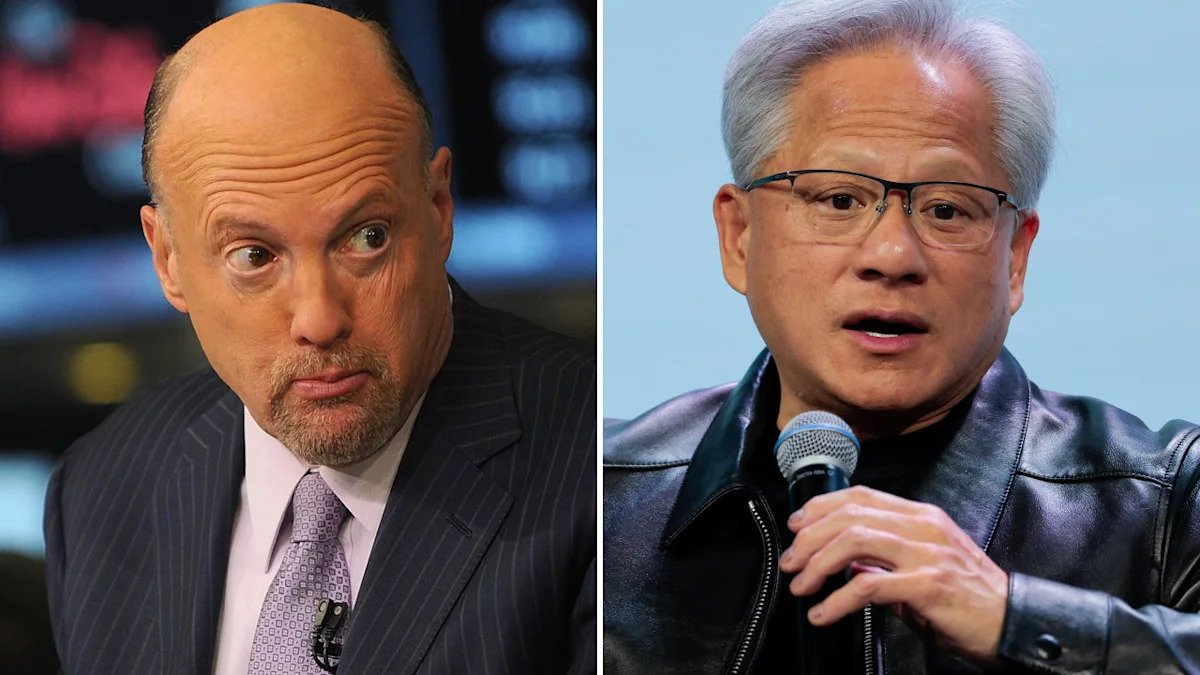
Jim Cramer spent years championing Nvidia (NASDAQ:NVDA). After Jensen Huang’s departure, the CNBC host had a blunt assessment of the man who helped turn the chipmaker into an artificial intelligence powerhouse.
“Did he betray you, the shareholders?” Cramer asked in his Nov. 12 evening commentary (1). “Yes. End of story.”
Top Picks
-
Jeff Bezos backs a platform that lets anyone invest in rental homes for as little as $100 — 5 ways to build wealth like a landlord without actually being one
-
A single line on your car insurance policy could be inflating your premium by up to 30% — here’s what to change
-
Gold has overtaken U.S. Treasuries as central banks’ top reserve asset. Get Goldco’s 2026 Precious Metals IRA Playbook for free
Earlier that day, reacting to the resignation (2) on CNBC, Cramer said: “I think it had to happen.”
Huang’s exit followed reports of several affairs, including one with a businesswoman U.S. intelligence agencies reportedly suspect of spying for China. Nvidia shares fell as much as 14% at their Nov. 12 low before finishing the session down more than 4%.
The company named longtime finance chief Colette Kress interim CEO (3) while its board searches for a permanent replacement. Cramer is confident in Kress and pushed back on the idea that Nvidia’s other employees suddenly mattered less without its founder.
For retirement savers, though, the immediate question is how much a shock like this can affect their own accounts. You may never have bought Nvidia shares directly, yet still own the stock through funds in your 401(k) or IRA.
S&P 500 funds spread your money across hundreds of companies. Those companies don’t get equal shares of your investment, though, which means that big-name players can account for more of your savings than you realize.
Players like Nvidia.
How much are you betting on Big Tech?
The S&P 500’s 10 largest holdings accounted for 37.4% of the index as of Nov. 12, according to S&P Dow Jones Indices (4).
That means, for someone with $100,000 in a fund tracking that index, roughly $37,400 would be tied to those 10 holdings. The remaining hundreds of stocks would divvy up the rest.
There’s still substantial protection against trouble at any single company. If a stock represents 7% of your fund and falls 10%, it would pull the fund down about 0.7%.
Assuming everything else stays unchanged, that is.
But when you also own a technology fund and individual shares of some of the same companies, then it gets a little dicey. Three investments can leave you making the same bet several times — and with a lot less money than you put into it, if you lose.