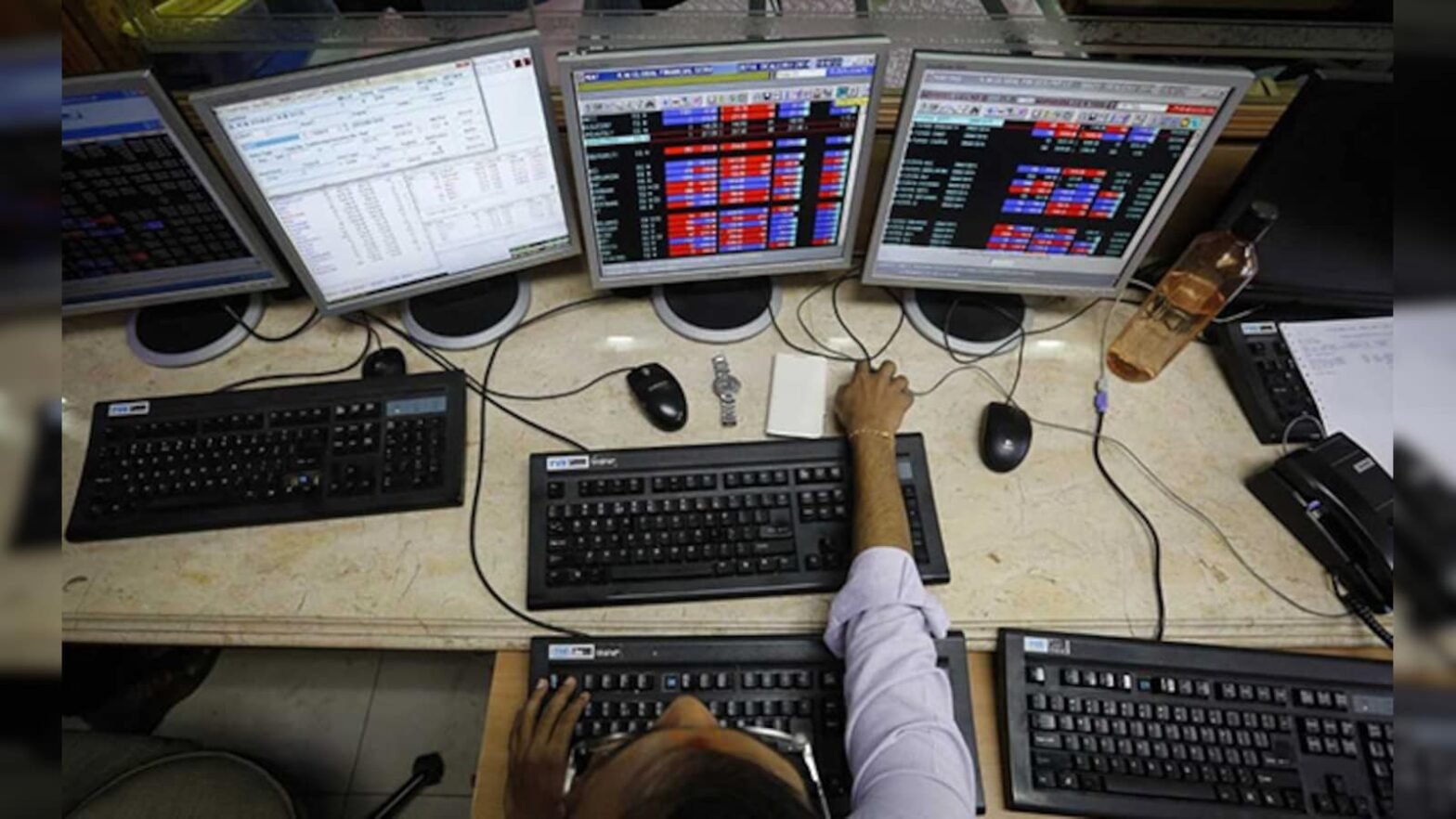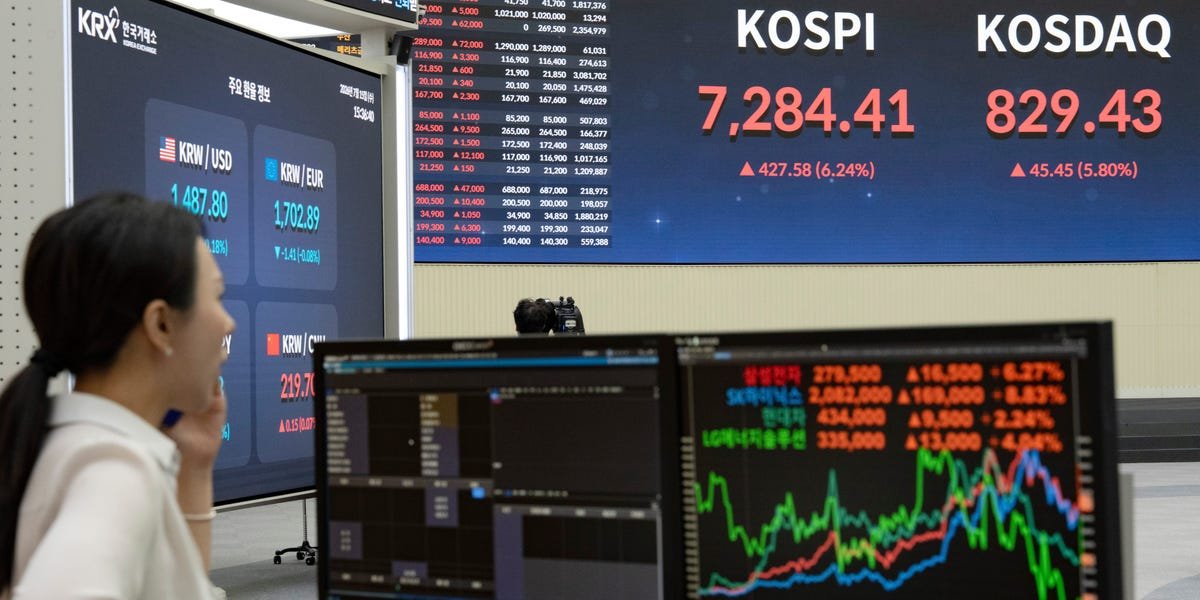
South Korea’s stock market has become one of the world’s hottest and most volatile AI trades.
Powered by memory-chip leaders SK Hynix and Samsung Electronics, the country’s benchmark Kospi index is still up more than 60% this year despite a sharp pullback in recent weeks.
But sentiment can turn quickly — and sharply.
On Thursday, the country’s benchmark Kospi index close 6.4% lower, with SK Hynix tumbling 12% and Samsung Electronics losing nearly 9% as investors fretted over AI-related valuations after the Bank of Korea’s first interest-rate increase in more than three years.
HSBC says the market’s biggest vulnerability may have less to do with AI demand than with who’s buying the stocks.
“A key vulnerability to the rally sits in the market’s ownership structure. Retail investors are buying aggressively, even as foreign investors remain aggressive sellers,” strategists led by Herald van der Linde wrote in a report published Thursday.
HSBC sees the market’s ownership structure, rather than weakening fundamentals, as a growing source of risk. The bank says the AI-driven memory-chip boom is still fueling strong earnings growth while Korean stocks remain attractively valued.
Instead, HSBC is concerned that retail investors have borrowed heavily to buy stocks while piling into leveraged ETFs tied to Samsung Electronics and SK Hynix.
HSBC estimates the products grew from virtually nothing to about $12 billion within a month, while another $15 billion of similar products were listed in Hong Kong.
On some trading days in June and July, leveraged single-stock ETFs accounted for as much as 35% of KOSPI turnover. The bank also estimates that annualized volatility in Korean equities has climbed to about 80% since May.
“That can be exhilarating on the way up. It can also become destabilizing on the way down, magnifying volatility and accelerating any sell-off, as we saw last week,” the HSBC analysts wrote.
Morningstar struck a similar note during a Wednesday webinar, warning about the risks surrounding the products that have surged alongside the AI rally.
“These products are not appropriate as buy-and-hold investments, and they should only be used by traders who understand how these products work and use them for short-term trading or hedging purposes,” said Jackie Choy, Morningstar’s senior principal for passive investment strategy ratings.
Despite the recent turbulence, enthusiasm for South Korea’s AI champions remains strong beyond the local market.
On Wednesday, SK Hynix’s new US-listed ADR ranked fifth on Interactive Brokers’ most-active list based on client orders, trailing only Micron, SanDisk, a leveraged semiconductor ETF, and Nvidia.
“It is quite stunning to see SKHY nipping at the heels of a perennial favorite like #4 NVDA,” Steve Sosnick, the chief strategist at Interactive Brokers, wrote.
Read next
Huileng Tan is a senior reporter based in Singapore, covering markets, the global economy, commodities, and investing. Her reporting focuses on how shifts in money, demographics, technology, and policy are reshaping businesses, wealth, and everyday life around the world.Since joining Business Insider in 2021, she has covered everything from commodity booms and investor trends to China’s economy, the AI trade, and the forces driving global markets.Before joining Business Insider, she reported for CNBC, Dow Jones, ICIS, and The Wall Street Journal.In 2018 and 2019, she won the Singapore Exchange Orb Awards for Story of the Year – Derivatives for her reporting on the global commodities and derivatives markets.Reach her at htan@businessinsider.com.

Follow Following
Every time publishes a story, you’ll get an alert straight to your inbox!
Look out for an alert in your inbox the next time publishes a story!
Every time a new story is published, you’ll get an alert straight to your inbox!
Look out for an alert in your inbox the next time a new story is published!
By clicking “Sign up”, you agree to receive emails from Business Insider. In addition, you accept Insider’s Terms of Service and Privacy Policy.